
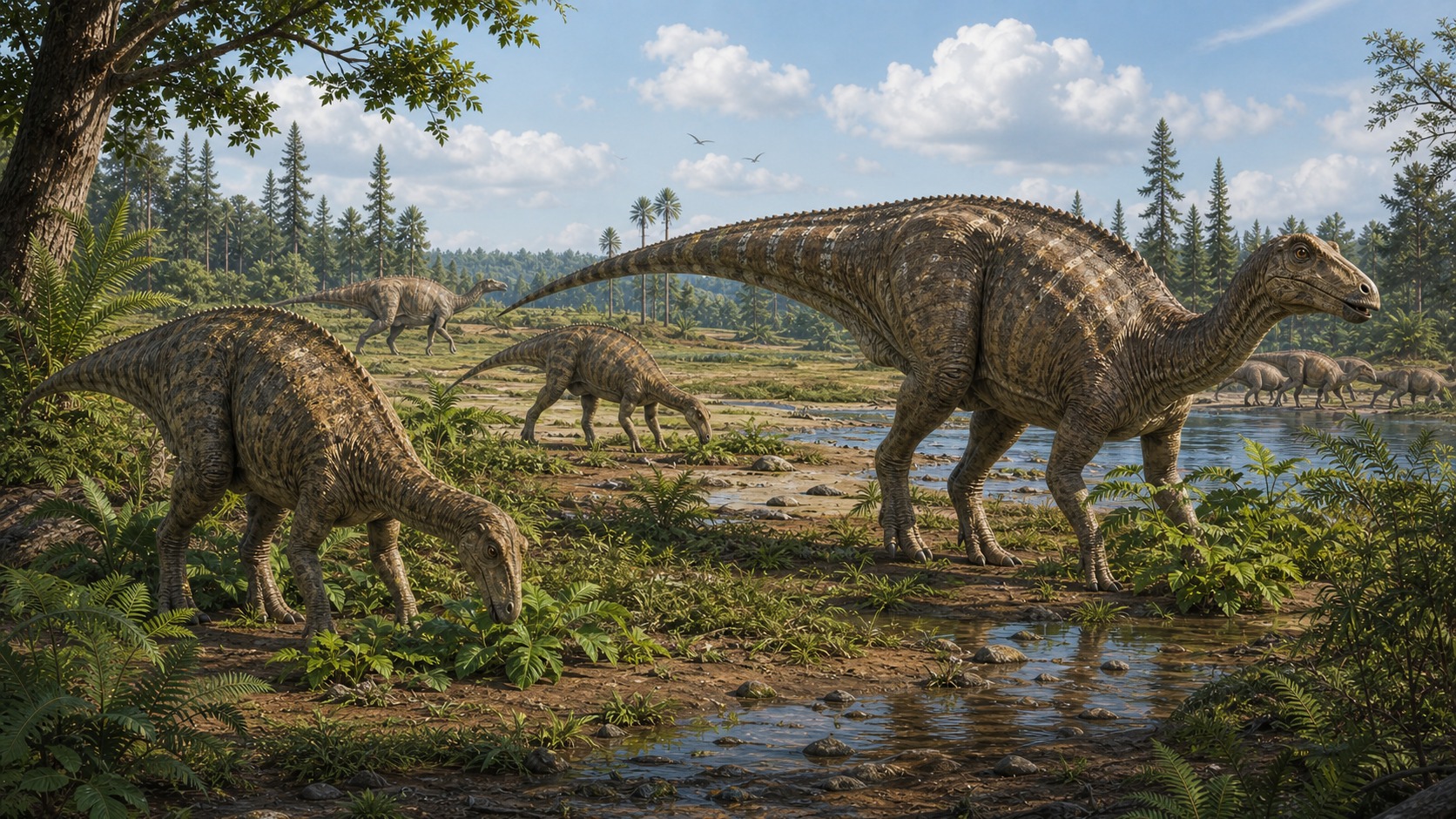
How Ornithopods Became Some of the Most Successful Herbivores
How Ornithopods Became Some of the Most Successful Herbivores is written for readers learning about successful herbivorous dinosaurs, duck-billed dinosaurs, and iguanodont relatives. This article uses a direct success story angle: A story-style article explaining how the group became successful through anatomy, ecology, and evolutionary opportunity. In simple terms, ornithopods were bird-hipped herbivorous dinosaurs that ranged from small runners to large duck-billed herd animals. Familiar examples include Iguanodon, Edmontosaurus, Parasaurolophus, Maiasaura, but the group is broader than the few names most readers already know. The goal is to give readers enough context to recognize the dinosaurs, understand how paleontologists study them, and see why they matter in the larger story of dinosaur life.
A: They were bird-hipped herbivorous dinosaurs that ranged from small runners to large duck-billed herd animals, known from fossils across Cretaceous floodplains, forests, coastal lowlands, and broad herbivore-rich ecosystems.
A: Common examples include Iguanodon, Edmontosaurus, Parasaurolophus.
A: They were herbivores, though exact feeding style varied by skull, teeth, and habitat.
A: Researchers compare bones, teeth, footprints, rock layers, and related species.
A: Some evidence suggests group behavior in certain species, but it should not be assumed for all.
A: They reveal anatomy, ecosystems, growth, movement, and evolutionary relationships.
A: No. Body size varied widely across each dinosaur group.
A: Fossils are known from multiple continents, depending on the group and time period.
A: No. New fossils and methods can revise posture, skin, behavior, and relationships.
A: The group is best understood through evidence, examples, and ecological context.
What This Topic Covers
This article takes the title seriously: How Ornithopods Became Some of the Most Successful Herbivores. Instead of treating the subject as a loose dinosaur list, it explains the group through anatomy, examples, fossil evidence, and ecosystem context.
The angle here is success story. A story-style article explaining how the group became successful through anatomy, ecology, and evolutionary opportunity. That means the article emphasizes the details readers are most likely to need when comparing ornithopods with other dinosaur groups.
The Basic Ornithopods Body Plan
Ornithopods are best understood through their body plan: bird-hipped herbivorous dinosaurs that ranged from small runners to large duck-billed herd animals. Their skeletons show how feeding, posture, movement, and defense worked together in real animals.
Examples such as Iguanodon, Edmontosaurus, and Parasaurolophus show how much variety can exist inside one dinosaur group. Some species became famous because their fossils are dramatic, while others matter because they clarify relationships or behavior.
The body plan also helps readers avoid common mistakes. A single famous dinosaur should not stand in for the entire group, and a single reconstruction should not be treated as final.
Fossils and Evidence
Paleontologists build these explanations from preserved evidence. Skulls, teeth, vertebrae, limb bones, footprints, eggs, nests, and rock layers each contribute a different kind of information.
Incomplete fossils are normal in dinosaur science. Researchers compare them with better-known relatives, but careful explanations mark the difference between direct evidence and educated inference.
Habitats and Daily Life
These dinosaurs lived in Cretaceous floodplains, forests, coastal lowlands, and broad herbivore-rich ecosystems. Those environments shaped food, movement, social behavior, and survival.
Daily life would have involved feeding, avoiding predators, finding water, responding to seasonal change, and reproducing successfully. Even enormous or famous dinosaurs were not isolated display pieces; they were animals inside food webs.
Young animals may have lived differently from adults. Smaller bodies, different proportions, and greater vulnerability could change how juveniles moved through the same ecosystem.
Why the Group Became Successful
The success of ornithopods came from anatomy meeting opportunity. Useful feeding structures, stable movement, and adaptation to plant-rich habitats allowed many species to prosper.
Success did not mean every branch survived forever. Climate shifts, habitat changes, competition, predation, and extinction events repeatedly reshaped which dinosaurs dominated each landscape.
Famous Examples to Know
Readers often begin with famous names such as Iguanodon, Edmontosaurus, Parasaurolophus, Maiasaura. Those examples are valuable because they give the group recognizable anchors.
The less familiar names also matter. Hadrosaurus and Hypsilophodon help show that the group was wider than the most marketable dinosaurs.
A good article uses famous species as doorways into evidence rather than as substitutes for the full story.
Common Misunderstandings
One common mistake is assuming all ornithopods looked, behaved, or lived the same way. The fossil record shows variation across time, place, and branch.
Another mistake is treating size as the only important feature. Skull mechanics, teeth, limbs, trackways, growth, and environment can be just as important.
Why This Dinosaur Group Matters
Ornithopods matter because they help explain how herbivorous dinosaurs occupied major roles in Mesozoic ecosystems. They shaped landscapes through feeding, movement, reproduction, and interactions with predators.
They also make dinosaur science more than a collection of names. Each fossil connects anatomy to environment, and each new discovery can refine how the group is understood.
For readers, the best takeaway is simple: ornithopods were not one-note prehistoric animals. They were diverse, evidence-rich dinosaurs whose fossils still help scientists reconstruct ancient worlds.