

Dinosaur Evolution explores the incredible transformation of dinosaurs over millions of years, revealing how these prehistoric animals adapted, diversified, and reshaped life on Earth. This section of Dinosaur Street focuses on the evolutionary story behind the fossils, showing how dinosaurs didn’t appear fully formed but gradually evolved from smaller reptilian ancestors into a vast range of species with unique traits. You’ll learn how changes in anatomy—such as stronger limbs, specialized teeth, feathers, and advanced senses—helped dinosaurs survive in shifting environments. Dinosaur Evolution also highlights how natural selection shaped predators, plant-eaters, and omnivores differently, leading to towering giants, swift hunters, and highly specialized survivors. From early bipedal dinosaurs to feathered species closely related to modern birds, these articles reveal evolution as a dynamic, ongoing process rather than a straight line. By understanding dinosaur evolution, readers gain insight into adaptation, extinction, and resilience, connecting the ancient past to the living world today and showing how dinosaurs continue to influence life long after their disappearance.
A: Yes—birds evolved from small feathered theropod dinosaurs and are living dinosaurs today.
A: Early forms appear in the Late Triassic (~235–230 million years ago), with exact “first” taxa debated.
A: By comparing many anatomical traits (cladistics) and testing relationships with phylogenetic methods.
A: No—feathers likely began for insulation and display; flight came later in some lineages.
A: Abundant plant food, efficient breathing, and growth strategies likely favored giant bodies in some ecosystems.
A: When unrelated groups independently evolve similar traits due to similar pressures (like armor or horns).
A: Nesting sites, trackways, bone beds, and anatomy suggest changes in sociality, parenting, and movement.
A: Yes—new species evolved, spread, and replaced others across millions of years.
A: The K–Pg extinction event around 66 million years ago wiped out non-avian dinosaurs.
A: That evolution is a straight ladder—dinosaur evolution is a branching, messy tree with many experiments.
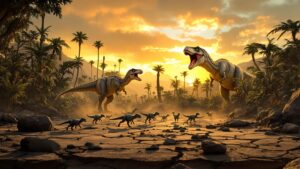
Dinosaur Evolution Explained: From Early Reptiles to Giant Predators
From small early reptiles to towering giants like Tyrannosaurus rex, dinosaur evolution is one of Earth’s most fascinating stories. This in-depth guide explores how dinosaurs emerged, diversified, and dominated prehistoric ecosystems—before a catastrophic extinction changed everything forever.

How Did Dinosaurs Evolve? A Beginner-Friendly Guide
Curious about how dinosaurs evolved? This easy-to-understand guide breaks down their journey from early reptiles to powerful giants, explaining key changes, survival strategies, and their lasting legacy in today’s world.
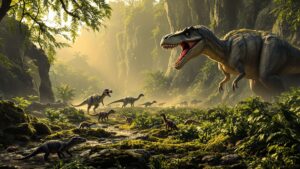
From Tiny Ancestors to Massive Giants: Dinosaur Evolution Story
How did dinosaurs evolve from small reptiles into some of the largest creatures to ever live? This beginner-friendly guide explores their incredible journey, from early origins to giant predators, and the lasting legacy they left behind.