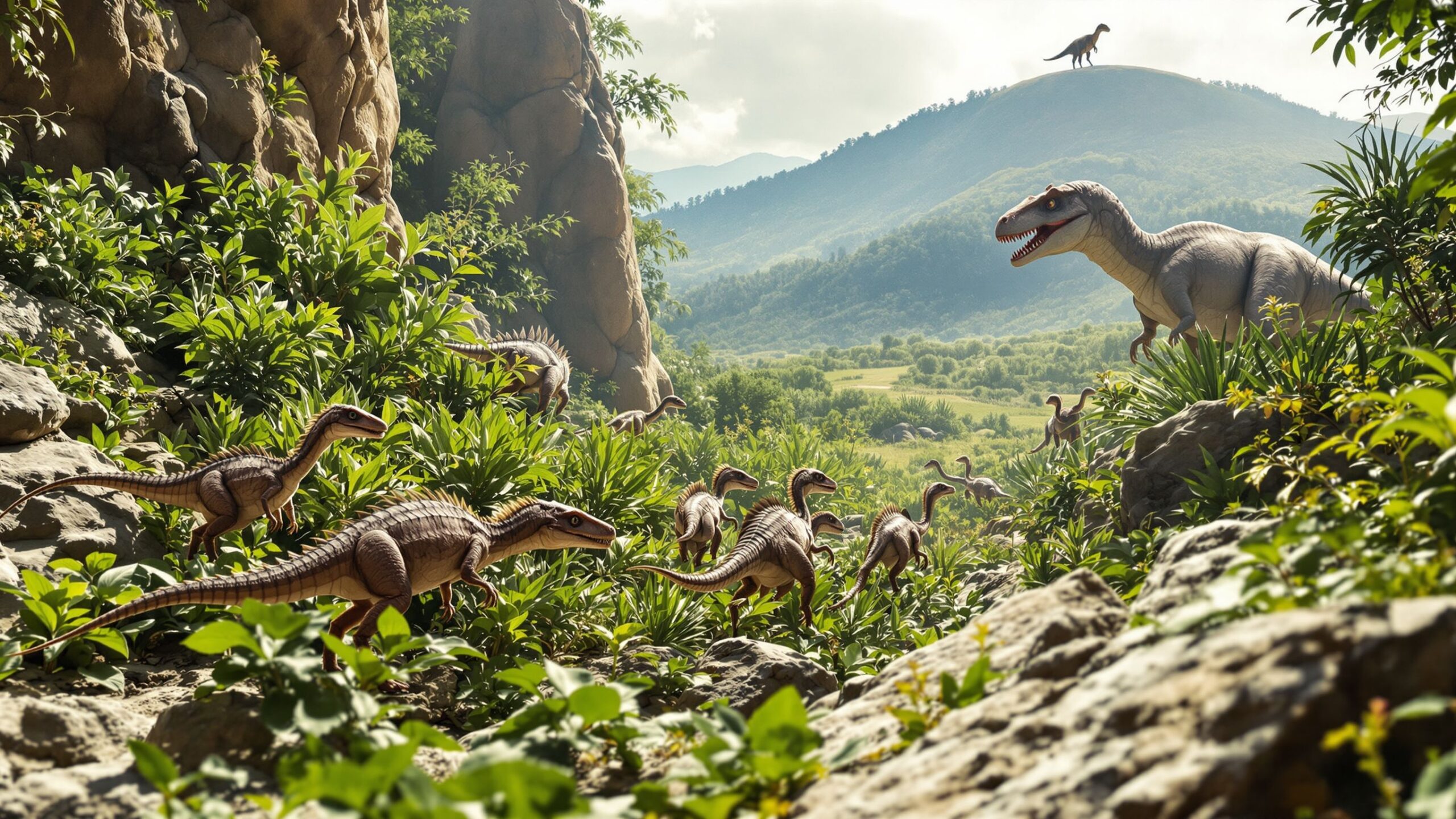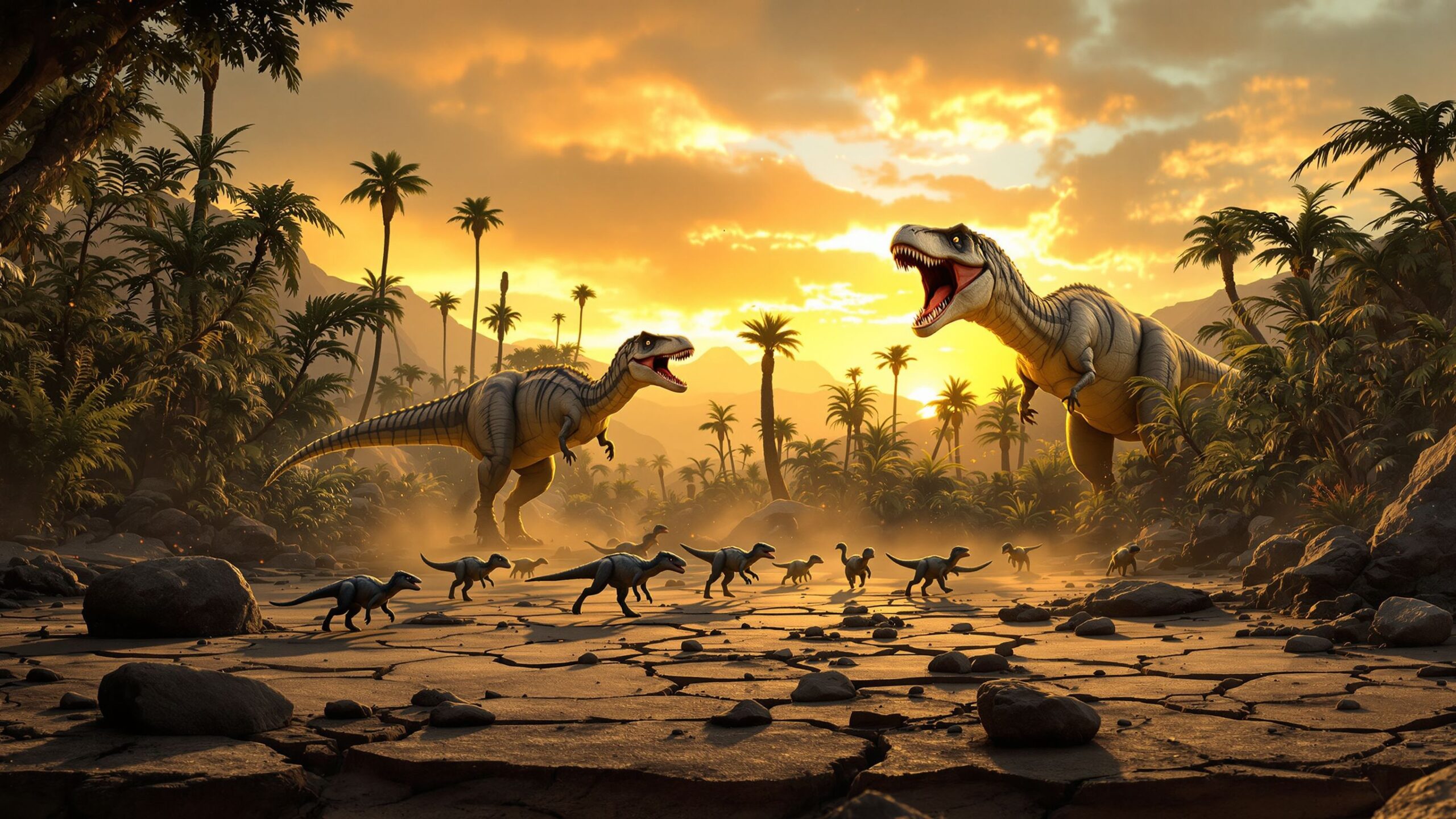
Long before the thunderous footsteps of towering predators shook the earth, the planet was home to a very different cast of creatures. Around 300 million years ago, during the late Paleozoic Era, early reptiles began to diversify into a wide range of forms. These primitive reptiles, evolving from amphibian ancestors, adapted to drier environments and laid the groundwork for what would eventually become the age of dinosaurs. The continents were still fused into the supercontinent Pangaea, and ecosystems were shaped by harsh climates and dramatic environmental changes. The mass extinction event at the end of the Permian period, known as the Permian-Triassic Extinction, wiped out nearly 90% of life on Earth. While devastating, this event created ecological opportunities for new groups to rise. Among those survivors were archosaurs, a group of reptiles that would eventually give rise to crocodiles, pterosaurs, and dinosaurs. These early archosaurs were not yet dominant, but they possessed key traits—upright posture, efficient lungs, and strong limbs—that would later define dinosaur success.
A: Dinosaurs first appeared during the Triassic Period, roughly 230 million years ago.
A: No. Dinosaurs and lizards are reptiles, but dinosaurs evolved from archosaur relatives, not modern lizards.
A: Their upright leg position, specialized hips, and body structure helped separate them from many other reptiles.
A: No. Many were small, agile animals, especially early dinosaurs and bird-like theropods.
A: Some did, especially many theropods closely related to birds.
A: Birds evolved from small feathered theropod dinosaurs.
A: Size helped with defense, feeding reach, digestion, and survival in certain environments.
A: No. Pterosaurs were flying reptiles, but they were not dinosaurs.
A: No. Animals like plesiosaurs and mosasaurs lived alongside dinosaurs but belonged to different reptile groups.
A: Non-avian dinosaurs are extinct, but birds are living dinosaurs descended from theropods.
The Rise of Archosaurs and the Birth of Dinosaurs
By the early Triassic period, archosaurs began to diversify rapidly. Some developed into armored herbivores, while others became swift, agile predators. Among these archosaurs were the earliest dinosaurs, small and relatively unassuming creatures that lived alongside many other reptiles. Early dinosaurs such as Eoraptor and Herrerasaurus appeared around 230 million years ago.
These early dinosaurs were typically bipedal, lightweight, and fast-moving, giving them an evolutionary advantage in certain environments. Unlike sprawling reptiles, dinosaurs stood upright with legs positioned beneath their bodies, allowing for more efficient movement. This adaptation would prove critical as dinosaurs began to outcompete other species.
While they were not initially the dominant life forms, dinosaurs steadily gained ground. Environmental shifts, including changing climates and vegetation patterns, favored their adaptability. By the late Triassic, dinosaurs had begun to diversify into distinct groups that would dominate the Jurassic and Cretaceous periods.
The Great Split: Saurischians and Ornithischians
One of the most significant moments in dinosaur evolution was the split into two major groups based on hip structure: Saurischia and Ornithischia. This divergence shaped the evolutionary paths of dinosaurs for millions of years.
Saurischians, often called “lizard-hipped” dinosaurs, included both carnivorous theropods and long-necked herbivorous sauropodomorphs. Among them were iconic predators like Tyrannosaurus rex and massive plant-eaters like Brachiosaurus. These dinosaurs evolved into some of the largest land animals ever to exist.
Ornithischians, or “bird-hipped” dinosaurs, were primarily herbivores. They developed a wide array of defensive and feeding adaptations, from armored plates to beak-like mouths. Famous examples include Stegosaurus and Triceratops. Despite their name, birds did not evolve from ornithischians but rather from theropod dinosaurs within the saurischian group.
The Jurassic Explosion: Giants Take Over
The Jurassic period marked the true rise of dinosaurs as the dominant terrestrial animals. Lush vegetation and warm climates created ideal conditions for rapid growth and diversification. During this time, dinosaurs evolved into enormous sizes, especially among the sauropods.
Gigantic herbivores like Diplodocus roamed vast plains, using their long necks to feed on vegetation unreachable by other animals. These massive creatures likely lived in herds, offering protection through sheer numbers.
Predators also grew in size and power. Allosaurus became one of the apex hunters of its time, equipped with sharp teeth and powerful jaws. The predator-prey dynamic drove evolutionary arms races, leading to stronger defenses in herbivores and more efficient hunting strategies in carnivores.
The Jurassic was also a time of experimentation. Dinosaurs developed diverse body shapes, feeding strategies, and behaviors, laying the foundation for even greater diversity in the Cretaceous period.
The Evolution of Feathers and Flight
One of the most fascinating developments in dinosaur evolution was the emergence of feathers. Initially, feathers likely evolved for insulation or display rather than flight. Fossil evidence from species like Velociraptor shows that many theropods possessed feather-like structures.
Over time, these feathers became more complex and adapted for flight in certain lineages. This evolutionary pathway eventually led to the first true birds, such as Archaeopteryx. Archaeopteryx displayed a mix of reptilian and avian traits, including teeth, a long bony tail, and feathered wings.
The transition from ground-dwelling dinosaurs to flying birds represents one of the most remarkable evolutionary transformations in Earth’s history. It also highlights that dinosaurs did not entirely disappear; their descendants still soar in the skies today.
The Cretaceous Apex: The Age of Giants and Specialists
The Cretaceous period saw dinosaurs reach their peak in diversity and specialization. Ecosystems became more complex, and dinosaurs adapted to a wide range of niches. Massive herbivores coexisted with highly specialized predators, each finely tuned to their environment.
At the top of the food chain stood formidable predators like Tyrannosaurus rex, whose powerful bite and keen senses made it one of the most efficient hunters in history. Meanwhile, herbivores like Ankylosaurus developed heavy armor and clubbed tails to defend against attacks.
Plant life also evolved during this time, with flowering plants becoming more widespread. This shift influenced dinosaur diets and behavior, leading to new feeding strategies and adaptations. The interplay between flora and fauna drove continued evolutionary innovation.
Mass Extinction and the End of the Dinosaur Era
Despite their dominance, dinosaurs were not immune to global catastrophe. Around 66 million years ago, a massive asteroid impact triggered the Cretaceous-Paleogene Extinction Event. The collision caused widespread fires, climate changes, and a collapse of ecosystems.
Most dinosaur species were unable to survive these rapid changes. Large, non-avian dinosaurs disappeared, marking the end of an era. However, not all dinosaurs perished. Small, feathered theropods—early birds—managed to survive and adapt to the new world.
This extinction event reshaped life on Earth, allowing mammals to rise and eventually dominate. It also marked a turning point in evolutionary history, demonstrating the fragile balance of ecosystems.
How Fossils Reveal the Story of Evolution
Our understanding of dinosaur evolution comes largely from fossils, which provide snapshots of ancient life. Paleontologists study bone structures, footprints, and even preserved soft tissues to reconstruct how dinosaurs lived and evolved.
Advancements in technology, such as CT scanning and molecular analysis, have revolutionized the field. Scientists can now examine internal structures and even infer aspects of dinosaur physiology and behavior. Fossil discoveries continue to refine our understanding, revealing new species and challenging old assumptions.
Each fossil tells a story, contributing to a larger narrative that spans millions of years. From tiny early dinosaurs to colossal giants, the fossil record captures the dynamic and ever-changing nature of evolution.
Dinosaurs Today: Living Legacy in Birds
While the age of giant dinosaurs has long passed, their legacy lives on in modern birds. Every sparrow, eagle, and chicken is a direct descendant of theropod dinosaurs. Features such as hollow bones, feathers, and certain skeletal structures link birds to their ancient ancestors.
This connection transforms our perception of dinosaurs. Rather than viewing them as entirely extinct, we can see them as part of a continuous evolutionary lineage. Birds represent a surviving branch of the dinosaur family tree, thriving in environments across the globe.
Understanding this link also highlights the adaptability of life. Even after catastrophic events, evolution finds a way to persist and diversify, carrying forward the legacy of ancient species.
The Ongoing Journey of Discovery
Dinosaur evolution is not a closed chapter but an ongoing story. New fossil discoveries are made every year, offering fresh insights into how these incredible creatures lived, adapted, and evolved. Scientists continue to debate and refine theories, driven by new evidence and innovative research methods.
From the humble beginnings of early reptiles to the awe-inspiring giants of the Mesozoic Era, dinosaur evolution is a testament to the power of natural selection and adaptation. It is a story of survival, transformation, and resilience that continues to captivate scientists and the public alike.
As research progresses, our understanding of dinosaurs will only deepen, revealing even more about the ancient world they once ruled. Their story reminds us that evolution is a dynamic process, constantly shaping life on Earth in ways both subtle and profound.