Dinosaurs are among the most fascinating creatures ever to walk the Earth. For more than 165 million years, these remarkable animals evolved into an incredible variety of shapes and sizes, ranging from tiny feathered hunters no larger than modern birds to colossal giants weighing more than a dozen elephants. Their success was no accident. Every part of a dinosaur’s body—from its skull and teeth to its legs and tail—was shaped by evolution to help it survive in its environment Understanding dinosaur anatomy provides valuable insight into how these prehistoric animals lived, moved, hunted, defended themselves, and interacted with the world around them. Although dinosaurs disappeared approximately 66 million years ago, their fossils continue to reveal extraordinary details about their bodies and lifestyles. Modern technology, including CT scans, computer modeling, and biomechanical analysis, has allowed scientists to reconstruct dinosaur anatomy with greater accuracy than ever before. This beginner’s guide explores the major components of dinosaur anatomy and explains how these ancient animals were built to thrive in diverse habitats across the globe.
A: Their upright leg posture, hip structure, and unique skeletal features set them apart.
A: Tails helped with balance, movement, defense, and communication.
A: They study teeth, jaws, fossilized stomach contents, bite marks, and coprolites.
A: No. Some had scales, some had feathers, and some may have had a mix of both.
A: Their anatomy, growth patterns, food supply, and evolutionary advantages helped some species reach enormous sizes.
A: Footprints reveal speed, stride, group behavior, posture, and movement style.
A: Some were massive, but many had internal spaces that made them lighter than they looked.
A: Healed breaks, bite marks, infections, and bone growth can reveal wounds and survival stories.
A: Skulls show diet, senses, brain size, jaw power, and species identity.
A: Yes. Modern birds evolved from a group of feathered theropod dinosaurs.
The Dinosaur Skeleton: The Framework of Life
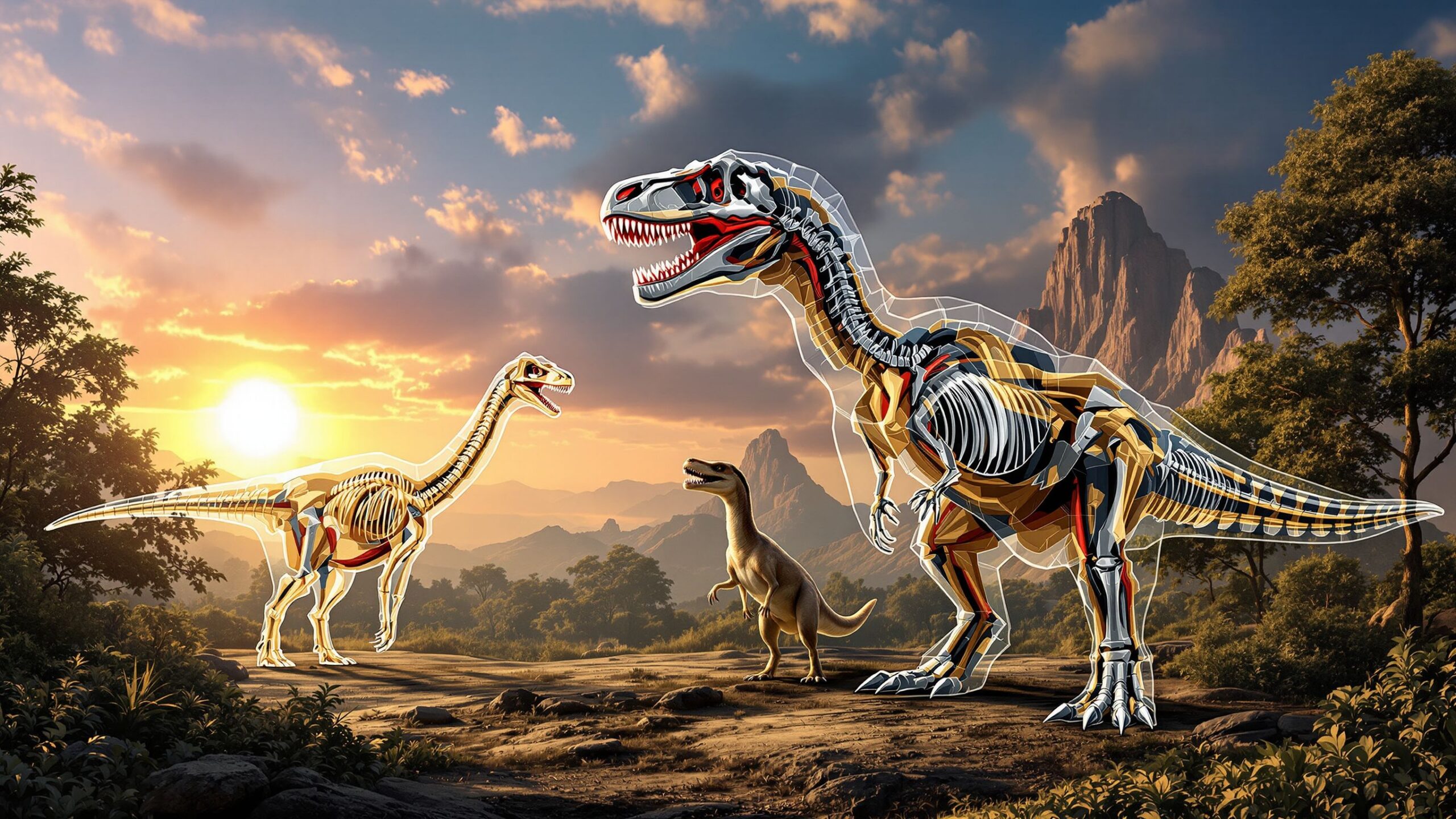
The skeleton formed the foundation of every dinosaur’s body. Like modern reptiles, birds, and mammals, dinosaurs were vertebrates, meaning they possessed an internal skeleton built around a backbone.
A dinosaur’s skeleton provided support, protection, and structure. It allowed muscles to attach and work together to create movement. Without a strong skeletal framework, giant dinosaurs such as the long-necked sauropods would never have been able to support their enormous weight.
Dinosaur skeletons varied dramatically depending on species and lifestyle. Predatory dinosaurs typically possessed lightweight but strong skeletons designed for speed and agility. Massive herbivores developed thick, weight-bearing bones capable of supporting bodies that could exceed 70 tons.
One of the most important features distinguishing dinosaurs from many other reptiles was the position of their limbs. Unlike crocodiles and lizards, whose legs often extend outward from the sides of the body, dinosaurs generally had upright legs positioned directly beneath them. This posture improved efficiency, stability, and mobility.
Understanding Dinosaur Hips
One of the defining characteristics of dinosaurs lies in their hip structure. In fact, scientists classify dinosaurs into two major groups based largely on the arrangement of their hip bones.
The first group, called saurischians, included famous dinosaurs such as Tyrannosaurus rex, Velociraptor, and the giant sauropods. These dinosaurs possessed a lizard-like hip arrangement.
The second group, known as ornithischians, included Triceratops, Stegosaurus, and Ankylosaurus. These dinosaurs had a bird-like hip structure.
Interestingly, despite the name “bird-hipped dinosaurs,” modern birds actually evolved from saurischian dinosaurs rather than ornithischians. This surprising discovery demonstrates how evolutionary history can be more complex than it initially appears.
The hip structure played a crucial role in locomotion, balance, and weight distribution. It served as the central anchor point connecting the powerful muscles responsible for movement.
The Skull: A Window into Dinosaur Lifestyles
A dinosaur’s skull reveals an enormous amount about how it lived. Skull shape varied dramatically depending on diet, behavior, and evolutionary adaptations.
Carnivorous dinosaurs generally possessed large skulls equipped with sharp teeth and powerful jaw muscles. Tyrannosaurus rex, for example, had one of the strongest bite forces of any land animal ever discovered. Its massive skull was designed to withstand tremendous pressures while crushing bone.
Herbivorous dinosaurs often had specialized skulls adapted for cropping, chewing, or grinding plant material. Some species developed beaks similar to modern birds and turtles. Others evolved complex dental batteries containing hundreds of teeth working together to process vegetation efficiently.
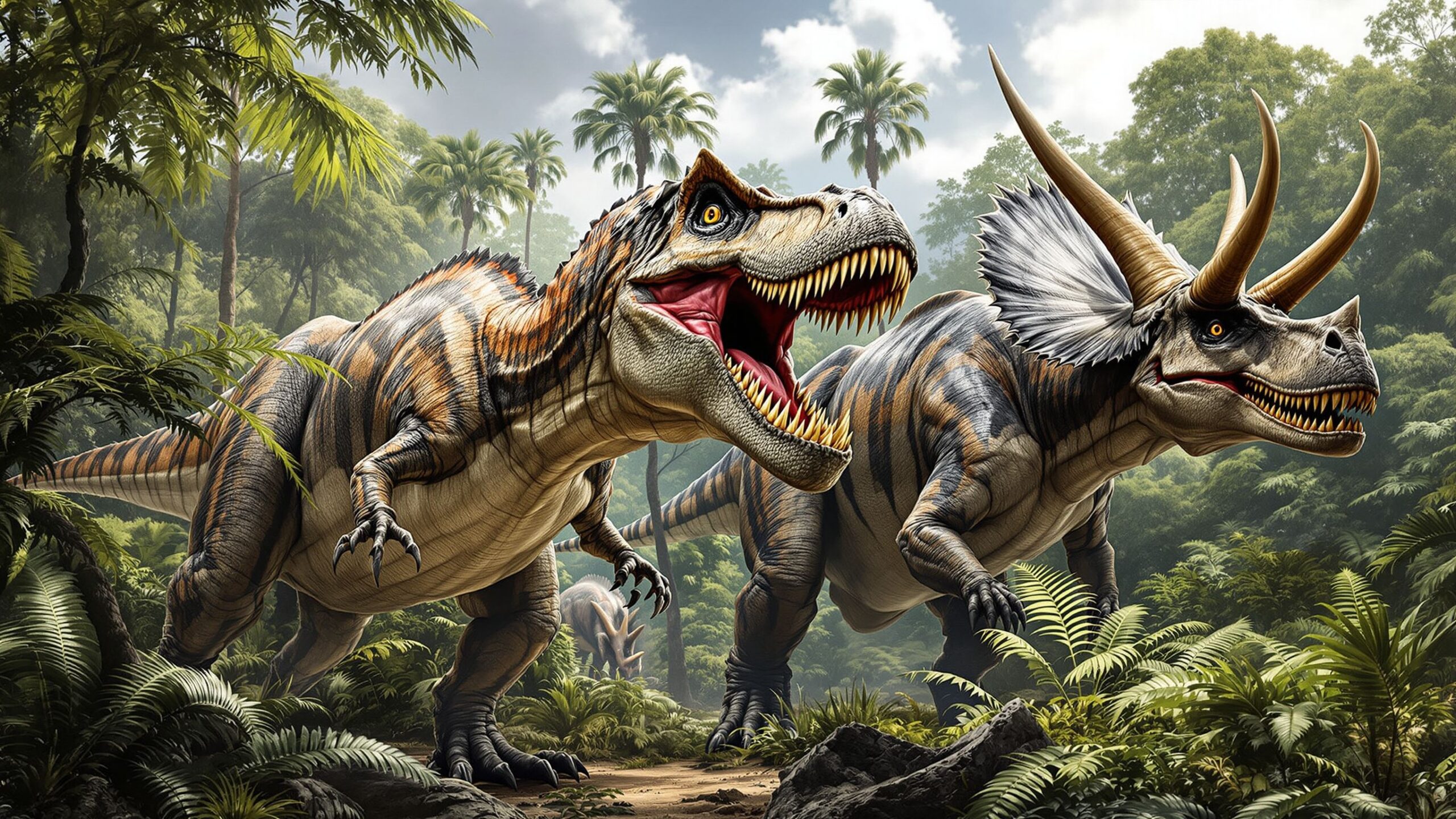
Many dinosaur skulls also featured elaborate ornaments. Horns, crests, frills, and bumps may have been used for defense, species recognition, communication, or attracting mates.
The famous three-horned Triceratops possessed a large frill and prominent facial horns. Meanwhile, Parasaurolophus developed a long hollow crest that may have functioned as a resonating chamber for producing sounds.
Dinosaur Teeth: Tools for Survival
Teeth were among the most specialized structures in dinosaur anatomy. Their shape often reflected a dinosaur’s diet and feeding habits.
Predatory dinosaurs possessed sharp, serrated teeth designed to puncture flesh and tear meat. These teeth acted much like steak knives, slicing through muscle and tissue with remarkable efficiency.
Tyrannosaurus rex had banana-shaped teeth that combined strength and cutting ability. Velociraptor possessed curved teeth ideal for gripping struggling prey.
Plant-eating dinosaurs evolved completely different dental adaptations. Some had leaf-shaped teeth suitable for shredding vegetation. Others developed rows of tightly packed teeth that continuously replaced themselves throughout life.
Hadrosaurs, often called duck-billed dinosaurs, possessed some of the most sophisticated teeth in dinosaur history. Their dental batteries contained hundreds of teeth arranged in grinding surfaces capable of processing tough plant material.
Many dinosaurs replaced lost teeth regularly. Some species may have grown thousands of replacement teeth over their lifetimes.
The Neck: Balancing Reach and Strength
Necks played an important role in dinosaur anatomy, particularly among giant herbivores.
Sauropods such as Brachiosaurus and Diplodocus evolved extraordinarily long necks. These structures allowed them to reach vegetation high above the ground while minimizing the need to move their enormous bodies.
A long neck provided feeding advantages, energy efficiency, and access to resources unavailable to smaller competitors.
Despite their immense size, sauropod necks were surprisingly lightweight. Many vertebrae contained air-filled spaces similar to those found in modern birds. These hollow structures reduced weight while maintaining strength.
Carnivorous dinosaurs typically possessed shorter, stronger necks that supported large heads and powerful jaws. Their neck muscles helped stabilize the skull during hunting and feeding.
Dinosaur Muscles: Engines of Movement
While bones provide structure, muscles generate movement. Unfortunately, muscles rarely fossilize, making them more difficult to study than skeletons.
Scientists reconstruct dinosaur musculature by examining attachment points on fossilized bones and comparing them with living animals such as birds and crocodilians.
Large muscle groups controlled locomotion, feeding, breathing, and posture. The hind limbs often housed some of the most powerful muscles in the body.
Predators relied on strong leg muscles for running and pursuing prey. Massive herbivores developed powerful support muscles capable of carrying tremendous body weight.
Tail muscles also played an important role. In many dinosaurs, the tail served as a counterbalance and contributed significantly to movement and stability.
Modern biomechanical studies suggest many dinosaurs were surprisingly athletic. Some smaller species may have reached speeds comparable to modern running animals.
The Forelimbs: More Than Tiny Arms
Forelimbs varied enormously among dinosaur groups.
The tiny arms of Tyrannosaurus rex are among the most famous anatomical mysteries in paleontology. Although small relative to its body, these arms were surprisingly muscular and capable of generating considerable force.
Other predators, such as Allosaurus and Deinonychus, possessed longer arms equipped with sharp claws used for grasping prey.
Herbivorous dinosaurs often adapted their forelimbs for supporting body weight. Large quadrupedal species walked on all fours, distributing their massive weight across both front and rear limbs.
Some dinosaurs evolved specialized forelimb structures for digging, defense, or feeding. The diversity of limb anatomy reflects the wide range of ecological roles dinosaurs occupied.
The Hind Limbs: Power and Mobility
The hind limbs were among the most important components of dinosaur anatomy.
Nearly all dinosaurs relied heavily on their rear legs for movement. Whether running, walking, or standing, the hind limbs generated much of the power required for locomotion.
Theropod dinosaurs, including Tyrannosaurus and Velociraptor, possessed long, muscular legs optimized for speed and agility. Their limb proportions suggest active lifestyles involving pursuit and hunting.
Large herbivores developed sturdy, column-like legs designed to support enormous body masses. Sauropods, despite their size, were capable of covering significant distances while foraging.
Joint structure, muscle attachments, and bone proportions reveal how different species moved. Some were built for speed, while others prioritized stability and endurance.
Claws and Feet: Built for Function
Dinosaur feet varied dramatically depending on lifestyle and habitat.
Predatory dinosaurs often possessed sharp claws that aided in hunting, gripping prey, and maintaining traction. The famous sickle-shaped claw of Velociraptor may have been used to pin prey during attacks.
Herbivores generally possessed broader feet designed for weight support and efficient movement. Large sauropods developed massive foot structures capable of distributing their enormous weight across the ground.
Footprints preserved in ancient sediments provide valuable information about dinosaur behavior. Fossil trackways reveal walking speeds, group movement patterns, and even interactions between different species.
These ancient footprints act like snapshots frozen in time, offering direct evidence of how dinosaurs moved through their environments.
The Tail: A Critical Multi-Purpose Structure
The tail was one of the most versatile anatomical features in dinosaur evolution.
In many species, the tail acted as a counterbalance that helped maintain stability during movement. Large predators relied on their tails to balance their massive heads and upper bodies while running.
Some dinosaurs used their tails as defensive weapons. Ankylosaurus evolved a powerful club-like tail capable of delivering devastating blows. Stegosaurus possessed a spiked tail that may have deterred predators.
Sauropods developed long whip-like tails that potentially served multiple purposes, including communication, defense, and balance.
The tail also housed important muscle groups that contributed to locomotion and posture.
Armor, Horns, and Defensive Adaptations
Not all dinosaurs relied on speed or size for protection. Many evolved specialized defensive structures.
Ankylosaurs developed extensive body armor composed of bony plates embedded within the skin. These natural shields protected vulnerable body regions from predators.
Stegosaurs evolved large plates along their backs and sharp spikes on their tails. Although scientists continue debating the exact purpose of the plates, they likely played roles in display, temperature regulation, or defense.
Ceratopsians such as Triceratops developed impressive horns and frills. These structures may have served multiple functions, including protection, competition, and visual communication.
The variety of defensive adaptations demonstrates the evolutionary arms race between predators and prey throughout dinosaur history.
Feathers and Skin: Beyond Scaly Reptiles
For many years, dinosaurs were portrayed as giant scaly reptiles. Modern discoveries have dramatically changed this image.
Fossil evidence now confirms that many dinosaurs possessed feathers. Some species were completely feathered, while others may have combined scales and feathers across different body regions.
Feathers likely evolved initially for insulation, display, communication, or brooding behavior before eventually contributing to flight in bird ancestors.
Skin impressions reveal a surprising diversity of textures. Some dinosaurs possessed pebbly scales, while others displayed complex patterns and structures.
Scientists have even identified evidence of coloration in certain feathered dinosaurs by examining microscopic pigment-containing structures preserved within fossils.
These discoveries continue transforming our understanding of dinosaur appearance.
Breathing and Internal Anatomy
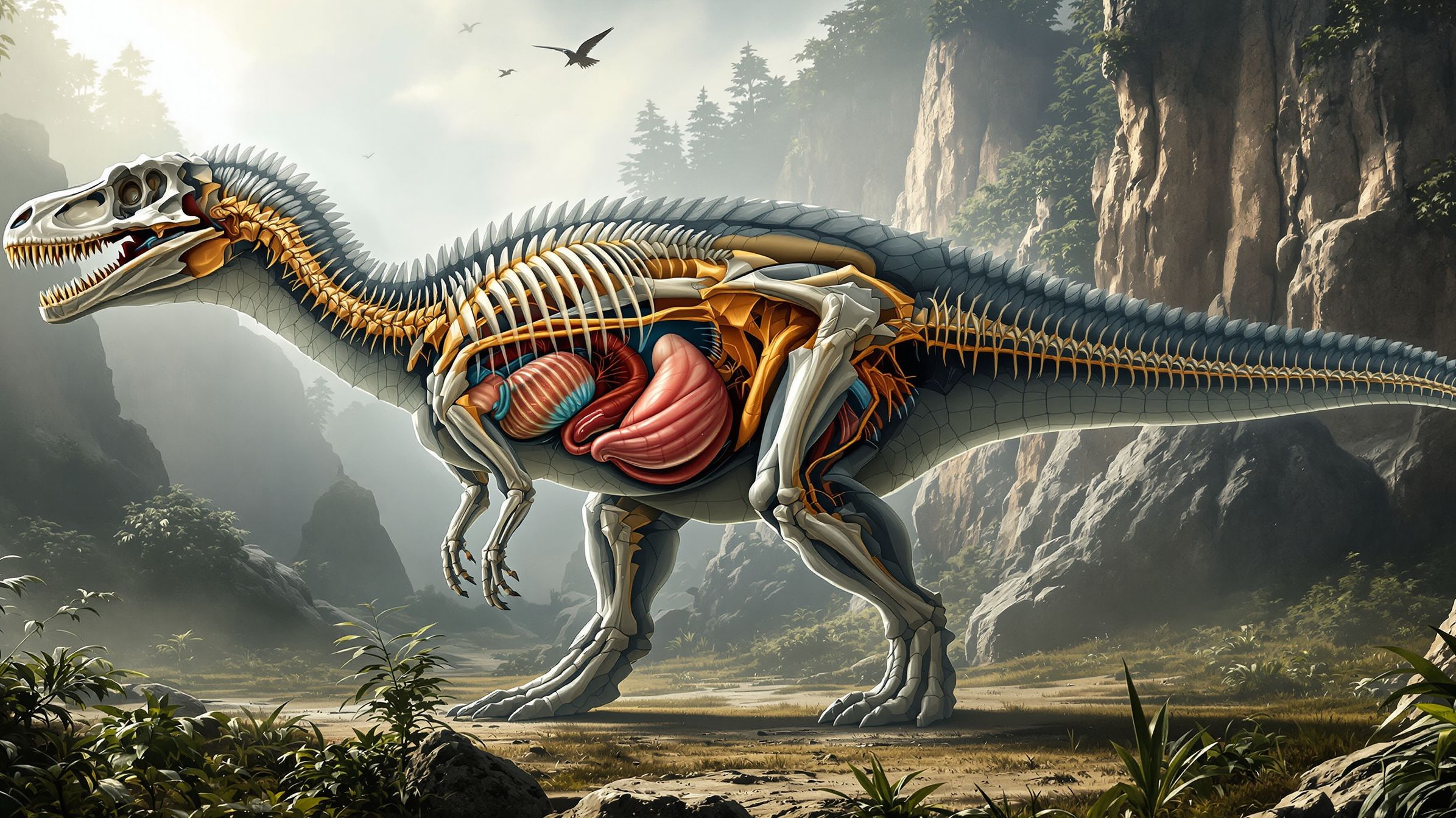
Although soft tissues rarely fossilize, scientists have learned much about dinosaur internal anatomy through careful study.
Evidence suggests many dinosaurs possessed highly efficient respiratory systems similar to those found in modern birds. Air sacs connected to the lungs may have improved oxygen delivery and supported active lifestyles.
This advanced breathing system could help explain how large dinosaurs maintained energy levels despite their enormous size.
Research also indicates dinosaurs likely possessed efficient cardiovascular systems capable of pumping blood throughout large bodies. Massive sauropods would have required powerful hearts to circulate blood to their elevated heads and long necks.
The study of internal anatomy continues to reveal how dinosaurs functioned as living organisms rather than merely collections of bones.
How Dinosaur Anatomy Changed Through Evolution
Dinosaur anatomy was not static. Over millions of years, evolutionary pressures produced remarkable adaptations.
Small early dinosaurs gave rise to giant sauropods, heavily armored herbivores, horned species, duck-billed grazers, and agile predators. Each lineage developed anatomical innovations suited to its environment.
Natural selection favored traits that improved survival and reproduction. Stronger jaws, longer necks, better defenses, faster legs, and more efficient respiratory systems all emerged through this process.
The evolution of feathers ultimately led to one of the most significant transitions in Earth’s history: the origin of birds.
Today, every bird represents a living dinosaur, carrying anatomical features inherited from ancient ancestors.
Conclusion
Dinosaur anatomy tells an extraordinary story of adaptation, innovation, and survival. From powerful skeletons and specialized teeth to balancing tails, armored bodies, and feathered coverings, every part of a dinosaur’s body evolved to meet specific challenges in its environment.
The incredible diversity of dinosaur anatomy allowed these animals to dominate terrestrial ecosystems for over 165 million years. Whether towering giants browsing treetops, armored herbivores defending themselves from predators, or agile hunters pursuing prey, dinosaurs were among the most successful vertebrates in Earth’s history.
As new fossil discoveries continue to emerge and technology advances, scientists uncover even more details about how dinosaurs were built. Each new discovery adds another piece to the puzzle, helping us better understand the remarkable creatures that once ruled the prehistoric world and whose descendants still soar through our skies today.