Some preservation begins within weeks, but a fossil has no universal finish date
Minerals can begin preserving delicate tissue within weeks under suitable conditions, while other changes continue through a much longer burial history. That does not mean a dinosaur fossil forms in one fixed number of weeks, years or millennia. A bone described as one hundred million years old has an age in Earth’s history; the separate processes that preserved it did not necessarily run continuously for that entire interval. The clearest answer comes from timing a particular change: a burial event, the first growth of a mineral, or the development of a protective cemented lump. Experiments on shrimp and research on shell-bearing concretions give unusually specific examples. They show how quickly some crucial preservation can occur, while leaving the later survival of the resulting fossils as a different part of the story.
A: No. Its geological age and the durations of particular preservation processes are different quantities.
A: Researchers observed the start and increasing extent of calcium phosphate mineralization in decaying tissue.
A: Pore connections and fluid pathways can expose them to different chemical conditions.
A: They concern carbonate cement growing around remains rather than phosphate preserving details inside soft tissue.
A: There is no universal endpoint; later fluids and weathering can continue to modify it.
A: Yes. Erosion and redeposition can rework older fossils into younger deposits.
A: Color reflects composition and alteration rather than a dependable duration scale.
A: Relationships among cracks, mineral growth, and sediment can reveal a relative sequence.
A: Surface conditions introduce new stresses that differ from its protected burial environment.
A: It should identify the process, material, conditions, and evidence being timed.
Several clocks begin at different moments
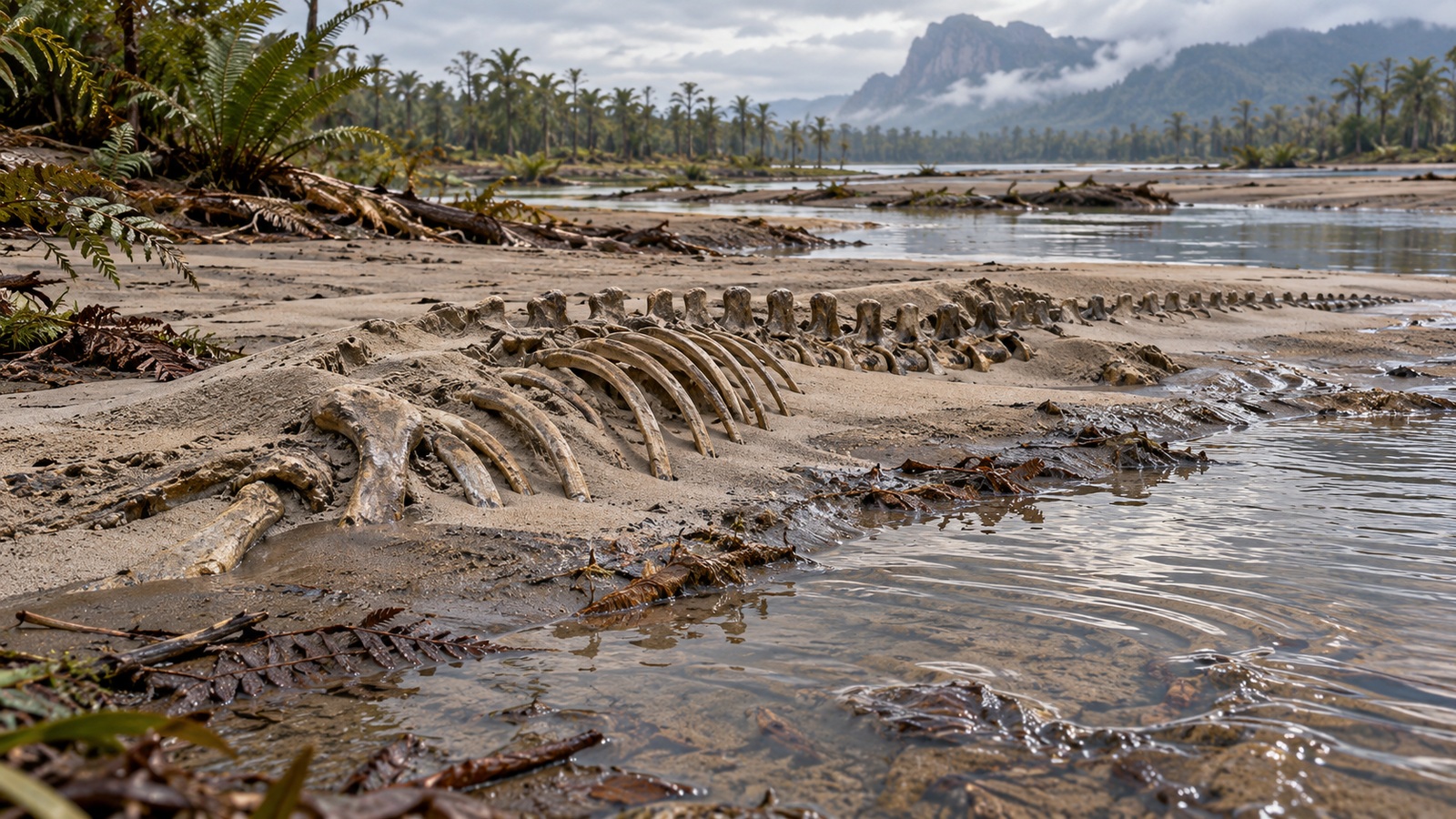
Death starts one possible sequence, but a fossil need not represent a dead body. A footprint begins when an animal presses into a surface, and a burrow begins during activity underground. Each kind of evidence has its own vulnerable interval. Comparing their formation times without identifying the material being preserved mixes unlike biological and geological events.
Even for a bone, separate clocks track exposure, burial, mineral alteration, and residence within rock. These intervals can overlap rather than follow a tidy sequence. Sediment might accumulate while water already deposits minerals in pores. A useful explanation names the process before assigning a duration and allows several processes to operate together.
Burial can be sudden without finishing preservation
A flood, collapsing bank, or other sedimentary event can cover remains quickly. The brief deposition of that layer protects material from some kinds of disturbance and changes the conditions around it. Yet burial does not instantly convert everything into a stable fossil. Water, microbes, and chemical reactions can continue beneath the surface.
Fast covering can be particularly valuable when fragile structures would otherwise disappear. It can reduce access by larger scavengers and limit mechanical disturbance. The consequences depend on the sediment and local environment, however. A deeply buried object can still dissolve, deform, or decay instead of becoming recognizable evidence.
The duration of the burial event is therefore only one answer to a narrow timing problem. It does not determine the time needed to fill pores, modify tissues, or harden surrounding sediment. A catastrophic event and a long burial history are entirely compatible. The catastrophe explains emplacement, while subsequent chemistry explains much of the final specimen.
Decay determines which early opportunities remain available
Soft tissues change rapidly compared with many mineralized hard parts, although their survival varies with temperature, oxygen, water chemistry, and microbial activity. Preservation must capture relevant information before it is destroyed or transformed beyond recognition. That creates deadlines for particular structures rather than a universal deadline for the whole organism. A leaf outline, a tooth, and muscle tissue do not lose information at identical rates. Early chemical conditions can preserve one component while another disappears. Timing matters because the biological target itself is changing, not because a buried animal is waiting motionless for a mineralization switch to turn on.
Mineral deposition requires both supply and suitable chemistry
Groundwater can transport dissolved substances through sediment and into porous remains. Minerals precipitate only when local conditions allow, rather than whenever water touches a bone. Concentration, acidity, temperature, and the availability of suitable surfaces influence that behavior. A continuous supply of water does not guarantee a constant rate of preservation.
Flow pathways also matter. A porous sand layer can conduct water differently from compact clay, while cracks may concentrate movement into narrow channels. Different parts of the same specimen may therefore encounter different chemical histories. The result can be uneven mineral filling rather than one homogeneous transformation completed everywhere at once.
The National Park Service distinguishes mineral filling of pores from replacement, processes that may occur together. That distinction matters for duration because different features may record different reactions. Timing one mineral phase would not necessarily time every alteration in the object. A fossil’s composition can preserve evidence of successive episodes rather than one uninterrupted operation.
Shrimp tissue began to mineralize within two weeks
In Briggs and Kear’s 1993 decay experiments, parts of shrimp became mineralized in calcium phosphate. Mineral growth began within two weeks and increased over at least four to eight weeks. It preserved details of muscle tissue, demonstrating a genuine preservation process rather than simply drying a carcass into a recognizable outline. The shrimp itself supplied the phosphate, particularly effective under conditions closed to oxygen.
This is a useful answer to one timing problem: fine soft-tissue information could be captured while decay was still occurring. It is not an experimentally measured date for turning a whole dinosaur into a finished rock specimen. The mineralized tissue, the sediment around an animal and the later geological history remain different targets. Nevertheless, the experiment removes the assumption that every important fossil-preserving reaction must take millions of years.
Small concretions could grow over weeks to months
A concretion is a body of sediment cemented more strongly than its surroundings, sometimes around an organic center. Yoshida and colleagues investigated small carbonate concretions around tusk-shells and used chemical patterns and transport modeling to estimate formation over weeks to months. Decaying tissue helped provide the carbon involved in carbonate growth, and a sharp boundary between cemented and surrounding sediment constrained their interpretation. The timescale applies to these small bodies under the studied conditions. It does not mean that every concretion, regardless of size and chemistry, grew at the same speed. This example concerns early cement formation around remains, a different process from calcium phosphate preserving shrimp muscle. Both could secure information early, before the enclosing deposit completed the rest of its geological history.
Sediment hardening has a timeline of its own
Loose sediment can become sedimentary rock through compaction, cementation, and related changes after deposition. Fossil preservation may begin before the host material becomes firm rock. Conversely, chemical alteration of remains may continue after substantial hardening. The two histories interact without needing to share an identical start or finish.
A fossil within sandstone therefore does not establish that its pores and the surrounding sediment received cement simultaneously. Microscopic relationships can show which material grew first or which filled a later crack. Those relative sequences help geologists reconstruct events. They provide order even when an exact number of years cannot be assigned to each step.
This is one reason a classroom sequence should be read as an introduction rather than a rigid schedule. Burial, rock formation, and preservation are often shown as separate panels because that is easy to follow. In a natural deposit, the boundaries are less neat. Understanding the overlap produces a more realistic account without making the basic sequence useless.
Different materials do not share one finish line
A mineral-filled bone, a flattened carbon-bearing leaf, and an insect enclosed in ancient resin preserve information through different pathways. Asking when each became fully fossilized can conceal an arbitrary definition of completion. Some retain original material; others preserve shape after the original has disappeared. There is no requirement that every specimen reach total mineral replacement.
Even an apparently stable fossil can remain chemically responsive to its environment. Later groundwater may dissolve minerals, deposit new ones, or alter existing material. Preservation is therefore a history of retained information rather than a certificate that chemistry has permanently stopped. A recognizable fossil can be changed further without ceasing to be evidence of ancient life.
A geological age times the animal’s world, not every chemical reaction
A date for a dinosaur-bearing deposit places that evidence within geological history. Suitable minerals in volcanic layers can supply numerical constraints, while the order of beds connects those dates with fossils. The Natural History Museum’s formation overview places mineralization within this longer sequence. Its duration cannot be read directly from the total age of the specimen.
For example, a fossil could preserve tissue during early burial and acquire another mineral coating much later. The early preservation and later coating would both be real parts of its history. Neither would by itself establish the animal’s age without the geological relationships needed to interpret it.
Color and weight are not stopwatches either. Different mineral mixtures can make equally old specimens look different, and similar-looking fossils can have very different ages. A dark, dense specimen is not necessarily one that took longer to form. The relevant duration belongs to a process, not to a particular visual style of fossil.
Reworking can give a fossil more than one burial history
Erosion may remove a fossil from an older deposit and transport it into younger sediment. The specimen then acquires another context without losing the age of the organism it represents. Its surfaces might record abrasion, weathering, or later mineral deposits associated with the second episode. Researchers investigate such histories by comparing the fossil with the surrounding assemblage and sediment. A fossil and its final host layer cannot always be assumed to have originated together. This complication makes precise field context essential when separating the age of the biological evidence from the age of its latest resting place.
Exposure begins a new interval of vulnerability
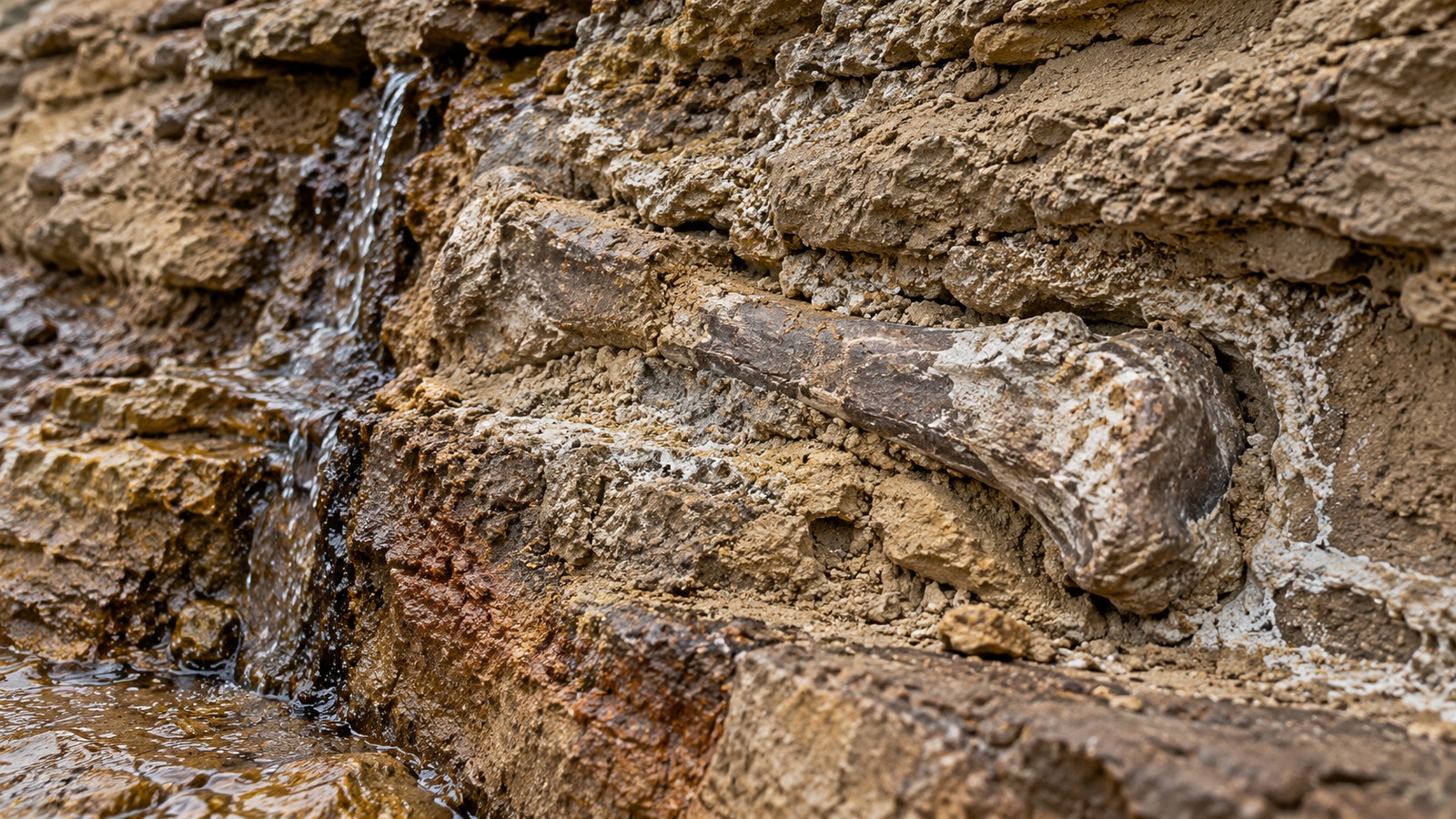
Uplift and erosion eventually make buried evidence accessible. The visible fossil may have survived within rock for an immense time but begin deteriorating rapidly at the surface. Sunlight, temperature changes, water, salt growth, and mechanical breakage can threaten newly exposed material. Its long geological survival does not guarantee durability during the next rainy season.
Discovery therefore samples a limited opportunity between exposure and destruction. Some fossils are found shortly after emerging, while others have already lost important portions. That interval affects what collectors and researchers can observe. It is another clock in the specimen’s history, distinct from both its ancient age and the timing of early preservation.
Compare the examples without giving them one shared finish line
The shrimp experiment timed the onset and progress of mineral preservation in tissue. The tusk-shell study estimated how quickly carbonate cement formed small concretions around remains. Neither measured the number of years that a dinosaur bone must spend underground before becoming a fossil. Their importance is that specific early preservation steps can be fast enough to protect material that otherwise disappears during decay.
For many natural fossils, the evidence gives an order of events more securely than an elapsed time. Minerals lining a crack formed after the crack opened; a coating over those minerals formed later again. Such relationships can reveal pauses and separate episodes. They cannot automatically turn each episode into a number of years.
A complete account can therefore contain both a rapid beginning and an immense age. Burial may happen during a short event, crucial mineral growth may start early, and the specimen may then survive within changing rocks for millions of years. Later fluids can renew alteration, followed by exposure and weathering at the surface. The short intervals and the long ones describe different parts of the same history rather than contradictory accounts.
The useful answer is a set of times, not a minimum waiting period
Some measured or modeled preservation steps operate on week-to-month timescales, as these studies demonstrate. Other fossils lack the evidence needed to time their initial preservation so closely. The necessary distinction is between preserving particular information and completing every possible change in a specimen. A fossil need not wait for all chemistry to stop, nor undergo total replacement, to preserve evidence of past life. When the material, reaction and conditions are specified, a formation-time estimate can be meaningful. Without them, an impressive age or a fast experimental result alone cannot provide the whole answer.