A fossil survives a chain of events that usually destroys other remains
A dinosaur skeleton does not become a fossil simply because the animal dies. Its remains enter a sequence of decay, disturbance, burial, chemical alteration, and geological change, with opportunities for information to disappear at every stage. Most organisms leave no recognizable fossil at all. The exceptional survivors may retain original material, altered tissue, an external shape, or evidence of an activity rather than a body. Understanding fossil formation therefore means following more than the familiar idea of a bone turning to stone. It means examining what was preserved, what was lost, and how the surrounding sediment and later rock history shaped the record. A fossil is the result of that history, carrying evidence both of ancient life and of the processes that allowed a small part of it to reach the present.
A: Discovery is a recent stage in their history, not a requirement for ancient preservation.
A: A surviving element may retain strong evidence for a particular anatomical or environmental investigation.
A: Matching anatomy and rock relationships can test their former connection; proximity alone cannot establish it.
A: Its matrix can retain physical and environmental relationships that become difficult to recover elsewhere.
A: One may be ancient and mineral-filled while another formed during recent exposure or handling.
A: Restoration may correct distortion or replace missing parts, which should be documented separately.
A: Different tissues and local burial conditions can produce uneven preservation within a single deposit.
A: The modern erosion surface can cut through rocks deposited under very different conditions.
A: Yes. Their histories need to be distinguished through anatomy, surfaces, and context.
A: Preservation determines which observations remain reliable and which apparent features may reflect later events.
Preservation begins with the kind of evidence available
Organisms contain tissues with different chances of surviving. Durable skeletal parts commonly persist after softer tissues decay, while impressions or chemical traces can preserve other information under suitable conditions. Activities such as moving across a surface can also leave evidence independently of an animal’s body. The National Park Service’s fossil overview places these varied records within the wider definition of a fossil.
This diversity matters because the process cannot be reduced to one universal recipe. A mineralized bone and a surface impression preserve different materials and relationships. Their research value also differs. Before reconstructing how a specimen formed, identify what part of the former organism or activity the present object actually represents.
Death opens a period of rapid information loss
After an animal dies, microorganisms, scavengers, physical disturbance, and weather can alter the remains. Tissues connecting skeletal elements can weaken, allowing bones to separate. Some parts may be carried away or destroyed while others remain. The surviving arrangement therefore need not reproduce the body exactly as it lay at death. These changes are part of taphonomy, the investigation of what happens to biological remains as they enter the geological record. A fossil’s missing parts can reflect this history rather than an unusual living anatomy, although absence alone rarely identifies one precise cause.
Transport changes the relationship between organism and setting
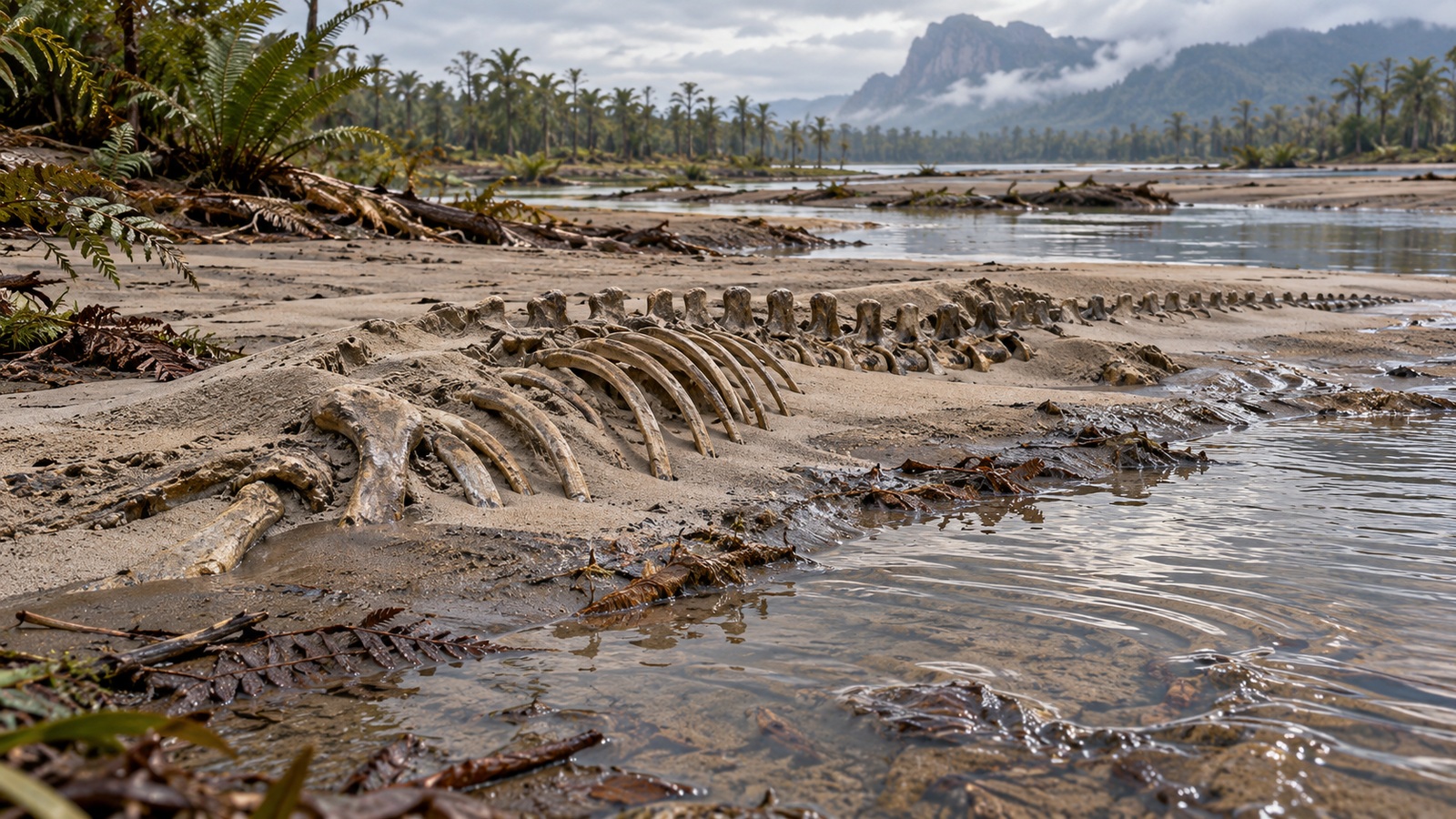
Water, gravity, or other processes can move remains before final burial. A bone may be deposited away from the habitat where the animal spent much of its life. Movement can also separate elements and place them beside material from other organisms. These possibilities complicate the interpretation of a fossil association.
Researchers examine arrangement, sediment, surface condition, and the distribution of elements to evaluate that history. The National Park Service’s taphonomy account illustrates why preservation itself needs investigation. A group of fossils is not automatically a group of animals that lived together at the same moment. Biological and geological explanations must be considered together.
Transport does not always erase useful information. A displaced bone can retain detailed anatomy, while its geological context reveals another part of the story. The important step is separating those sources of evidence. A specimen can answer some questions well even when it cannot establish the original location of death.
Sediment cover can protect remains without stopping every change
Burial can reduce exposure to scavenging, physical disturbance, and some destructive surface conditions. Fine sediment may also record delicate relationships that a coarser deposit would not retain. This makes the timing and nature of cover important. Yet burial alone does not guarantee a complete skeleton or preserve every tissue.
Decay and chemical reactions can continue below the surface. Burrowing organisms, moving groundwater, pressure, and later disturbance can modify the deposit. The conditions within the sediment therefore matter as well as the fact of being covered. A realistic formation history follows those later events instead of ending at the first layer of mud.
The buried environment influences what material survives
Water chemistry, available minerals, oxygen conditions, and the nature of the surrounding sediment affect preservation. That surrounding sediment, or the rock it becomes, is called the matrix. Different tissues can respond differently within the same general setting. A bone might retain fine internal architecture while losing some chemical information, or survive as a recognizable shape after substantial alteration. No single observation captures every aspect of that change.
The material filling a cavity also needs interpretation. It may derive from sediment entering a space, minerals deposited later, or a combination of events. Those histories can sometimes be distinguished through texture and relationships with surrounding material. The object seen today is not necessarily composed entirely of the substance present during life.
Internal detail and original composition should therefore be treated separately. Preserved form can support anatomical research even where chemical alteration limits other analyses. Conversely, surviving material may contain information not obvious from the outside. Selecting a research method requires understanding which kind of evidence remains available.
The formation environment can vary over very short distances. A protected interior and an exposed surface may follow different histories, even within one specimen. This is one reason researchers document sampling position carefully. A result from one spot should not automatically be treated as a complete description of every region of the fossil.
Permineralization fills spaces while replacement changes the material
Permineralization occurs when minerals accumulate in natural pore spaces within remains. Groundwater carries dissolved substances through a buried bone or piece of wood, and mineral crystals grow where conditions permit them to leave solution. The process can retain fine internal architecture, much as filling the passages of a sponge would preserve their arrangement. It need not mean that every part of the original framework has disappeared.
Replacement is different: original material dissolves and another mineral takes its place. The National Park Service explains that both processes can occur together. Silica, for example, can fill spaces and replace material in fossil wood. A specimen can therefore retain a tree’s microscopic structure while having a very different composition from a living trunk.
These names describe changes rather than one universal sequence. Some fossils undergo extensive mineral transformation, whereas others retain original material or record only an impression. Even in a heavily mineralized specimen, different regions may have different histories. The familiar phrase turned to stone is useful as a first image, but it conceals the distinction between filling an existing space and substituting new material.
Sediment becoming rock adds another chapter
Continued burial can compact sediment and contribute to the formation of sedimentary rock. Pressure and chemical changes influence both the enclosing material and the fossil. Compression can distort a specimen’s original shape, while fractures can divide once-connected parts. A mount or illustration may restore those changes, but the geological deformation should remain documented.
Later fluids can add another alteration episode. A fossil’s final color, mineral fill, or fracture cement may reflect events occurring after its initial preservation. The relative order of some events can be investigated through their physical relationships. Reconstructing that sequence is part of understanding what the specimen records today.
A fossil must survive the later history of its rock
Rock can be buried more deeply, uplifted, fractured, eroded, or destroyed. A fossil that formed successfully can still disappear during those later stages. The record available to paleontologists is therefore filtered more than once. Initial preservation does not guarantee eventual discovery.
Some geological conditions can modify or eliminate biological detail. Other circumstances leave fossil-bearing layers comparatively accessible and recognizable. Their present distribution reflects both the original environments and the subsequent history of the crust. A fossil-rich outcrop represents a fortunate intersection of those processes rather than an unbiased sample of all ancient life.
This distinction helps explain why an absence can be difficult to interpret. An organism may have lived in a region without suitable deposits surviving at the surface today. Alternatively, the relevant rocks may remain buried or unstudied. Fossil occurrence needs to be evaluated alongside those geological opportunities.
Erosion makes discovery possible while threatening the specimen
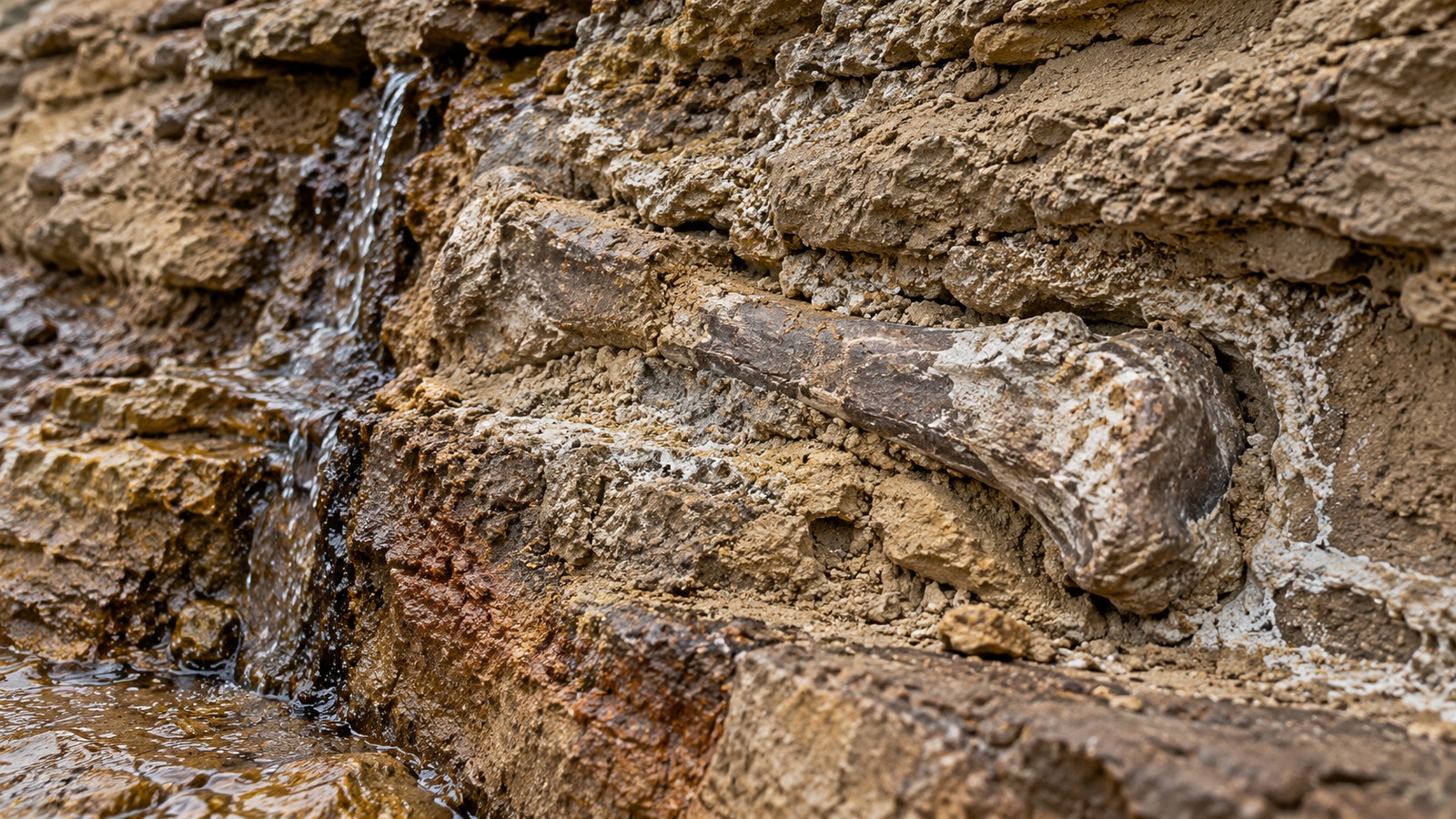
The removal of surrounding rock can reveal fossils that were previously inaccessible. The same exposure also subjects them to weather, breakage, and loss. A visible fragment may be the beginning of an important discovery or the last surviving portion of a specimen already eroding away. That limited opportunity explains why recording the surrounding rock and the object’s position is so valuable. The exposure surface is a recent stage in the fossil’s history, not the ancient ground on which the animal necessarily lived.
Plants and small organisms broaden the formation story
Dinosaur bones are conspicuous, but fossils also include leaves, pollen, shells, insects, microscopic remains, and many other traces of life. These materials can preserve under conditions that differ from those favoring large vertebrate skeletons. Their presence helps reconstruct environments and communities that would otherwise be invisible in a bone-centered account. A complete site investigation looks beyond the largest object.
Exceptional deposits can preserve unusual detail or concentrations of material. They are valuable precisely because many comparable organisms or tissues seldom enter the accessible record. Their contents still require an explanation of preservation and sampling. An extraordinary deposit is not automatically a photograph of every organism in its surrounding ecosystem.
Fossil formation builds a biased record
Durable parts, favorable depositional settings, and organisms abundant in those settings can be overrepresented. Delicate tissues, upland habitats, and small or rare organisms may be harder to recover. Later exposure and collecting methods add further filters. The resulting fossil record remains informative, but it does not preserve each former population in equal proportion.
Researchers study these biases rather than assuming that they make reconstruction impossible. Comparing different deposits, using appropriate recovery methods, and examining the surrounding geology can reveal what is missing or overrepresented. Independent evidence can also test an interpretation. A large skeleton and a pollen sample may contribute very different information about the same broad environment.
The question asked of a fossil should match its preservation. An isolated durable tooth might identify an animal more securely than it identifies the exact habitat in which that individual lived. A delicate plant impression might record a local surface particularly well while preserving little original chemistry. Understanding formation helps choose the strongest question instead of demanding every answer from every specimen.
One specimen can preserve several overlapping histories
Biological history concerns the organism’s anatomy, growth, and life. Taphonomic history concerns what happened as its remains were altered and buried. Later geological history concerns changes within the rock and its eventual exposure. These accounts interact, but they are not identical.
A healed injury, a transport fracture, and a modern break could coexist in the same bone. Their appearance and context need to be investigated before a narrative is assigned. Distinguishing them protects information about both the animal and the deposit. It also explains why a fossil’s surroundings can be as important as its most recognizable feature.
Follow one bone from a carcass to an outcrop
Consider an illustrative dinosaur limb bone that separates from a decaying carcass beside a river and is swept into a channel deposit, where sand covers it and becomes its matrix. Water later carries minerals into its pores while additional sediment accumulates above; pressure, cementation and later fractures change the buried object without erasing all of its anatomy. Much later, uplift and erosion expose one end of the bone, allowing a paleontologist to recognize it before weathering destroys it. The fossil now combines a biological structure with evidence of transport, burial and alteration. Its shape can reveal the dinosaur’s anatomy even though its final position is not where the animal stood or died. That journey explains why a fossil is more than an old object: its surviving form and surrounding rock preserve connected parts of a long history.