Dinosaurs were among the most successful predators in Earth’s history. For more than 165 million years, carnivorous dinosaurs occupied the top levels of prehistoric food chains, evolving a remarkable variety of hunting strategies that allowed them to survive in environments filled with competition. Some predators relied on immense size and overwhelming strength. Others depended on speed, agility, stealth, or specialized senses. Together, these adaptations helped create some of the most effective hunters the planet has ever seen.
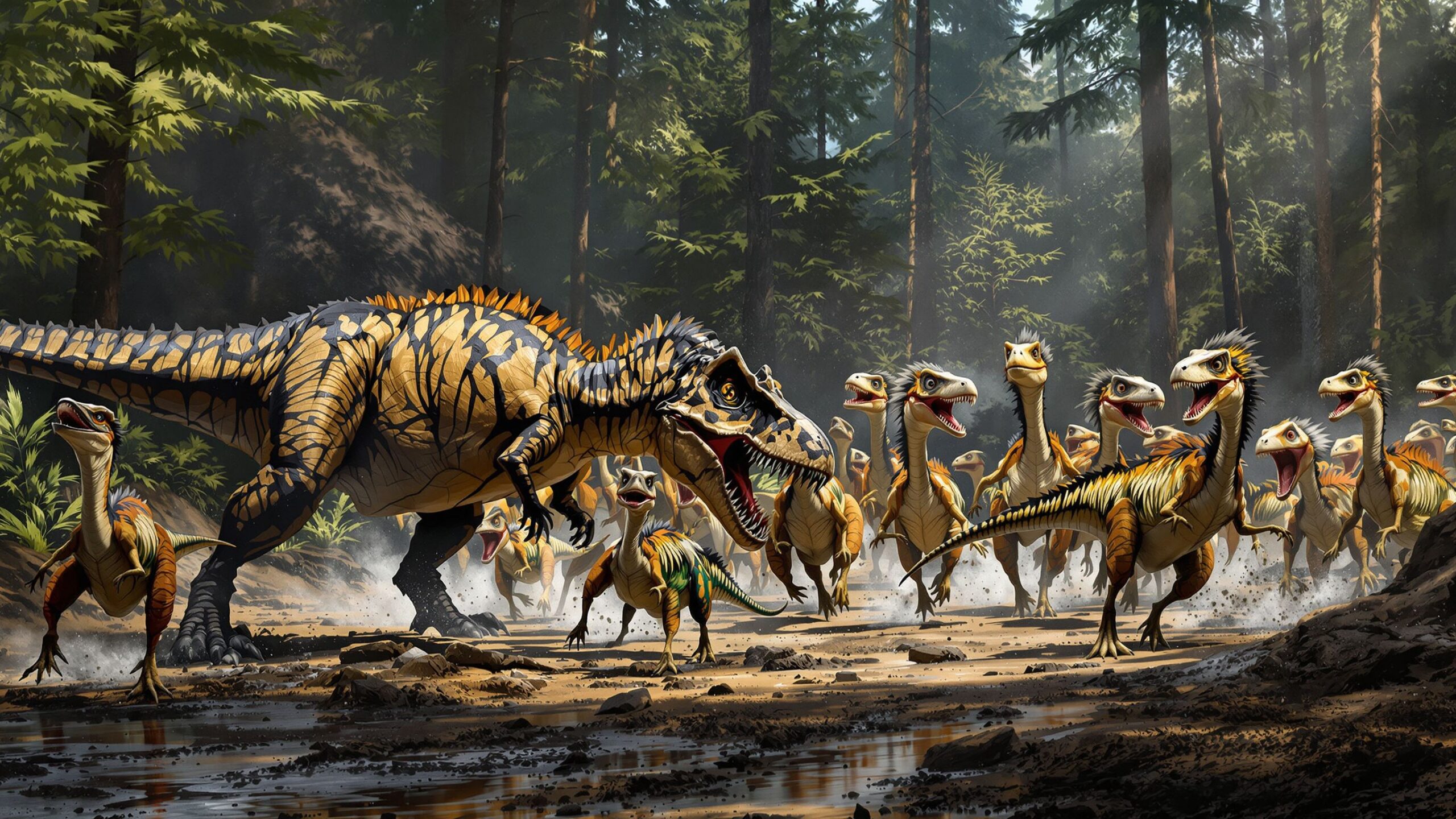
When most people imagine dinosaur hunting, they picture a massive Tyrannosaurus rex charging after terrified prey across an open landscape. While dramatic scenes like this are common in movies, the reality was often far more complex. Just as modern predators use different techniques to catch food, dinosaurs likely employed a wide range of hunting methods depending on their size, environment, prey, and physical abilities.
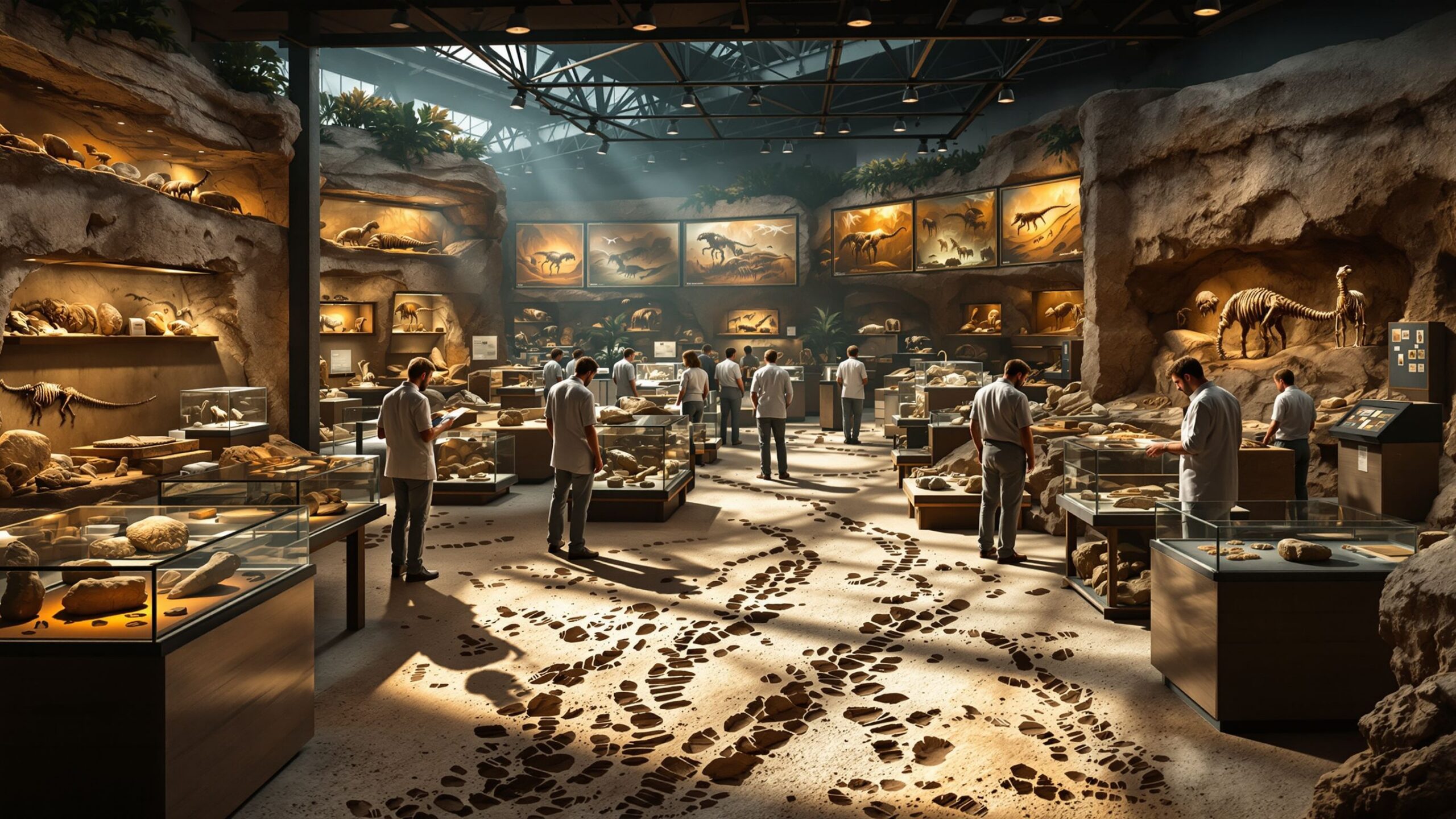
Although no humans ever witnessed dinosaurs hunting, fossils provide remarkable clues about how these animals lived. Teeth, claws, footprints, bite marks, skeletons, and comparisons with modern animals help scientists reconstruct prehistoric hunting behavior. By studying this evidence, researchers have developed increasingly detailed pictures of how dinosaurs located, pursued, captured, and consumed their prey.
A: They used combinations of speed, strength, claws, teeth, vision, and specialized hunting strategies.
A: No. Different species evolved unique methods based on anatomy and environment.
A: Fossils, bite marks, teeth, stomach contents, and trackways provide evidence.
A: Some evidence suggests group behavior in certain species, but it remains debated.
A: Tyrannosaurus rex is considered one of the strongest-biting land predators known.
A: Many predators likely used claws to grab, hold, or injure prey.
A: Some probably hunted, scavenged, or combined both behaviors.
A: Good vision helped predators locate and track prey effectively.
A: Large predators often relied on strength, powerful bites, and ambush opportunities.
A: Occasionally, fossils preserve direct evidence of predator-prey interactions.
Why Hunting Was Essential for Survival
Every predator faces the same challenge: obtaining enough food to survive.
Carnivorous dinosaurs depended on meat for energy and nutrients. Hunting provided the protein necessary to support growth, reproduction, movement, and daily activities. Without successful hunts, predators could not survive.
Hunting also involved risks. Prey animals often defended themselves using horns, armor, speed, or sheer size. A serious injury could prevent a predator from hunting effectively in the future.
Because hunting required significant energy and carried substantial risks, predators evolved specialized adaptations that improved their chances of success. These adaptations shaped nearly every aspect of dinosaur anatomy.
The need to hunt efficiently drove millions of years of evolutionary change and helped produce some of the most impressive predators in Earth’s history.
The Tools of a Dinosaur Hunter
Successful hunting begins with the right equipment.
Carnivorous dinosaurs evolved bodies specifically designed for capturing prey. Sharp teeth, powerful jaws, strong muscles, keen senses, and specialized claws all contributed to hunting success.
Different predators possessed different combinations of these features. Some relied heavily on bite force, while others depended on speed or agility. Certain species evolved long arms for grasping prey, while others used massive heads and necks to overpower victims.
These anatomical tools worked together as integrated systems. Every feature contributed to the predator’s ability to locate, capture, and consume food.
The diversity of predatory adaptations reflects the wide variety of hunting strategies employed by dinosaurs.
Teeth Built for Killing
A predator’s teeth often reveal how it hunted.
Most carnivorous dinosaurs possessed sharp, serrated teeth designed for slicing through flesh. These teeth functioned similarly to steak knives, allowing predators to cut muscle and tissue efficiently.
Tyrannosaurus rex possessed thick, powerful teeth capable of crushing bone. Rather than simply slicing meat, it could exert tremendous pressure that shattered skeletal structures.
Smaller predators often evolved narrower, curved teeth that helped grip struggling prey. These teeth prevented animals from escaping once captured.
Unlike mammals, many dinosaurs continuously replaced lost teeth throughout their lives. This ensured they always possessed effective hunting equipment.
Tooth shape provides some of the strongest evidence for reconstructing hunting behavior.
Powerful Jaws and Bite Force
Teeth alone were not enough. Predators also needed powerful jaws.
Large skulls housed extensive jaw muscles that generated tremendous biting force. Among all known land animals, Tyrannosaurus rex possessed one of the strongest bites ever measured.
This immense power allowed it to puncture bone, tear flesh, and subdue large prey. Other predators evolved different jaw structures suited to their specific hunting strategies.
Some species relied on repeated bites that caused blood loss and injury. Others delivered crushing bites designed to quickly incapacitate prey.
The jaw system functioned as a powerful weapon that significantly increased hunting effectiveness.
Speed as a Hunting Advantage
Many predators relied on speed to catch prey.
Long hind limbs, strong muscles, and lightweight skeletons allowed certain dinosaurs to move rapidly across prehistoric landscapes. Speed helped predators close distances, chase fleeing animals, and exploit opportunities.
Smaller theropods often possessed body proportions associated with agility and acceleration. These predators likely depended heavily on quick movement while hunting.
Not every predator was built for sprinting. Larger species often sacrificed speed for power. Nevertheless, movement remained a critical part of hunting behavior across most carnivorous dinosaurs.
The ability to move efficiently gave predators a significant advantage in the constant struggle between hunter and hunted.
Ambush Hunting
Not every hunt involved long chases.
Many modern predators conserve energy by relying on ambush tactics, and some dinosaurs may have done the same. Rather than pursuing prey over long distances, ambush predators remain hidden until the perfect opportunity arises.
Vegetation, terrain features, and environmental conditions could provide concealment. Once prey approached within range, the predator launched a sudden attack.
Ambush hunting reduces energy expenditure while increasing the chances of catching unsuspecting prey. This strategy can be particularly effective for large predators whose size limits prolonged pursuit.
Although direct evidence remains difficult to obtain, anatomical features suggest that at least some dinosaurs may have used ambush techniques.
Tracking and Detecting Prey
Before a predator can attack, it must first find its target.
Many carnivorous dinosaurs likely possessed excellent senses that helped locate prey. Large eyes provided strong vision, while advanced smell and hearing may have aided detection over longer distances.
Predators constantly monitored their surroundings for signs of potential meals. Movement, scent, sound, and environmental clues all contributed to prey detection.
Some species may have followed established migration routes or frequented watering areas where prey animals gathered.
The ability to locate food efficiently was just as important as the ability to capture it.
Claws as Hunting Weapons
Claws played an important role in many dinosaur hunting strategies.
Predatory dinosaurs often possessed sharp claws on their hands and feet. These structures could be used for gripping prey, maintaining traction, or inflicting injuries.
The famous sickle-shaped claw of Velociraptor is one of the most recognizable examples. Scientists believe this claw may have been used to pin prey while delivering bites.
Hand claws helped some predators hold struggling victims during feeding. Combined with teeth and jaws, claws created highly effective hunting systems.
Different species evolved different claw shapes depending on their ecological roles and prey preferences.
Did Some Dinosaurs Hunt in Packs?
One of the most debated questions in paleontology concerns cooperative hunting.
Certain fossil discoveries suggest that some predatory dinosaurs may have traveled or lived in groups. Multiple individuals found together have led researchers to consider the possibility of pack behavior.
Group hunting offers several advantages. Multiple predators can surround prey, share detection responsibilities, and tackle larger animals than a single hunter could manage alone.
However, evidence for true pack hunting remains limited and controversial. While some species may have exhibited cooperative behaviors, scientists continue debating the extent of these interactions.
Modern predators demonstrate that social hunting can evolve under certain conditions, making it a plausible possibility for some dinosaurs.
Hunting Different Types of Prey
Not all prey animals presented the same challenges.
Small prey such as mammals, lizards, insects, and juvenile dinosaurs required different hunting approaches than large herbivores. Smaller predators often specialized in capturing quick, agile animals.
Large predators targeted larger prey that provided substantial nutritional rewards. However, bigger prey also carried greater risks.
Some carnivorous dinosaurs likely consumed fish, while others focused on terrestrial animals. Tooth shape, jaw structure, and fossil evidence help identify these dietary preferences.
Different prey types encouraged the evolution of specialized hunting strategies.
Giant Predators and Massive Prey
The largest carnivorous dinosaurs faced unique challenges.
Predators such as Tyrannosaurus rex hunted in ecosystems containing enormous herbivores. Capturing such prey required significant power and careful strategy.
Some scientists suggest that large predators targeted young, injured, or vulnerable individuals whenever possible. This approach reduced risk while maximizing hunting success.
Massive predators possessed powerful muscles, strong bones, and impressive bite forces that helped them overcome large prey animals.
Their anatomy reflects adaptations for handling some of the largest land animals ever to exist.
Scavenging as Part of Survival
Hunting was not the only way predators obtained food.
Many carnivorous dinosaurs likely scavenged when opportunities arose. Consuming animals that had already died provided valuable nutrition without the risks associated with hunting.
Modern predators frequently combine hunting and scavenging, and dinosaurs were likely no different.
Evidence suggests that some species may have been opportunistic feeders capable of exploiting a variety of food sources.
Scavenging reduced energy expenditure and increased survival chances during difficult periods.
Successful predators often take advantage of every available opportunity.
Prey Animals Fought Back
Hunting was dangerous because prey animals were not helpless.
Many herbivorous dinosaurs evolved defenses specifically designed to deter predators. Triceratops possessed large horns and a protective frill. Ankylosaurus carried heavy armor and a powerful tail club. Stegosaurus wielded sharp tail spikes.
Even animals lacking obvious weapons could use size, speed, or group behavior to reduce vulnerability.
Predators needed to assess risks carefully before attacking. An injury sustained during a hunt could have serious consequences.
This ongoing evolutionary competition helped shape both predators and prey over millions of years.
Fossils Reveal Ancient Hunts
Scientists reconstruct hunting behavior using multiple forms of evidence.
Bite marks on bones reveal predator-prey interactions. Fossilized footprints show movement patterns and potential chase scenarios. Tooth wear provides information about feeding behavior.
Skeletons reveal anatomical capabilities, while modern computer models help estimate speed, bite force, and movement.
Occasionally, extraordinary fossils preserve direct evidence of interactions between predators and prey. These discoveries provide rare snapshots of prehistoric life.
Each fossil contributes another piece to the puzzle of dinosaur hunting behavior.
How Hunting Changed Through Evolution
Dinosaur predators evolved continuously throughout their history.
Early carnivorous dinosaurs were relatively small, but over millions of years many lineages became larger and more specialized. New hunting adaptations appeared as predators responded to changing prey populations and environmental conditions.
Natural selection favored traits that improved hunting success. Stronger jaws, better senses, sharper claws, greater speed, and more efficient movement all contributed to survival.
The result was a diverse array of hunting strategies unlike anything seen before or since.
Evolution transformed dinosaurs into some of the most successful predators the world has ever known.
Conclusion
Dinosaurs hunted their prey using an extraordinary combination of anatomy, behavior, and evolutionary adaptation. Sharp teeth, powerful jaws, strong muscles, keen senses, specialized claws, and efficient movement all contributed to their success as predators. Some relied on speed, others on strength, and many likely combined multiple strategies depending on circumstances.
Although no human ever observed a dinosaur hunt, fossils provide remarkable evidence that allows scientists to reconstruct these ancient behaviors. Footprints, bite marks, skeletons, and modern technology continue revealing new insights into how prehistoric predators lived and hunted.
The story of dinosaur hunting is ultimately a story of survival. Every adaptation evolved to improve the chances of finding food in a competitive and often dangerous world. Through millions of years of evolution, dinosaurs developed some of the most impressive hunting abilities ever seen in the history of life on Earth.