One of the most fascinating questions in paleontology is how scientists can understand dinosaur behavior when no human has ever seen a living dinosaur. Dinosaurs disappeared approximately 66 million years before people existed, leaving behind only fossils and traces of their ancient lives. Yet scientists have developed remarkably detailed ideas about how dinosaurs hunted, fed, traveled, cared for their young, interacted with one another, and survived in prehistoric ecosystems.
At first glance, this might seem impossible. After all, behavior does not fossilize in the same way bones do. Scientists cannot watch a Tyrannosaurus rex hunt or observe a herd of Triceratops moving across an ancient landscape. However, dinosaurs left behind far more evidence than skeletons alone. Every fossil, footprint, nest, tooth mark, and preserved environment acts as a clue that helps researchers piece together the story of how these animals lived.
Paleontology is often compared to detective work because scientists must gather evidence from many different sources and use it to reconstruct events that happened millions of years ago. By combining fossil discoveries with knowledge from modern animals, researchers can build surprisingly accurate pictures of dinosaur behavior.
A: They study tracks, nests, bones, teeth, injuries, eggs, coprolites, and living animal comparisons.
A: Yes. Footprints can show movement direction, speed, group travel, limping, and stride length.
A: Nests reveal egg laying, breeding sites, possible parental care, and colony patterns.
A: They study teeth, jaw shape, stomach contents, bite marks, and coprolites.
A: Sometimes. Bite marks, healed wounds, broken bones, and injuries may suggest fights or attacks.
A: Some likely did, based on trackways, nesting colonies, and bone beds.
A: They compare multiple clues and use living birds, reptiles, and other animals as references.
A: Yes. Skulls can reveal senses, bite strength, display structures, and feeding style.
A: They cannot know exact sounds, but skull anatomy may suggest possible vocal or display structures.
A: Some clues are strong, but many behavior ideas remain careful scientific interpretations.
Fossils Are More Than Just Bones
When most people think of fossils, they imagine dinosaur skeletons displayed in museums. While bones are important, they are only one piece of the puzzle.
Fossils can preserve many different kinds of information. Scientists study teeth, claws, skin impressions, feathers, eggs, nests, footprints, and even fossilized droppings. Each type of fossil provides unique clues about behavior.
A dinosaur’s skeleton can reveal how it moved, what it ate, and how strong it may have been. Tooth shape can indicate whether an animal hunted prey or ate plants. Claws may reveal how a species defended itself or captured food.
By carefully examining fossils, researchers can infer behaviors that occurred millions of years ago. The more evidence they collect, the clearer the picture becomes.
Dinosaur Footprints Reveal Movement
One of the most valuable sources of behavioral evidence comes from footprints.
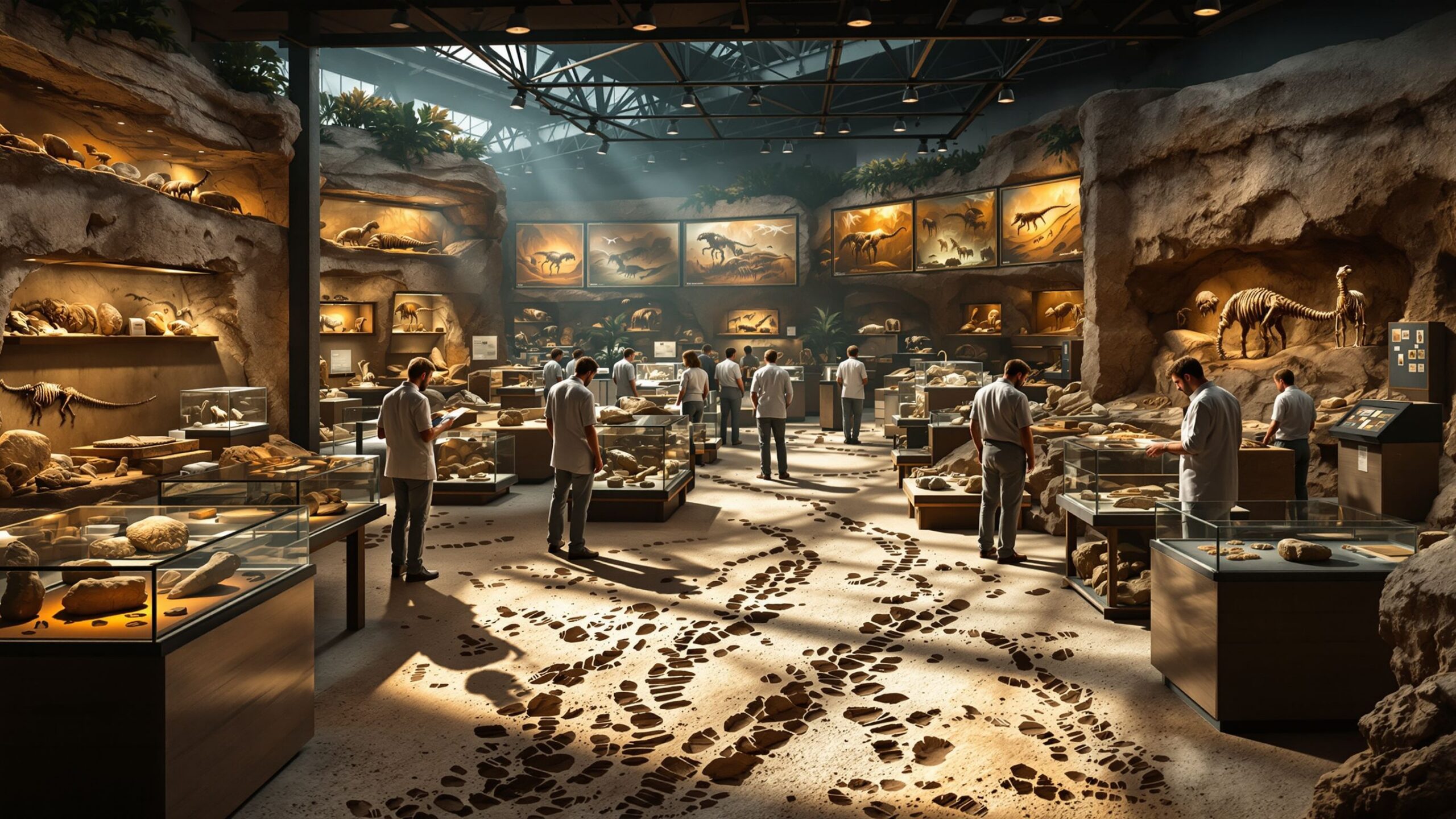
When dinosaurs walked through soft mud, sand, or sediment, they sometimes left tracks that later hardened into rock. These fossilized footprints, known as trackways, provide direct evidence of movement.
Scientists can measure stride length, footprint depth, and track spacing to estimate speed and posture. Some trackways suggest dinosaurs walked slowly, while others indicate running behavior.
Footprints also reveal social behavior. Multiple sets of tracks moving together in the same direction suggest group travel or herd behavior. In some cases, footprints of adults and juveniles appear together, indicating family groups.
Unlike bones, footprints capture animals in action, making them one of the most powerful tools for studying dinosaur behavior.
Fossil Nests Reveal Parenting Behavior
For many years, scientists assumed dinosaurs laid eggs and abandoned them. Modern discoveries have dramatically changed that view.
Fossil nests containing eggs, embryos, and hatchlings provide evidence that many dinosaurs cared for their young. Some nesting sites contain hundreds of nests arranged in organized colonies.
These discoveries suggest that certain dinosaurs returned to specific nesting grounds year after year, much like many modern birds.
Scientists have also discovered adult dinosaur skeletons positioned on top of nests. These fossils indicate brooding behavior similar to birds incubating eggs today.
The presence of juveniles alongside adults in some fossil deposits further supports the idea that at least certain species provided parental care after hatching.
Nests offer remarkable insight into reproductive behavior and family life.
Bone Beds Show Social Living
Sometimes large numbers of dinosaur fossils are found together in a single location. These fossil accumulations are known as bone beds.
Bone beds can reveal whether dinosaurs lived alone or in groups. If many individuals of the same species are found together, scientists investigate whether they may have traveled in herds or social groups.
Several dinosaur species are represented by large fossil assemblages containing individuals of various ages. This suggests long-term group living rather than random gatherings.
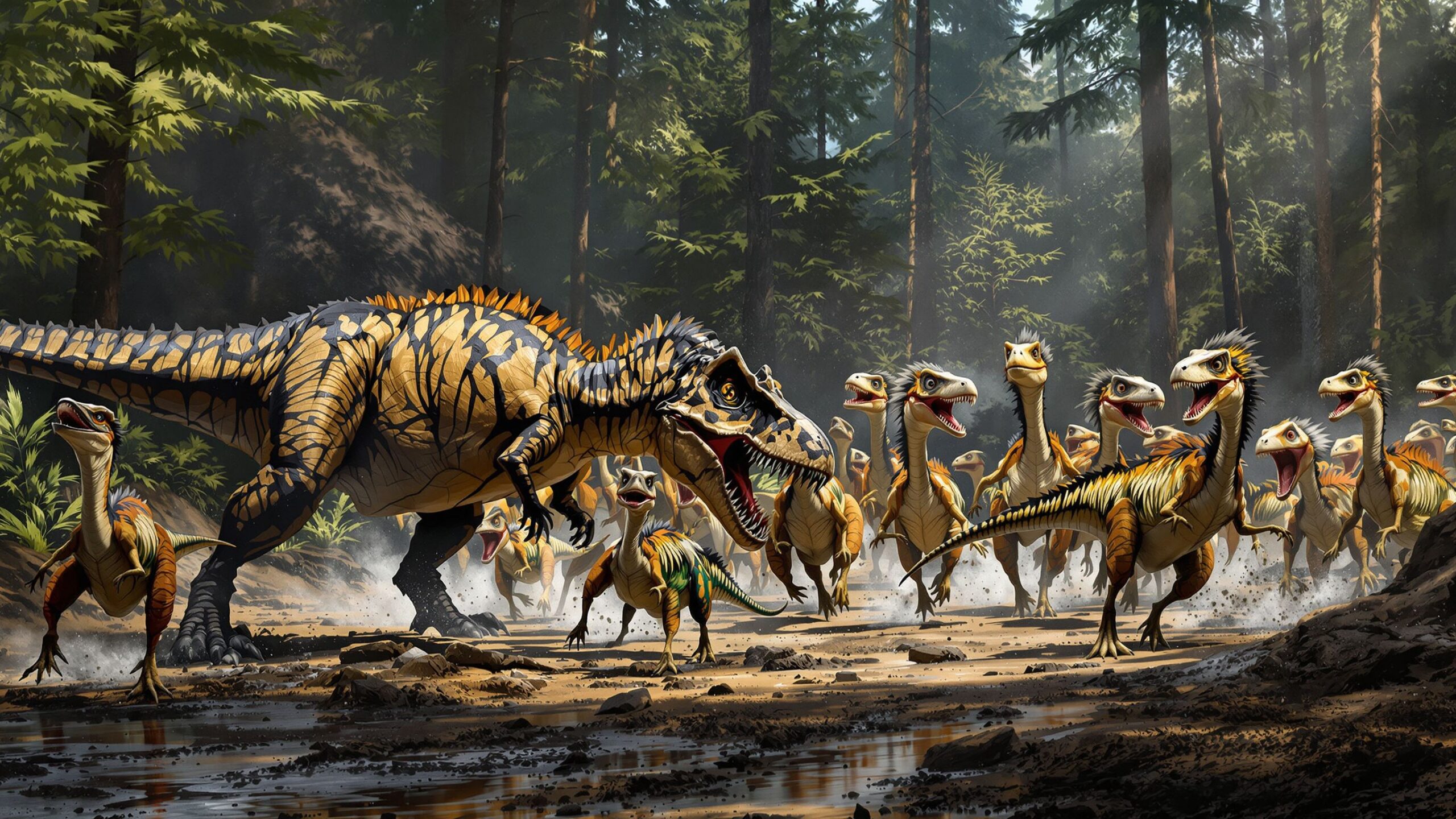
Herd behavior provides numerous advantages, including protection from predators, improved awareness of danger, and better access to resources.
While not all dinosaurs lived socially, bone beds indicate that group behavior was likely common among many species.
Teeth Tell Stories About Feeding
A dinosaur’s teeth can reveal an enormous amount about its lifestyle.
Carnivorous dinosaurs evolved sharp, serrated teeth ideal for slicing flesh. Herbivores developed broad teeth designed for grinding vegetation. These differences immediately indicate feeding behavior.
However, teeth can provide even more information. Wear patterns on tooth surfaces reveal how food was processed. Scratches and microscopic marks indicate the types of materials that passed through the mouth.
Broken teeth, replacement teeth, and jaw mechanics help scientists understand hunting strategies and feeding habits.
By studying teeth, researchers can reconstruct diets and feeding behaviors with surprising accuracy.
Bite Marks Reveal Predator and Prey Interactions
Fossils sometimes preserve evidence of direct interactions between animals.
Bite marks found on bones reveal encounters between predators and prey. Scientists can often identify the species responsible by comparing tooth spacing and bite patterns.
Some bite marks show signs of healing, indicating that the victim survived the attack. Others reveal scavenging behavior that occurred after death.
These traces provide direct evidence of hunting, feeding, competition, and survival.
Every bite mark represents a moment from a prehistoric encounter preserved for millions of years.
Fossilized Stomach Contents Reveal Diet
Occasionally, paleontologists discover fossilized stomach contents preserved inside dinosaur skeletons.
These rare discoveries offer direct evidence of what a dinosaur ate shortly before it died. Plant fragments, fish remains, bones, and other materials provide valuable dietary information.
Scientists have also discovered gastroliths, or stomach stones, inside some dinosaurs. These stones helped grind food and provide clues about digestive behavior.
Although uncommon, fossilized stomach contents are among the strongest forms of evidence available because they reveal actual meals rather than inferred diets.
Ancient Environments Provide Important Context
Understanding behavior requires understanding the environment in which an animal lived.
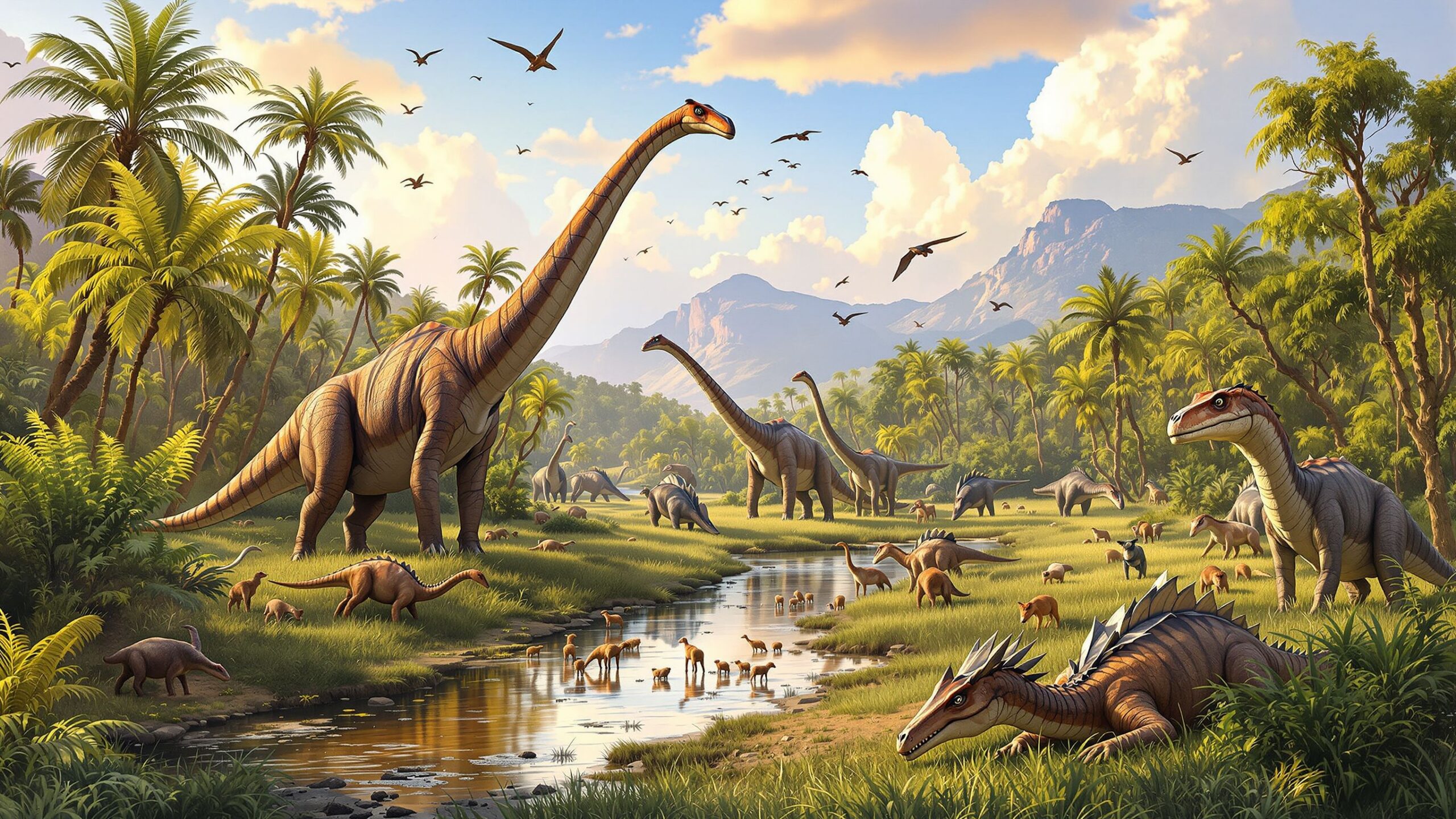
Scientists study ancient rocks, sediments, fossil plants, and associated animal remains to reconstruct prehistoric ecosystems. These reconstructions reveal whether dinosaurs lived in forests, deserts, wetlands, coastal regions, or floodplains.
Environmental conditions strongly influence behavior. Animals living in dry environments may travel long distances for water. Forest-dwelling species may feed differently than those living in open habitats.
By understanding ancient ecosystems, researchers gain valuable context for interpreting behavior.
Modern Animals Provide Valuable Comparisons
One of the most important tools in behavioral reconstruction is comparison with living animals.
Dinosaurs share evolutionary relationships with modern birds and reptiles. Because behavior often relates closely to anatomy, scientists compare dinosaur structures to similar features in living species.
Birds provide particularly valuable insights because they are direct descendants of dinosaurs. Nesting behavior, parental care, vocal communication, and social interactions observed in birds may reflect behaviors inherited from dinosaur ancestors.
Crocodilians also provide useful comparisons because they share certain anatomical traits with dinosaurs.
These living animals help researchers test hypotheses and develop realistic behavioral interpretations.
Feathers Reveal Communication and Display
The discovery of feathered dinosaurs transformed our understanding of dinosaur behavior.
Feathers are useful for much more than flight. In modern birds, feathers help attract mates, establish dominance, communicate social status, and intimidate rivals.
Scientists believe many feathered dinosaurs likely used their feathers in similar ways. Elaborate feather structures may have played important roles in courtship displays and social interactions.
The presence of feathers suggests that dinosaur behavior was often more complex than previously imagined.
These discoveries continue expanding our understanding of prehistoric life.
Growth Rings Reveal Life Histories
Just as trees produce growth rings, dinosaur bones contain growth patterns that reveal information about development.
By studying bone structure under microscopes, scientists can estimate age, growth rate, and maturity. These details help researchers understand how behavior changed throughout life.
Juveniles may have occupied different ecological roles than adults. Young dinosaurs often faced different challenges and risks than fully grown individuals.
Growth studies help scientists reconstruct life histories and understand behavior across different stages of development.
Injuries Reveal Survival and Social Behavior
Fossils often preserve evidence of injuries, diseases, and healing.
Broken bones that healed indicate that dinosaurs survived significant trauma. Some injuries suggest combat between members of the same species, while others may result from predator attacks.
The survival of severely injured individuals sometimes raises questions about social support. In certain cases, scientists speculate that group members may have contributed to the survival of injured animals.
Although interpretations must be made carefully, injuries provide important behavioral clues.
Computer Models Test Behavioral Ideas
Modern technology has revolutionized the study of dinosaur behavior.
Scientists use computer simulations to test ideas about movement, hunting, feeding, and social interactions. These models incorporate anatomical data collected from fossils.
Researchers can estimate running speeds, bite forces, range of motion, and energy requirements. Computer-generated reconstructions help determine whether proposed behaviors are physically realistic.
Technology allows scientists to explore possibilities that would otherwise remain impossible to investigate.
These tools continue improving our understanding of dinosaur life.
Multiple Clues Create Strong Conclusions
No single fossil can reveal everything about behavior. Instead, scientists rely on multiple lines of evidence.
A footprint may suggest group travel. A bone bed may support social behavior. Nesting sites may indicate parental care. Comparisons with modern birds may provide additional support.
When several independent sources point toward the same conclusion, confidence increases significantly.
Scientific understanding grows stronger as new evidence accumulates from different directions.
This process allows researchers to build increasingly detailed pictures of dinosaur behavior.
Why Dinosaur Behavior Studies Continue to Evolve
Our understanding of dinosaur behavior changes constantly as new discoveries are made.
Each year, paleontologists uncover new fossils that challenge old assumptions and reveal unexpected insights. Behaviors once considered unlikely sometimes become strongly supported by evidence.
The discovery of feathered dinosaurs, nesting colonies, brooding adults, and social trackways has transformed the field over the past few decades.
Future discoveries will undoubtedly continue reshaping our understanding of these remarkable animals.
Science is an ongoing process, and every new fossil adds another piece to the puzzle.
Conclusion
Although no human has ever seen a living dinosaur, scientists have developed powerful methods for studying their behavior. Fossils, footprints, nests, bone beds, bite marks, stomach contents, growth patterns, and ancient environments all provide valuable clues about how dinosaurs lived.
By combining this evidence with observations of modern birds and reptiles, researchers can reconstruct surprisingly detailed pictures of prehistoric life. These methods reveal dinosaurs as complex animals that hunted, migrated, cared for offspring, communicated, traveled in groups, and adapted to changing environments.
The study of dinosaur behavior demonstrates the remarkable power of scientific investigation. Even without direct observation, evidence preserved in rocks allows scientists to uncover stories that have remained hidden for millions of years. Every new discovery brings us closer to understanding not just what dinosaurs looked like, but how they lived their lives in the ancient world.