Dinosaurs have fascinated people for generations. Their enormous size, strange shapes, and incredible diversity make them some of the most captivating animals that ever lived. When most people think about dinosaurs, they picture towering skeletons displayed in museums or giant creatures roaming prehistoric landscapes. However, beneath the skin, scales, and feathers was a complex living body made up of interconnected systems that worked together much like those of modern animals.
Understanding what was inside a dinosaur helps us appreciate how these ancient creatures survived, grew, hunted, reproduced, and dominated Earth for more than 165 million years. Although soft tissues rarely fossilize, scientists have learned a tremendous amount about dinosaur anatomy by studying fossils, comparing dinosaurs to modern birds and reptiles, and using advanced technology to reconstruct their bodies. Every new discovery helps researchers build a clearer picture of how these remarkable animals functioned.
A: The skeleton formed the foundation for movement, protection, and support.
A: Many theropods and bird-like dinosaurs did, helping reduce weight.
A: Muscle attachment marks on bones provide important clues.
A: Some may have had bird-like respiratory systems with air sacs.
A: Tails provided balance, movement control, and sometimes defense.
A: No. Some had feathers, scales, or a combination of both.
A: Tooth shape often indicates whether a dinosaur ate plants or meat.
A: Many predators likely had excellent vision based on skull anatomy.
A: Hip structure helps classify major dinosaur groups.
A: Yes. Birds are living descendants of theropod dinosaurs.
What Is Dinosaur Anatomy?
Anatomy is the study of the physical structures that make up a living organism. In dinosaurs, anatomy included bones, muscles, organs, blood vessels, nerves, skin, feathers, scales, teeth, claws, and every other body part necessary for life.
Each part of a dinosaur’s anatomy had a specific purpose. Bones provided support. Muscles created movement. Teeth helped process food. Lungs supplied oxygen. The digestive system extracted nutrients. Together, these systems allowed dinosaurs to function as living animals rather than simply collections of bones.
Studying anatomy helps scientists answer important questions. How fast could a dinosaur run? What did it eat? How did it defend itself? How did it breathe? Anatomy provides many of the answers and offers a fascinating look into prehistoric life.
The Skeleton: The Body’s Framework
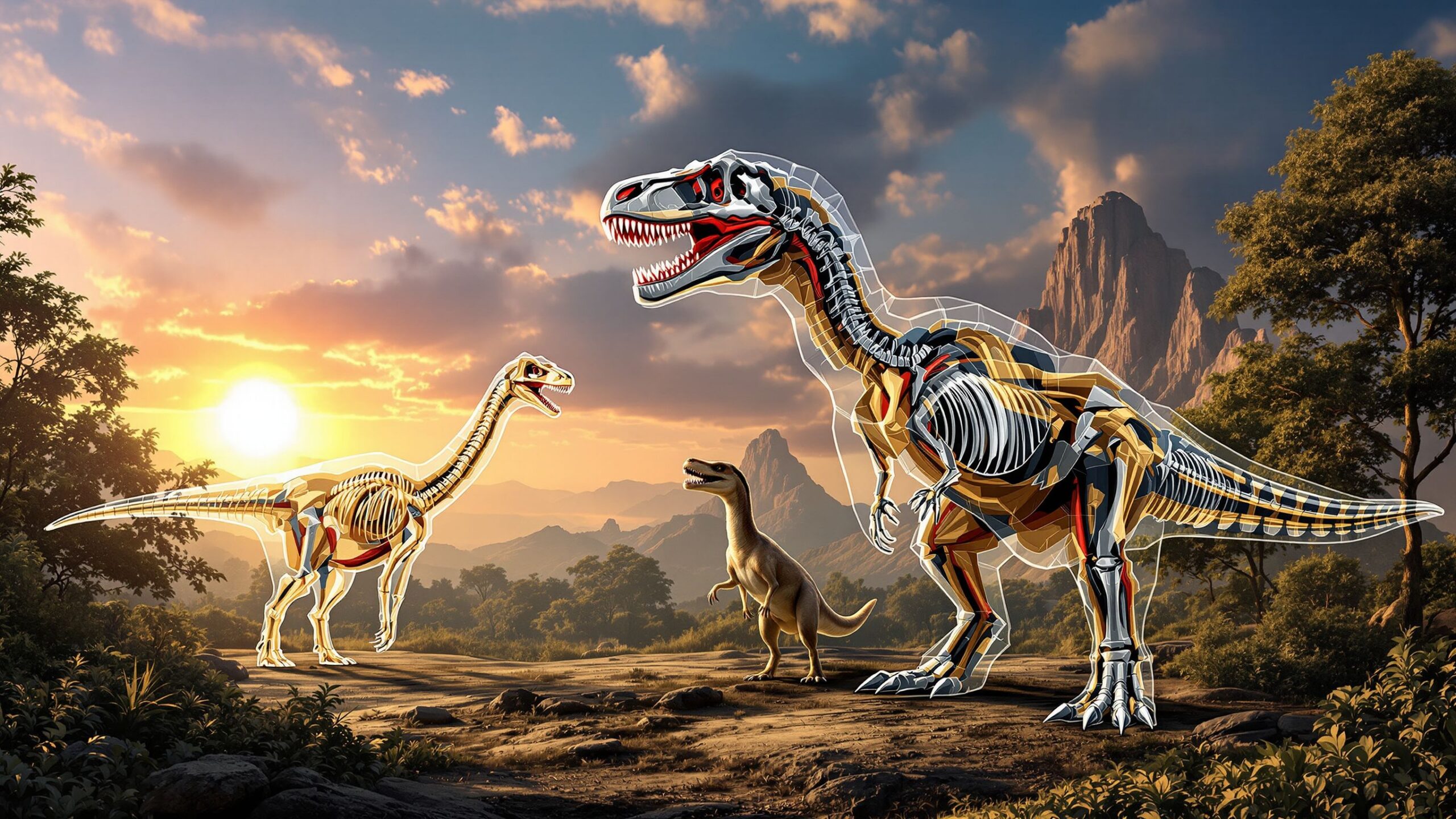
The skeleton formed the foundation of a dinosaur’s body. Every dinosaur possessed an internal skeleton made of hundreds of interconnected bones that supported its weight and protected vital organs.
The backbone served as the body’s central support structure. Ribs protected the chest cavity, while the pelvis and shoulder girdles connected the limbs to the rest of the skeleton. Together, these bones created a sturdy framework capable of supporting animals that ranged from chicken-sized hunters to giants longer than a basketball court.
Large dinosaurs depended heavily on strong skeletal systems. Massive species such as Argentinosaurus could weigh over 70 tons, requiring incredibly powerful bones to support their enormous bodies. Despite their size, many dinosaur bones were surprisingly lightweight because some contained air-filled spaces similar to those found in modern birds.
The skeleton also provided attachment points for muscles, allowing movement throughout the body. Without a strong skeletal framework, dinosaurs could not have achieved their impressive size or mobility.
The Skull: Protecting the Brain and Supporting the Jaws
The skull was one of the most specialized parts of dinosaur anatomy. It protected the brain while supporting the jaws, teeth, eyes, and sensory organs.
Predatory dinosaurs often evolved large skulls equipped with powerful jaws capable of generating tremendous bite force. Tyrannosaurus rex possessed one of the strongest bites ever recorded among land animals. Its skull was built to withstand incredible pressure while crushing bone and tearing flesh.
Plant-eating dinosaurs developed different skull structures adapted for clipping, shredding, or grinding vegetation. Some species evolved beaks similar to those of modern birds, while others developed rows of specialized teeth for processing tough plants.
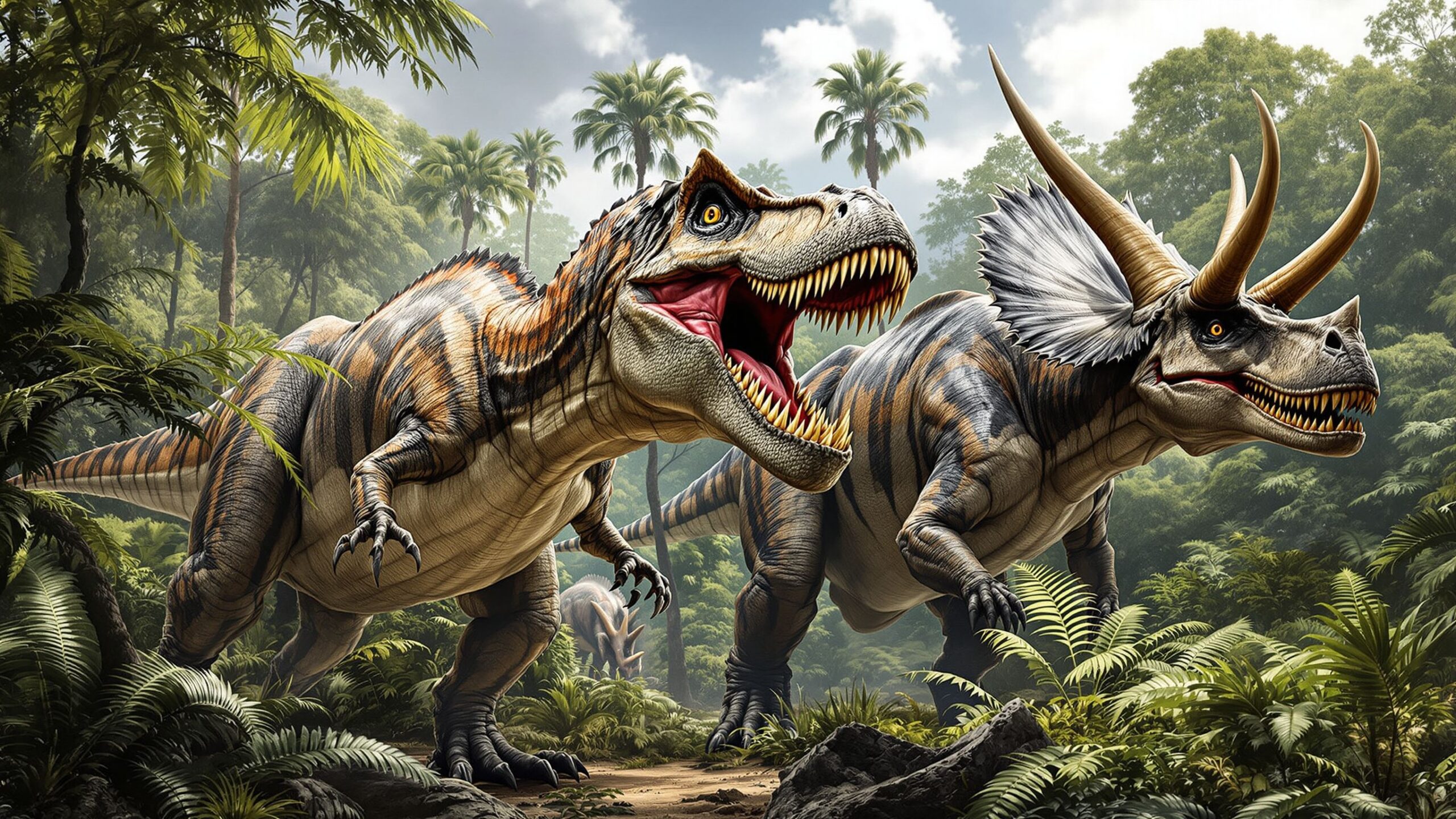
Many dinosaurs also evolved elaborate skull decorations. Horns, frills, crests, and ridges may have helped with communication, defense, species recognition, or attracting mates. These features made many dinosaurs instantly recognizable.
The Brain: Control Center of the Body
Inside every dinosaur skull was a brain that controlled bodily functions and behavior. Although many dinosaurs had relatively small brains compared to their body size, brain development varied significantly between species.
The brain processed sensory information, coordinated movement, controlled feeding behavior, and helped animals respond to threats. Predators often possessed larger brain regions associated with vision and coordination, reflecting the demands of hunting.
Scientists study fossilized braincases to estimate the size and shape of dinosaur brains. While dinosaurs were not necessarily unintelligent, their cognitive abilities varied depending on species and lifestyle.
Bird-like dinosaurs often possessed relatively large brains compared to their body size. These animals likely displayed complex behaviors that foreshadowed those seen in modern birds.
Eyes and Vision
Vision was one of the most important senses for many dinosaurs. Large eye sockets found in fossils indicate that some species possessed excellent eyesight.
Predatory dinosaurs benefited from forward-facing eyes that provided depth perception. This adaptation allowed them to judge distances accurately while hunting prey.
Herbivorous dinosaurs often had eyes positioned on the sides of their heads. This arrangement provided a wider field of view, helping them detect approaching predators from multiple directions.
Some scientists believe many dinosaurs could see color. If true, color vision may have helped with finding food, recognizing mates, and identifying members of their own species.
Good eyesight was a major survival advantage in prehistoric ecosystems filled with both hunters and hunted animals.
Teeth and Jaws
The teeth and jaws formed one of the most important feeding systems inside a dinosaur’s body. Different diets led to a remarkable variety of tooth shapes and structures.
Carnivorous dinosaurs evolved sharp, serrated teeth designed to slice through flesh. Tyrannosaurus rex possessed thick, powerful teeth capable of crushing bone, while smaller predators often had curved teeth designed for gripping prey.
Herbivorous dinosaurs developed broad teeth suitable for shredding leaves, stems, and other vegetation. Some species evolved complex dental batteries containing hundreds of teeth working together to grind plant material efficiently.
Many dinosaurs continuously replaced worn or damaged teeth throughout their lives. This ensured they always had effective feeding tools available.
The jaws worked together with powerful muscles to generate the force needed to process food and sustain the animal.
Muscles: Powering Every Movement
Muscles were responsible for every action a dinosaur performed. Attached to bones throughout the body, muscles contracted and relaxed to produce movement.
Walking, running, feeding, breathing, turning, and maintaining posture all depended on muscular activity. Predators relied on powerful leg muscles to pursue prey, while giant herbivores required extensive muscle systems capable of supporting tremendous body weight.
Neck muscles supported the head and controlled feeding movements. Tail muscles contributed to balance and locomotion. Jaw muscles generated biting force.
Although muscles rarely fossilize, scientists can estimate their size and arrangement by studying attachment points preserved on bones. This information helps researchers understand how dinosaurs moved and behaved.
The Heart and Circulatory System
The circulatory system transported oxygen and nutrients throughout a dinosaur’s body. At the center of this system was the heart, which pumped blood through a network of arteries and veins.
Large dinosaurs required particularly efficient circulatory systems. A giant sauropod with a long neck needed enough blood pressure to deliver oxygen-rich blood all the way to its elevated head.
Blood carried oxygen from the lungs to tissues throughout the body and returned carbon dioxide to the lungs for removal. It also transported nutrients necessary for growth and energy production.
Scientists believe dinosaur circulatory systems were highly effective, allowing many species to maintain active lifestyles and large body sizes.
The Lungs and Breathing System
Breathing supplied oxygen essential for life. Evidence suggests many dinosaurs possessed highly efficient respiratory systems similar to those found in modern birds.
These systems may have included air sacs connected to the lungs. Air sacs improved oxygen exchange while also helping reduce body weight by extending into certain bones.
Efficient breathing allowed dinosaurs to remain active and supported the enormous energy demands of large-bodied species. It may also have contributed to their success across a wide range of climates and environments.
Modern birds still use a highly efficient respiratory system inherited from their dinosaur ancestors, providing valuable clues about how dinosaurs breathed.
The Digestive System
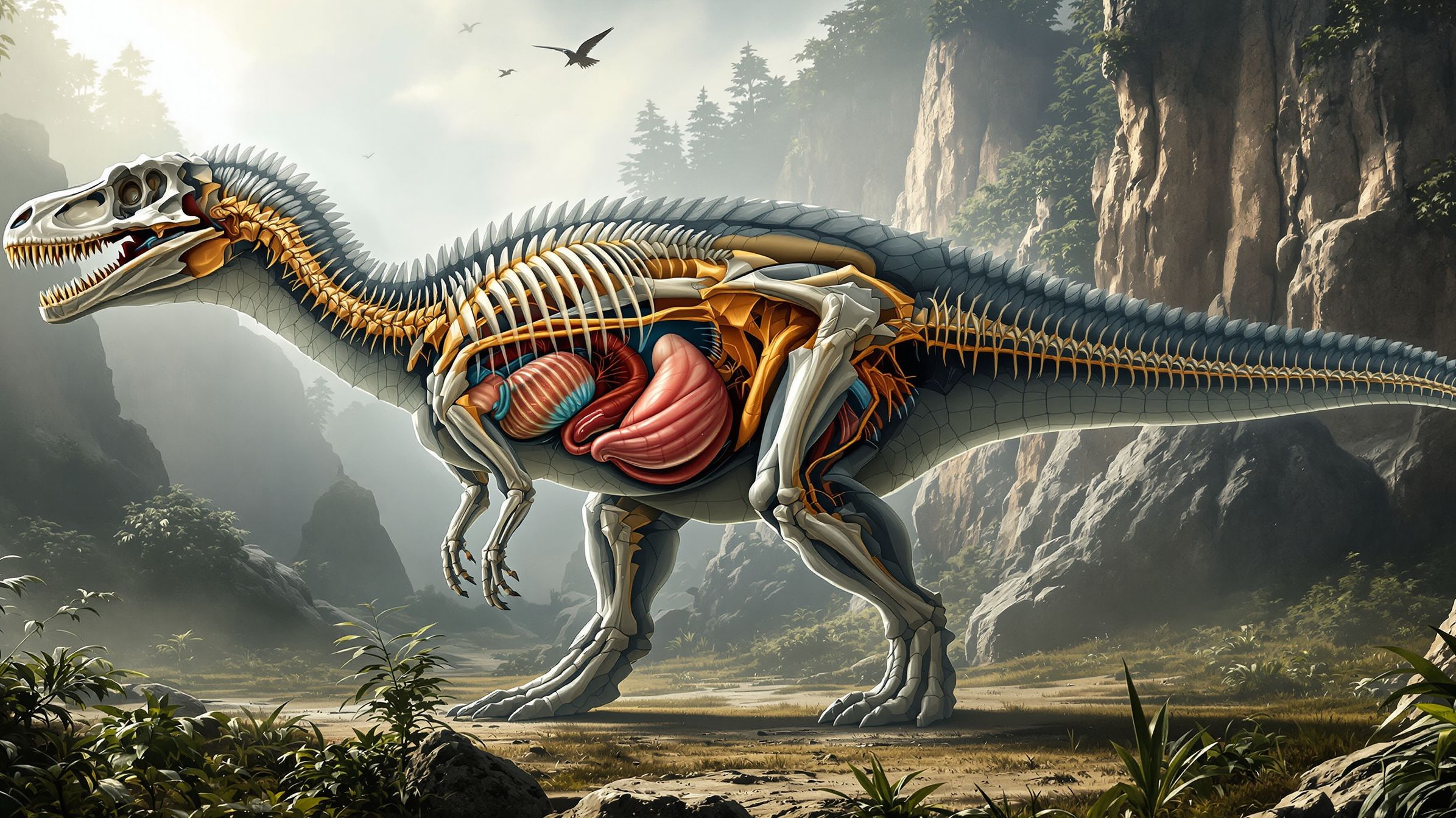
The digestive system converted food into usable energy. After food entered the mouth, it traveled through a series of organs responsible for breaking it down and absorbing nutrients.
Carnivorous dinosaurs processed meat and animal tissue, while herbivorous species faced the challenge of digesting tough plant material. Many plant-eaters likely relied on large digestive chambers and specialized microorganisms to help break down vegetation.
Some herbivorous dinosaurs swallowed stones known as gastroliths. These stones remained in the stomach and helped grind food into smaller pieces, improving digestion.
An efficient digestive system was critical for maintaining energy levels and supporting growth.
Internal Organs
Dinosaurs possessed numerous internal organs similar to those found in modern animals. The liver likely processed nutrients and removed toxins from the bloodstream. The kidneys filtered waste products and helped regulate fluid balance.
The pancreas contributed enzymes and hormones important for digestion and metabolism. Additional organs supported immunity, reproduction, and overall health.
Although soft tissues rarely fossilize, comparisons with birds and crocodilians help scientists reconstruct these internal systems with increasing confidence.
Together, these organs formed a complex network that kept dinosaurs alive and functioning efficiently.
The Nervous System
The nervous system served as the body’s communication network. The brain connected to the spinal cord, which extended through the vertebral column and branched into nerves throughout the body.
These nerves transmitted signals that controlled movement, sensation, reflexes, and internal functions. The nervous system allowed dinosaurs to react quickly to changes in their environment.
Predators depended on rapid communication between the senses and muscles while hunting. Herbivores relied on fast reactions to detect and escape threats.
Without an effective nervous system, coordination and survival would have been impossible.
Skin, Scales, and Feathers
The outer covering of a dinosaur’s body provided protection, insulation, and display features. Many dinosaurs possessed scales similar to those found on modern reptiles.
Some species evolved bony armor embedded within the skin. Ankylosaurs are famous for their heavily armored bodies, which provided protection from predators.
One of the most important discoveries in modern paleontology is that many dinosaurs possessed feathers. Some species were completely feathered, while others combined scales and feathers across different regions of the body.
Feathers likely helped regulate body temperature, attract mates, communicate with others, and eventually contributed to the evolution of flight.
These external coverings played a major role in dinosaur survival and appearance.
The Tail: More Than a Counterbalance
The tail was a critical part of dinosaur anatomy. In many species, it acted as a counterbalance that stabilized the body during movement.
Large predators used their tails to help maintain balance while running and turning. Some herbivores evolved defensive tails equipped with spikes or heavy clubs capable of deterring attackers.
The tail also contained major muscle groups involved in locomotion and posture. In some dinosaurs, it may have played a role in communication and display behaviors.
Far from being a simple extension of the body, the tail was an active and essential structure.
Reproduction and Growth
Like all animals, dinosaurs needed to reproduce. Most species laid eggs, and fossil discoveries have revealed nests, eggshells, embryos, and even evidence of parental care.
Many dinosaurs appear to have guarded their nests and protected their young. Some species may have incubated eggs using body heat or vegetation.
Young dinosaurs grew rapidly, often reaching impressive sizes in relatively short periods. Growth patterns preserved in fossil bones help scientists estimate age and development rates.
Successful reproduction allowed dinosaurs to thrive for millions of years across nearly every continent.
How Everything Worked Together
The true wonder of dinosaur anatomy lies in how every system worked together. The skeleton provided support. Muscles generated movement. The heart circulated blood. The lungs supplied oxygen. The digestive system provided nutrients. The nervous system coordinated activities throughout the body.
Every structure depended on the others. Evolution refined these systems over millions of years, producing animals perfectly adapted to their environments.
This remarkable integration allowed dinosaurs to become one of the most successful groups of animals in Earth’s history.
Conclusion
Looking inside a dinosaur reveals a world far more complex than bones alone. Beneath the skin existed an intricate network of muscles, organs, nerves, blood vessels, and specialized structures working together to sustain life. Every feature, from powerful jaws and efficient lungs to protective armor and balancing tails, played a role in helping dinosaurs survive and thrive.
Although dinosaurs disappeared approximately 66 million years ago, their fossils continue to reveal extraordinary details about how they lived. Each new discovery improves our understanding of these remarkable animals and the biological systems that made them so successful.
Studying dinosaur anatomy allows us to appreciate not only the creatures themselves but also the evolutionary innovations that continue to live on today through their descendants. Every bird soaring through the sky serves as a reminder that the legacy of dinosaurs is still very much alive.