Dinosaurs ruled the Earth for more than 165 million years, becoming one of the most successful groups of animals in the planet’s history. They thrived across deserts, forests, floodplains, coastlines, and countless other environments. Some became enormous plant-eaters weighing dozens of tons, while others evolved into swift predators capable of hunting with incredible efficiency. Their success was not accidental. It was the result of millions of years of evolution that shaped their bodies into highly specialized machines built for survival.
When people think about dinosaur power, they often imagine massive teeth, giant claws, and towering bodies. While those features certainly contributed to their strength, the true source of dinosaur power was far more complex. Every part of a dinosaur’s anatomy worked together to create animals capable of moving efficiently, defending themselves, finding food, reproducing, and adapting to changing environments.
From their strong skeletons and powerful muscles to their advanced breathing systems and specialized teeth, dinosaurs evolved anatomical advantages that allowed them to dominate prehistoric ecosystems for millions of years. Understanding these features helps explain why dinosaurs became such successful animals and why their descendants, modern birds, continue to thrive today.
A: Their power came from strong bones, large muscles, upright posture, teeth, claws, armor, tails, and specialized body plans.
A: Not always. Many plant-eaters were powerful because of size, horns, armor, and defensive strength.
A: Upright legs helped support weight, improve balance, and make movement more efficient.
A: Yes. Its skull, jaw muscles, and thick teeth were built for tremendous biting force.
A: Tails helped with balance, turning, running, display, and in some species, defense.
A: Armor protected them from predators and made attacks more difficult.
A: Some moved slowly, but their anatomy still supported efficient movement for their size.
A: They study fossils, bone shape, muscle attachment marks, computer models, and comparisons with living animals.
A: Yes. Smaller dinosaurs could be powerful through speed, agility, sharp claws, and quick reactions.
A: No. Their success came from anatomy, movement, feeding strategies, reproduction, and adaptation.
The Foundation of Power: A Strong Skeleton
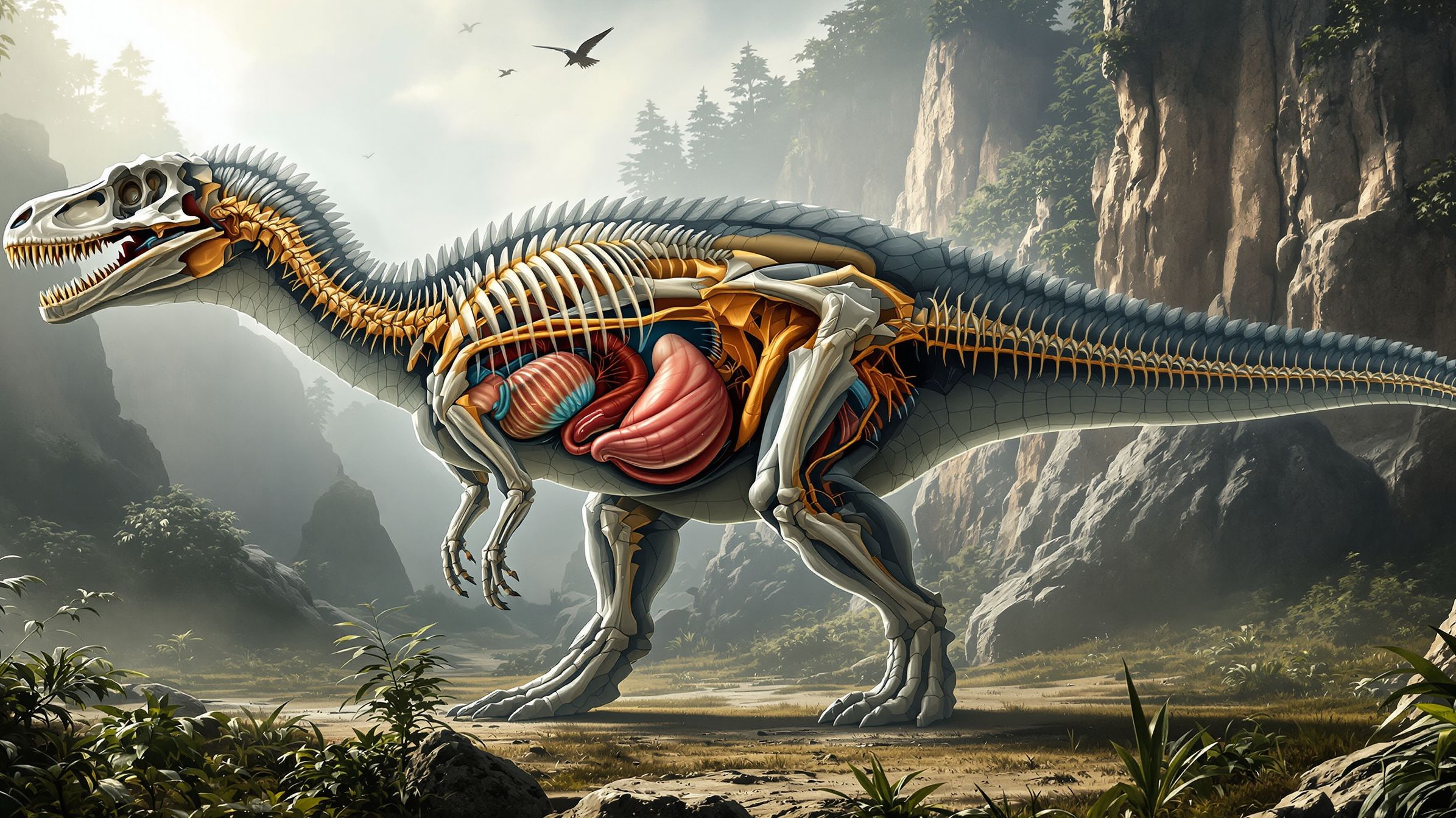
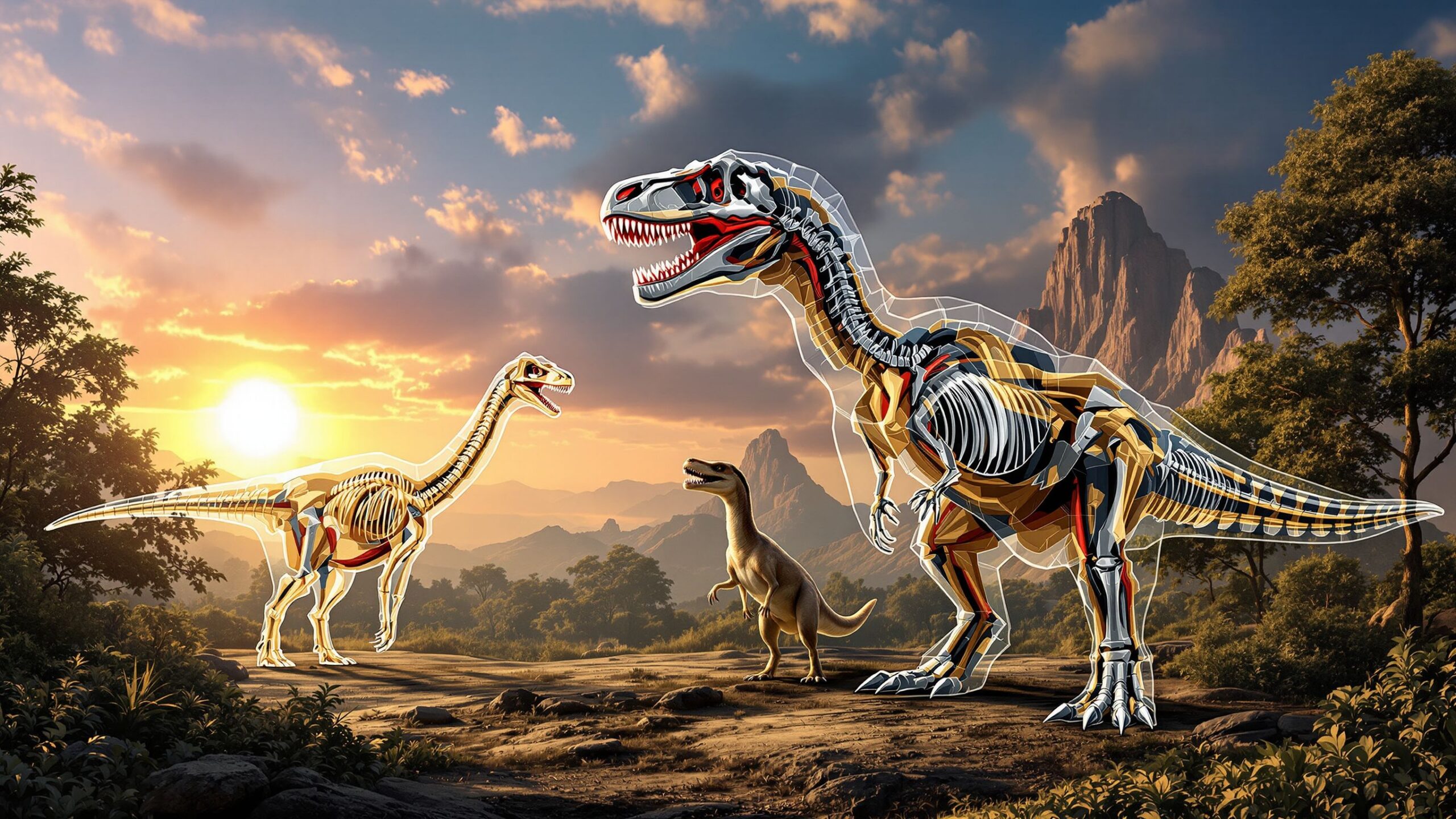
Every powerful dinosaur started with a powerful skeleton. The skeleton formed the framework that supported the body, protected vital organs, and provided attachment points for muscles.
Unlike many reptiles that walk with their legs extending outward from their bodies, dinosaurs evolved an upright posture. Their legs were positioned directly beneath them, allowing better balance, greater endurance, and more efficient movement. This seemingly simple adaptation gave dinosaurs a major advantage over many competing animals.
Strong bones allowed dinosaurs to support impressive body sizes. Giant sauropods such as Argentinosaurus and Patagotitan reached weights that exceeded those of multiple modern elephants combined. Without robust skeletal systems, such enormous sizes would have been impossible.
Many dinosaurs also possessed lightweight bones containing air-filled spaces. These hollow structures reduced body weight while maintaining strength, allowing animals to grow larger without becoming excessively heavy.
The skeleton was more than a collection of bones. It was the structural foundation that made dinosaur power possible.
Powerful Muscles Created Powerful Dinosaurs
While bones provided support, muscles generated movement. A dinosaur’s strength depended heavily on its muscular system.
Large muscle groups attached to the skeleton and powered walking, running, feeding, and defensive actions. Predators relied on powerful leg muscles to chase prey, while giant herbivores required immense muscular support simply to move their massive bodies.
Muscle attachment points preserved on fossilized bones allow scientists to estimate the size and strength of various muscle groups. These studies reveal that many dinosaurs possessed remarkably powerful bodies.
Theropod predators such as Tyrannosaurus rex likely had enormous leg and neck muscles that helped them move efficiently and control large prey. Even herbivorous dinosaurs developed powerful musculature to support their immense weight and navigate their environments.
The combination of strong bones and strong muscles created animals capable of extraordinary physical performance.
Upright Posture Increased Strength and Efficiency
One of the most important anatomical advantages dinosaurs possessed was their upright posture.
Modern lizards and crocodilians typically have sprawling limbs positioned to the sides of their bodies. This posture limits endurance and efficiency. Dinosaurs evolved a different solution. Their limbs were positioned directly beneath the body, creating a column-like support system.
This arrangement improved weight distribution and reduced the energy required for movement. Dinosaurs could travel farther, move more efficiently, and support larger body masses than many other reptiles.
Upright posture also improved speed and agility in predatory species. It allowed muscles to work more effectively and helped generate powerful forward movement.
This evolutionary innovation became one of the key reasons dinosaurs achieved such long-term success.
Massive Jaws and Powerful Bites
Few features capture the imagination quite like dinosaur jaws.
Many predatory dinosaurs evolved incredibly powerful bite mechanisms. Tyrannosaurus rex possessed one of the strongest bites ever recorded among land animals. Its jaws could generate tremendous pressure, allowing it to crush bone and tear through thick flesh.
Large skulls housed powerful jaw muscles that amplified bite force. These muscles attached to specialized structures on the skull and lower jaw, creating efficient systems for feeding and hunting.
Even herbivorous dinosaurs benefited from strong jaws. Species such as Triceratops and hadrosaurs evolved specialized chewing mechanisms capable of processing tough vegetation.
Powerful jaws allowed dinosaurs to exploit a wide variety of food sources and occupy numerous ecological niches.
Teeth Designed for Success
A dinosaur’s teeth were among its most important tools.
Carnivorous dinosaurs evolved sharp, serrated teeth designed for cutting flesh. These teeth acted like steak knives, slicing through muscle and tissue efficiently. Different predators evolved different tooth shapes depending on their hunting strategies.
Tyrannosaurus rex possessed thick, durable teeth capable of crushing bone. Velociraptor evolved curved teeth ideal for gripping prey. Other species developed long, narrow teeth suited for catching fish.
Herbivorous dinosaurs evolved entirely different dental systems. Many possessed broad teeth designed for shredding plants. Hadrosaurs developed dental batteries containing hundreds of tightly packed teeth that worked together as grinding surfaces.
The ability to replace lost teeth throughout life ensured that dinosaurs always maintained effective feeding equipment.
The Importance of Strong Necks
The neck played a surprisingly important role in dinosaur power.
Predatory dinosaurs required strong neck muscles to support heavy skulls and control prey during feeding. Large neck muscles helped stabilize the head and allowed precise movements during hunting.
Sauropods evolved extraordinarily long necks that allowed them to reach food across large areas without moving their entire bodies. This adaptation improved feeding efficiency while conserving energy.
Neck strength also contributed to defense, display behavior, and overall mobility. The neck served as an important link between the head and the rest of the body, influencing numerous aspects of dinosaur life.
Legs Built for Speed and Strength
Dinosaur legs reveal much about their lifestyles and capabilities.
Predatory dinosaurs often evolved long, muscular hind limbs optimized for speed and agility. These powerful legs enabled pursuit hunting and rapid movement across varied terrain.
Species such as Ornithomimus developed exceptionally long legs that may have allowed impressive running speeds. Other predators balanced speed with power, creating versatile hunting adaptations.
Large herbivores evolved thick, column-like legs capable of supporting enormous body masses. Sauropods and other giants required immense leg strength simply to stand and move.
Regardless of lifestyle, strong legs were essential for survival and played a major role in dinosaur dominance.
Claws and Weapons of Defense
Many dinosaurs evolved specialized anatomical structures that enhanced their power and survivability.
Predatory dinosaurs often possessed sharp claws used for grasping prey and maintaining traction. Velociraptor’s famous sickle-shaped claw remains one of the most recognizable features in paleontology.
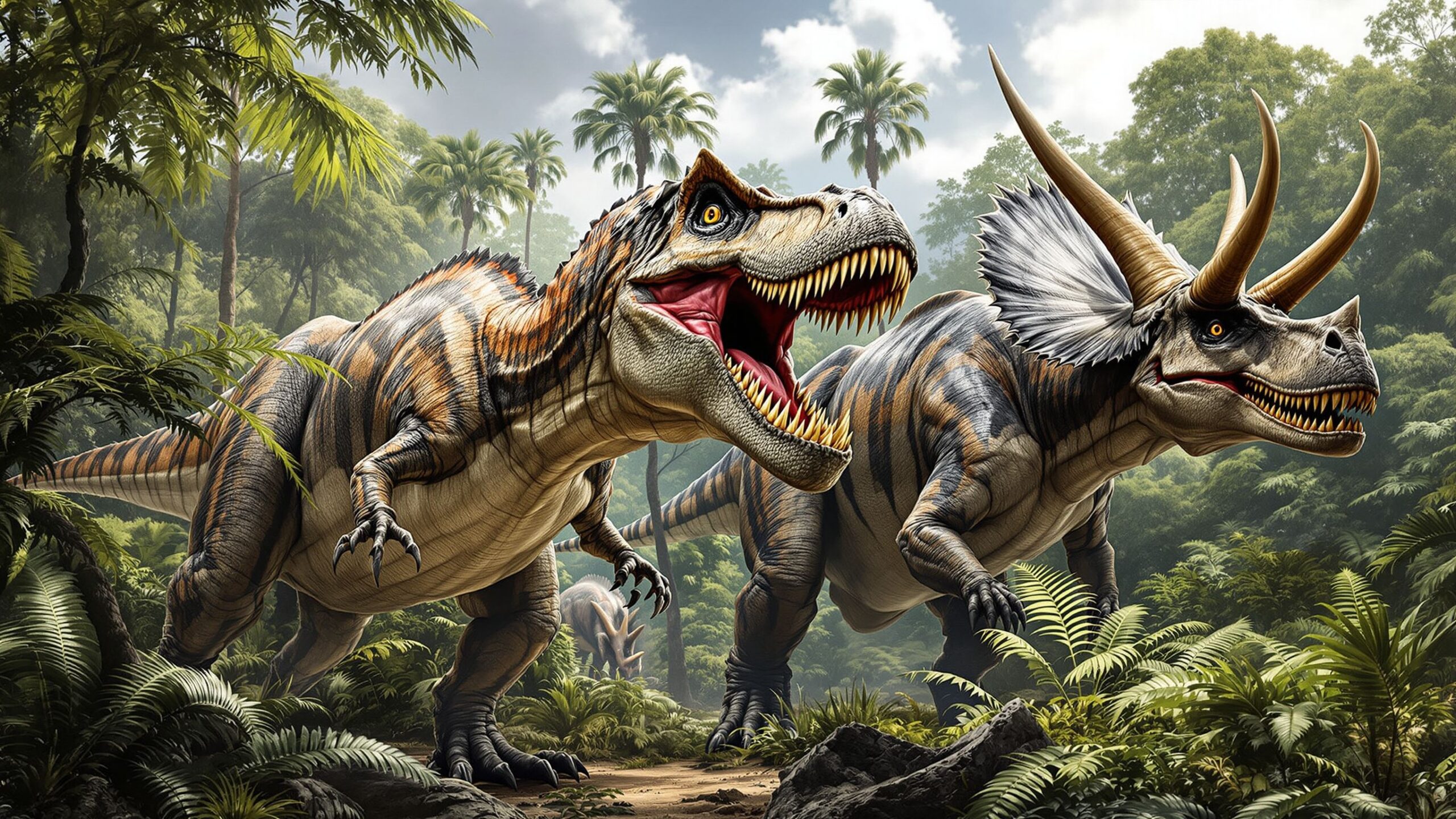
Herbivorous dinosaurs developed impressive defensive adaptations. Triceratops evolved powerful horns and a large protective frill. Ankylosaurus developed extensive body armor and a massive tail club capable of delivering devastating blows.
Stegosaurus possessed tail spikes that likely deterred predators. These structures demonstrate how power can take many forms beyond simple strength.
Defensive adaptations helped many dinosaurs survive in ecosystems filled with dangerous predators.
The Tail: A Hidden Source of Power
The tail was far more than a decorative appendage. In many dinosaurs, it played a crucial role in movement, balance, and strength.
Large predators used their tails as counterbalances that stabilized the body during running and turning. This balance allowed for greater agility and control.
The tail also housed major muscle groups connected to the hind limbs. These muscles contributed directly to locomotion and generated significant force during movement.
Some dinosaurs transformed their tails into defensive weapons. Ankylosaurs developed powerful clubs, while certain sauropods may have used whip-like tails for defense or communication.
The tail was one of the most versatile and important structures in dinosaur anatomy.
Efficient Breathing Fueled Activity
Power requires energy, and energy requires oxygen.
Evidence suggests many dinosaurs possessed highly efficient respiratory systems similar to those of modern birds. These systems may have included air sacs connected to the lungs.
Unlike mammalian lungs, bird-like respiratory systems allow continuous airflow, improving oxygen extraction and increasing efficiency. This adaptation would have supported active lifestyles and large body sizes.
Efficient breathing may have helped dinosaurs maintain high activity levels and thrive in diverse environments. It also likely contributed to their ability to achieve enormous sizes while remaining mobile.
Respiratory efficiency provided a hidden but powerful advantage.
Advanced Circulatory Systems Supported Giant Bodies
Moving oxygen throughout a large body requires an effective circulatory system.
Dinosaurs likely possessed powerful hearts and extensive networks of blood vessels that transported oxygen and nutrients to tissues throughout the body.
Large sauropods faced especially demanding circulatory challenges. Their hearts needed sufficient strength to pump blood up long necks to elevated heads.
An efficient circulatory system helped support growth, movement, and overall health. It also worked closely with the respiratory system to provide the oxygen needed for muscular activity.
Together, these systems formed the biological foundation of dinosaur power.
Armor and Natural Protection
Power is not always about offense. Sometimes survival depends on defense.
Several dinosaur groups evolved extensive protective armor. Ankylosaurs developed bony plates embedded within the skin, creating living tanks capable of resisting attacks.
Stegosaurs evolved large plates and tail spikes. Ceratopsians developed horns and frills that may have been used for both defense and display.
These adaptations reduced vulnerability to predators and increased survival chances. In many cases, protection allowed herbivorous dinosaurs to grow larger and occupy important ecological roles.
Defensive anatomy played a significant role in dinosaur success.
Intelligence and Sensory Advantages
Physical power was only part of the equation. Successful dinosaurs also relied on sensory and neurological adaptations.
Many predators possessed excellent vision that helped them locate prey and navigate complex environments. Some species likely had well-developed hearing and smell as well.
The brain coordinated movement, processed sensory information, and controlled behavior. Although dinosaur intelligence varied among species, effective nervous systems helped animals respond quickly to opportunities and threats.
Bird-like dinosaurs often possessed relatively large brains and advanced sensory capabilities, suggesting sophisticated behavior compared to many other prehistoric animals.
Powerful bodies worked best when paired with effective sensory systems.
Evolution Created Specialized Champions
One reason dinosaurs became so successful is that evolution continuously refined their anatomy.
Different species adapted to different lifestyles, resulting in extraordinary diversity. Some evolved speed. Others evolved size. Some specialized in defense, while others became highly efficient predators.
Natural selection rewarded traits that improved survival and reproduction. Over millions of years, these improvements accumulated, producing some of the most impressive animals ever to live.
The variety of dinosaur forms demonstrates the incredible flexibility of their anatomical design.
Conclusion
What made dinosaurs so powerful was not a single feature but the combination of many remarkable adaptations working together. Strong skeletons provided support. Powerful muscles generated movement. Efficient lungs supplied oxygen. Advanced circulatory systems distributed nutrients. Specialized teeth, jaws, claws, tails, armor, and sensory systems enhanced survival.
These interconnected features transformed dinosaurs into some of the most successful animals in Earth’s history. Their anatomy allowed them to grow larger, move faster, defend themselves more effectively, and exploit a wider range of environments than many competing animals.
Even though dinosaurs disappeared approximately 66 million years ago, their legacy lives on. Modern birds still carry many of the anatomical innovations that first evolved in their dinosaur ancestors. By studying dinosaur anatomy, we gain a deeper understanding of the biological engineering that helped these extraordinary creatures dominate the prehistoric world for millions of years.