A prehistoric winner needs a contest the fossils can actually test
No extinct nonavian dinosaur is an established universal intelligence champion, but troodontids such as Stenonychosaurus are leading anatomical candidates because of relatively large brains. Troodon has spent decades near the top of popular lists, often wearing an imaginary crown earned from that comparison. The appeal is obvious: a small, alert predator makes a satisfying rival to the biggest and strongest dinosaurs. But a crown suggests that the contestants faced the same test and that someone recorded the results. Neither condition applies to extinct nonavian dinosaurs. Brain proportions can support comparisons, while preservation, uncertain body masses, disputed names, and different ecological demands complicate the ranking. Even the membership of the contest matters, because living birds are dinosaurs too. The strongest answer identifies promising candidates for particular abilities and explains the evidence behind their reputations. It does not turn a fossil braincase into a universal intelligence score or pretend that an untested animal won every possible mental challenge.
A: No; both its taxonomic history and the limits of intelligence inference complicate that claim.
A: Its skull indicates a relatively substantial brain for its body size.
A: Yes; it introduces living dinosaurs whose particular cognitive abilities can be tested.
A: Fossils do not demonstrate the elaborate humanlike planning portrayed onscreen.
A: That is biologically plausible, but its precise memory capacities cannot be tested directly.
A: Their measurements and reference methods need reconciliation before the resulting values can be placed on a common scale.
A: Without an adequate sample and secure sex identification, a species-wide assumption would be difficult to test.
A: Parts restored from different individuals require explicit reconstruction assumptions rather than being treated as one directly preserved braincase.
A: Response speed can reflect sensory or motor performance; learning needs evidence of change with experience.
A: No universal champion is established; several lineages offer intriguing anatomical candidates.
Decide whether the contestants include living birds
In evolutionary classification, birds belong within Dinosauria. That means a request for the smartest dinosaur can include animals whose behavior researchers can test directly today. Corvids and parrots have demonstrated sophisticated capacities in particular experimental settings. In Clayton and Dickinson’s scrub-jay cache experiments, birds recovered stored food in ways sensitive to what they had hidden, where, and how long ago. Perishable waxworms and longer-lasting peanuts made elapsed time relevant to which food was worth retrieving. This is a documented memory problem solved by a living dinosaur, rather than a capacity assigned to an extinct animal from its appearance. Their inclusion changes the subject from a fossil ranking to comparative cognition among living and extinct members of a broad lineage.
Popular discussions usually mean extinct nonavian dinosaurs, however. Keeping that scope explicit avoids using a raven as a technical escape from the reader’s intended curiosity. Birds remain relevant evidence about evolutionary possibilities, but their observed abilities and the inferred capacities of a fossil theropod are different kinds of information. A useful comparison acknowledges both the family relationship and the gap in direct observation.
There is also no automatic overall winner among living birds. An experimental result may establish an impressive capacity in one species under particular conditions, while another species excels at a different task. That distinction matters before the comparison ever reaches the fossil record. Keeping a clear definition of the ability being compared makes living research more informative and prevents a modern example from becoming another unsupported universal champion.
The Troodon reputation belongs to a complicated fossil history
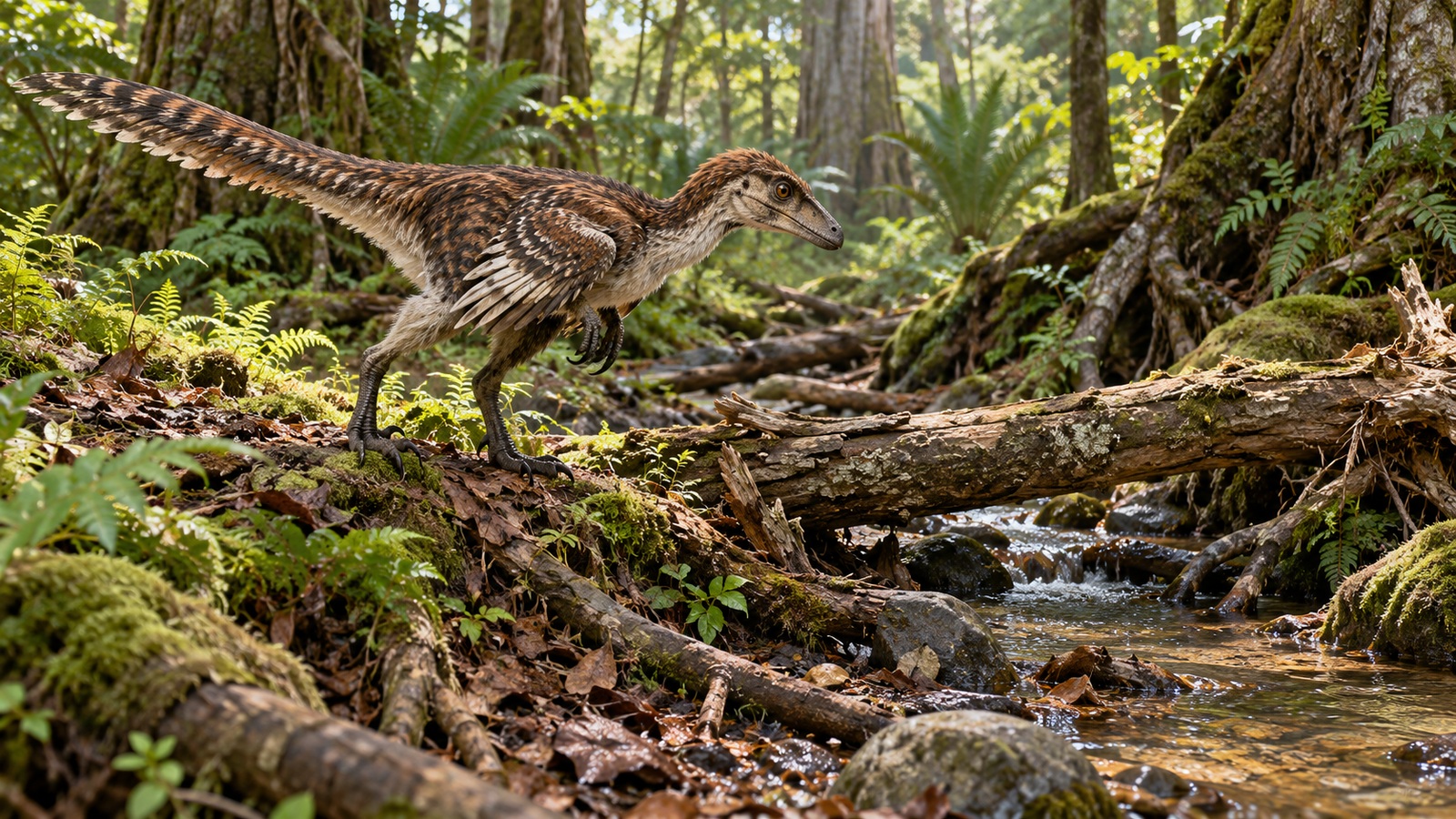
The name Troodon became associated in popular accounts with a small dinosaur possessing a relatively large brain and conspicuous eyes. Its naming history is more complicated than that familiar portrait suggests. The original name was based on a tooth, and identifying species reliably from isolated teeth can be difficult. Skeletal material once gathered under the name has been reassessed, so a confident illustration labeled Troodon may combine an older taxonomic interpretation with anatomy now discussed under other names. The Natural History Museum’s Troodon entry explains why uncertainty about the name affects claims about its brain. This does not mean the underlying troodontid fossils vanished. It means a celebrated label should not be treated as if it represents one uncontested, complete specimen with a fully known mind.
Troodontids remain interesting without a universal trophy
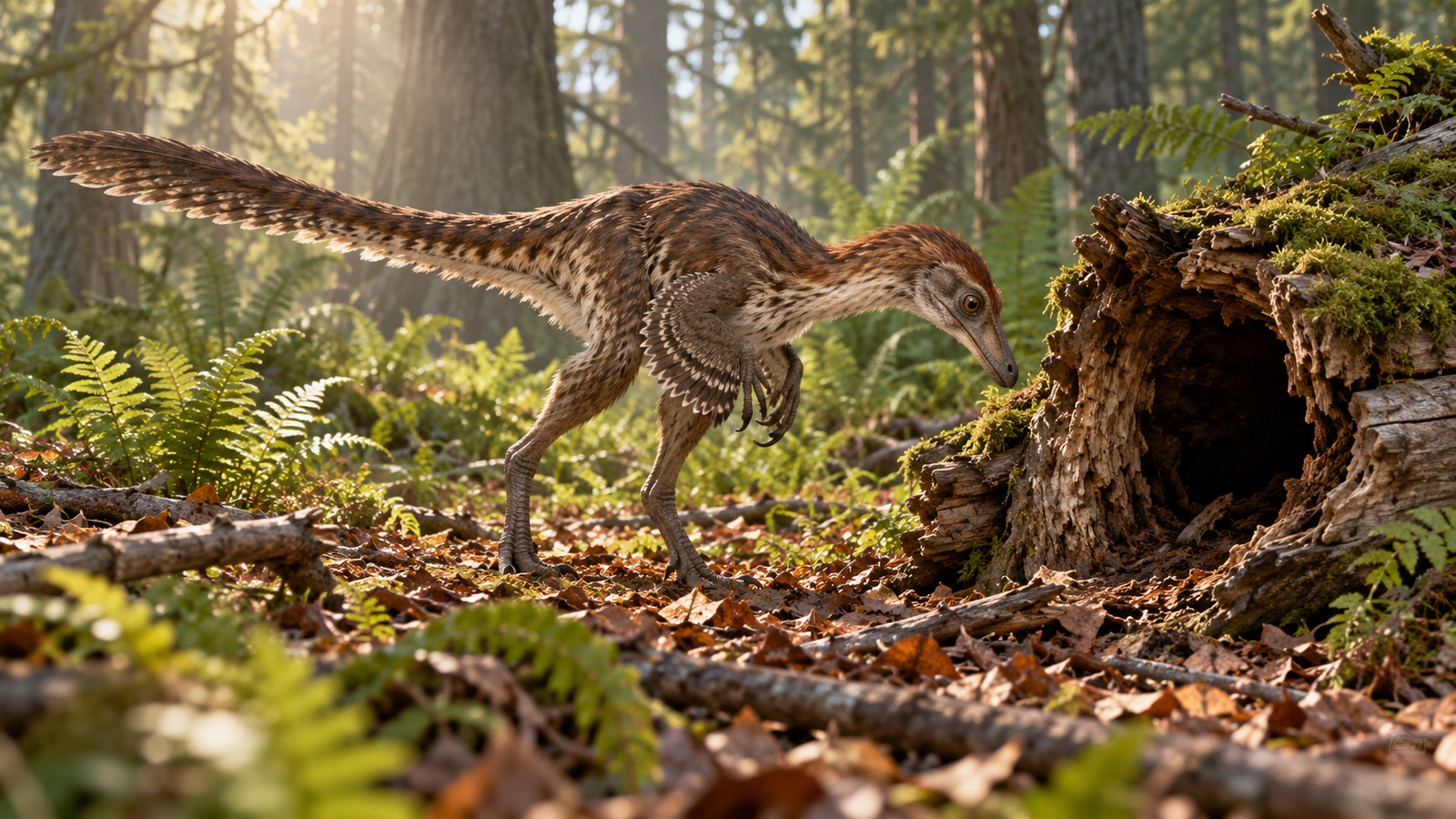
Troodontids were small-bodied theropods closely related to the broader lineage that includes birds. Some known skulls show substantial braincase capacity relative to body size. That makes them important in discussions of brain evolution among nonavian dinosaurs. It supplies a reason to investigate potential behavioral flexibility rather than a direct measurement of it.
Large eyes and a visually oriented head also contribute to their alert appearance in reconstructions. Those features concern sensory information and should not be mistaken for a general reasoning score. An animal may process demanding visual information without performing exceptionally in every form of learning. The distinction protects a useful anatomical observation from an unsupported behavioral leap.
The museum profile of Stenonychosaurus highlights its large brain relative to body size. This provides a clearer named example for discussing the relevant anatomy than simply repeating an old Troodon superlative. Still, no experiment reveals how it compared with another extinct species at remembering routes, changing foraging tactics, or responding to unfamiliar objects. Its candidacy is anatomical and comparative, not a recorded victory.
Raptors earned some of their reputation on the cinema screen
Dromaeosaurids such as Velociraptor combine a compelling body plan with a powerful popular image of cunning hunters. Their relationships with birds and their sensory anatomy make them interesting scientific subjects. Films add coordinated ambushes, deliberate trap-setting, and implausibly human problem solving. Those scenes cannot serve as behavioral observations of the extinct animals.
The Natural History Museum’s discussion of Velociraptor distinguishes the real animal from its fictional counterpart. Its relatively sophisticated anatomy does not establish that it could outthink a human or operate as part of a cinematic tactical team. Group association, even where supported, requires further evidence before it becomes proof of coordinated strategy. Removing those additions leaves an interesting predator with genuine anatomical clues and substantial behavioral uncertainty.
Tyrannosaurus complicates the idea that small always means clever
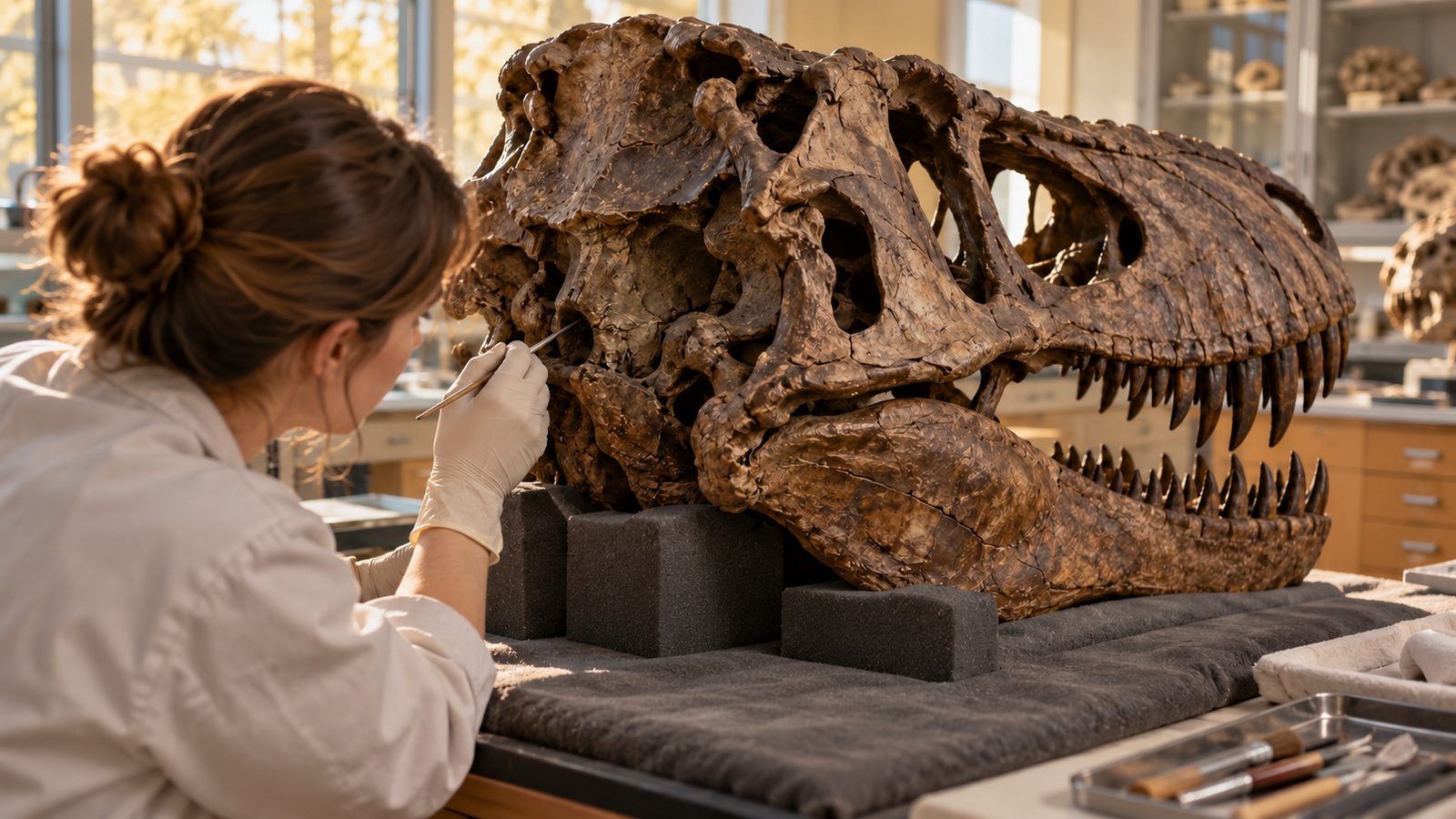
Tyrannosaurus had a large brain in absolute terms, as expected for a huge animal with substantial sensory and bodily demands. Some aspects of its braincase anatomy also show investment in receiving and processing information. These observations make the old caricature of a nearly thoughtless giant unhelpful. Yet absolute size cannot make it the automatic winner over smaller dinosaurs. A larger body changes the requirements placed on a nervous system, and different brain regions support different functions. The important comparison concerns scaling, organization, and ecology together rather than which reconstructed brain would occupy the biggest display case.
Neuron headlines did not settle the championship
Suzana Herculano-Houzel’s 2023 analysis used living-animal relationships to estimate neuron numbers in fossil dinosaurs and suggested striking comparisons with primates. That interpretation brought Tyrannosaurus into the intelligence discussion in a particularly dramatic way. The numbers depended on inferred brain dimensions and the selection of scaling relationships. They were not cell counts taken from preserved tyrannosaur brain tissue.
Caspar and colleagues’ 2024 reassessment challenged the anatomical estimates and behavioral inferences. One important disagreement concerned how much of the braincase cavity should be counted as brain tissue; another concerned whether bird-like scaling could reliably predict the cells in an extinct theropod. A larger assumed brain and denser assumed tissue both increase the output, without supplying any additional preserved neurons. Discussion continued into later commentary on T. rex cognition, with disagreement about the value of neural measures and the framing of cognition itself. The continuing exchange makes a simple monkey-smart versus reptile-smart choice misleading. Modern reference animals are not interchangeable packages of abilities waiting to be assigned to a fossil.
That later commentary and a reply identify a crucial shared limitation: reliable neuron estimates remain unavailable for these Mesozoic dinosaurs. An exact-looking number therefore cannot resolve the title of smartest dinosaur. Even a dependable count would need interpretation in relation to organization, body size, and behavior. The debate is useful for improving methods, but it does not supply a new confirmed champion.
Relative brain size depends on the measuring rules
Comparing brain size with body size is more informative than comparing brains alone. Researchers can ask how a reconstructed brain differs from the expected size for an animal of a given mass. The resulting value depends on the reference relationship chosen. A comparison against one group may not produce the same result as a comparison against another.
Body mass is itself an estimate, sometimes based on incomplete specimens. Brain volume may also be inferred from a cavity that contained additional tissues. Errors in either input can change the ranking. Reporting the uncertainties and methods is therefore part of the comparison, not an optional detail that can be discarded before announcing a winner.
A fossil sample can favor the best-preserved candidate
Stenonychosaurus is informative because its known skull anatomy supports comparison of brain size with body size. A species lacking a comparable braincase cannot simply be placed below it. Published rankings partly reflect which animals preserve the relevant anatomy and have been studied, as well as real biological differences. This is why the useful candidate description is specific: Stenonychosaurus offers relative brain expansion, Velociraptor contributes a bird-related theropod comparison, and Tyrannosaurus offers a large predator with important sensory investment. None supplies an experimental learning score.
Social behavior cannot be converted directly into a score
Group living can create demands involving recognition, spacing, communication, and responses to other individuals. But evidence that animals gathered does not reveal every cognitive process involved. A bonebed might record a social group, a repeated accumulation, or an environmental event that concentrated unrelated animals. The geological and anatomical context must distinguish those alternatives.
Similarly, care associated with nests can reveal meaningful behavior without proving teaching or elaborate cooperation. Different forms of parental investment can arise through different mechanisms. A solitary animal may also solve difficult spatial or foraging problems. Sociality is one ecological dimension worth investigating, rather than an automatic route to the top of a mental league table.
This distinction matters when a candidate is promoted through a chain of assumptions: grouped fossils become permanent packs, packs become coordinated hunters, and coordinated hunters become the smartest species. Each transition requires separate evidence. Without it, the final ranking merely amplifies the first uncertain interpretation. Strong explanations keep those steps visible and stop where support runs out.
The best mind for one task may differ from the best for another
Imagine comparing memory for feeding locations with precision in tracking fast-moving prey. These tasks place different demands on an animal. A large plant eater and a small predator could each perform effectively in its own ecological setting without one dominating an imaginary general examination. Anatomy would further affect which experiments could be attempted.
Living-animal research has to consider motivation, sensory access, developmental experience, and the physical ability to respond. Extinct species cannot be given controlled trials to untangle those influences. Their ecological roles help identify relevant hypotheses, but do not record actual test scores. A task-specific comparison is more scientifically meaningful than assuming every useful adaptation measures the same underlying quantity.
Evolution did not aim every lineage toward a human mind
Some older reconstructions imagined a clever small theropod eventually becoming a human-shaped intelligent descendant. Such speculation can be entertaining, but it is not evidence about the animal’s real abilities or evolutionary future. Selection acts within particular environments, and it does not arrange all species along a ladder ending in human cognition. Birds show that complex behavior can coexist with body plans very different from ours. A feathered dinosaur would not need a human posture, face, or hands to possess useful learning capacities. Judging it by its resemblance to a hypothetical person replaces biological investigation with a story about progress.
A better shortlist explains exactly what each candidate contributes
Troodontids deserve attention because some specimens show relatively expanded brains and informative sensory anatomy. Dromaeosaurids contribute evidence about brain evolution among bird-related theropods, although their fictional reputations exceed the record. Tyrannosaurs illustrate why large predators and absolute brain size require careful scaling rather than dismissal. Living birds provide actual behavioral tests while remaining evolved descendants with their own histories.
These are different reasons for scientific interest, not equal entries on a verified scoreboard. A source that calls one dinosaur the smartest should state whether it means relative brain size, a particular anatomical feature, or a demonstrated behavior. The first two can sometimes be compared in fossils; the third is far more restricted for extinct animals. Precision about the criterion turns a vague superlative into a claim the evidence can evaluate.
For extinct nonavian dinosaurs, no universal intelligence champion is currently established. Troodontids remain plausible candidates for relatively substantial cognitive capacities, but the exact abilities and comparisons remain uncertain. That answer preserves what makes the fossils exciting while acknowledging what they cannot record. The most revealing dinosaur mind is often the one studied through a specific, answerable problem rather than the one awarded the largest imaginary crown.