A dinosaur’s mind had more than one job
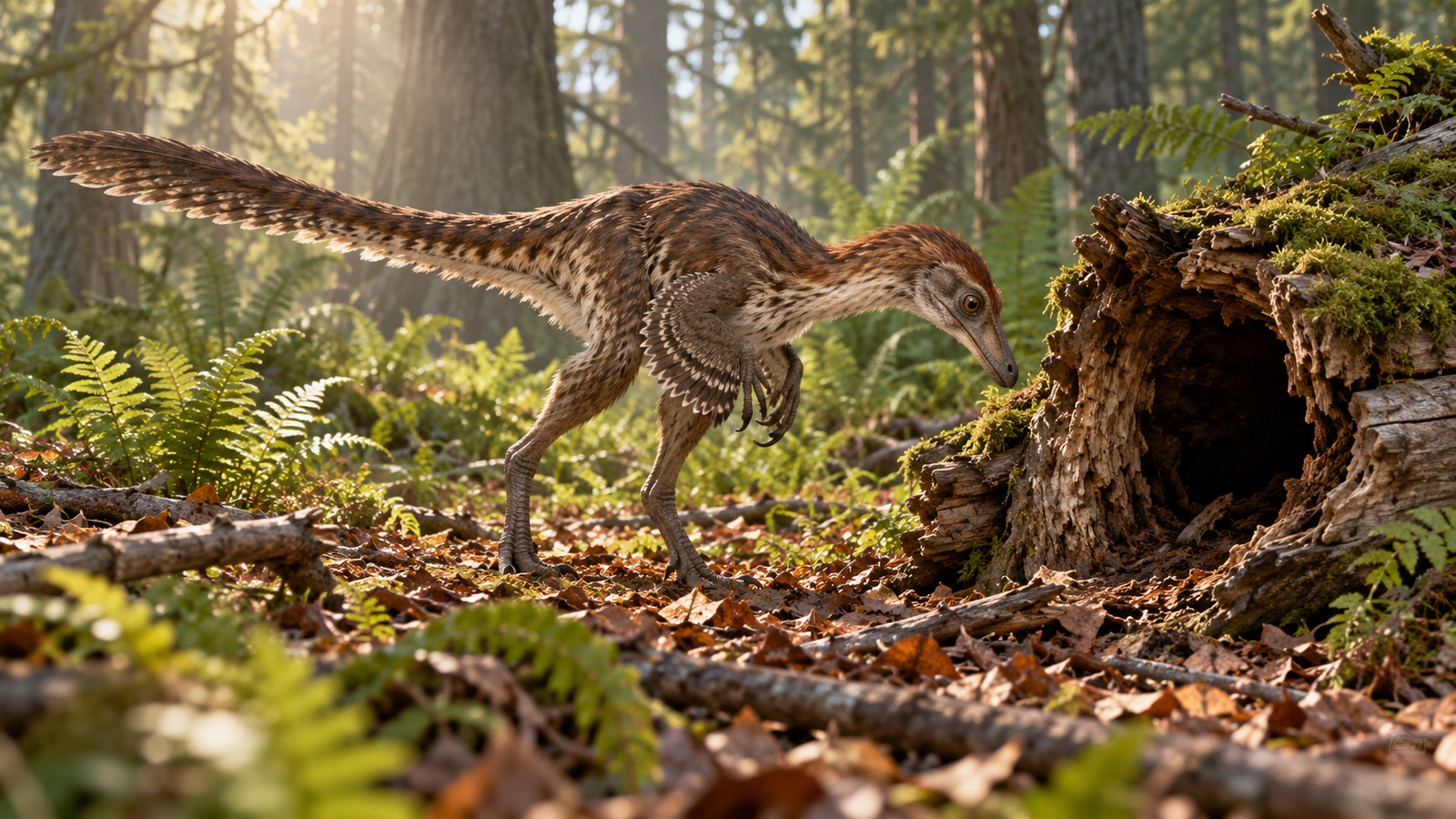
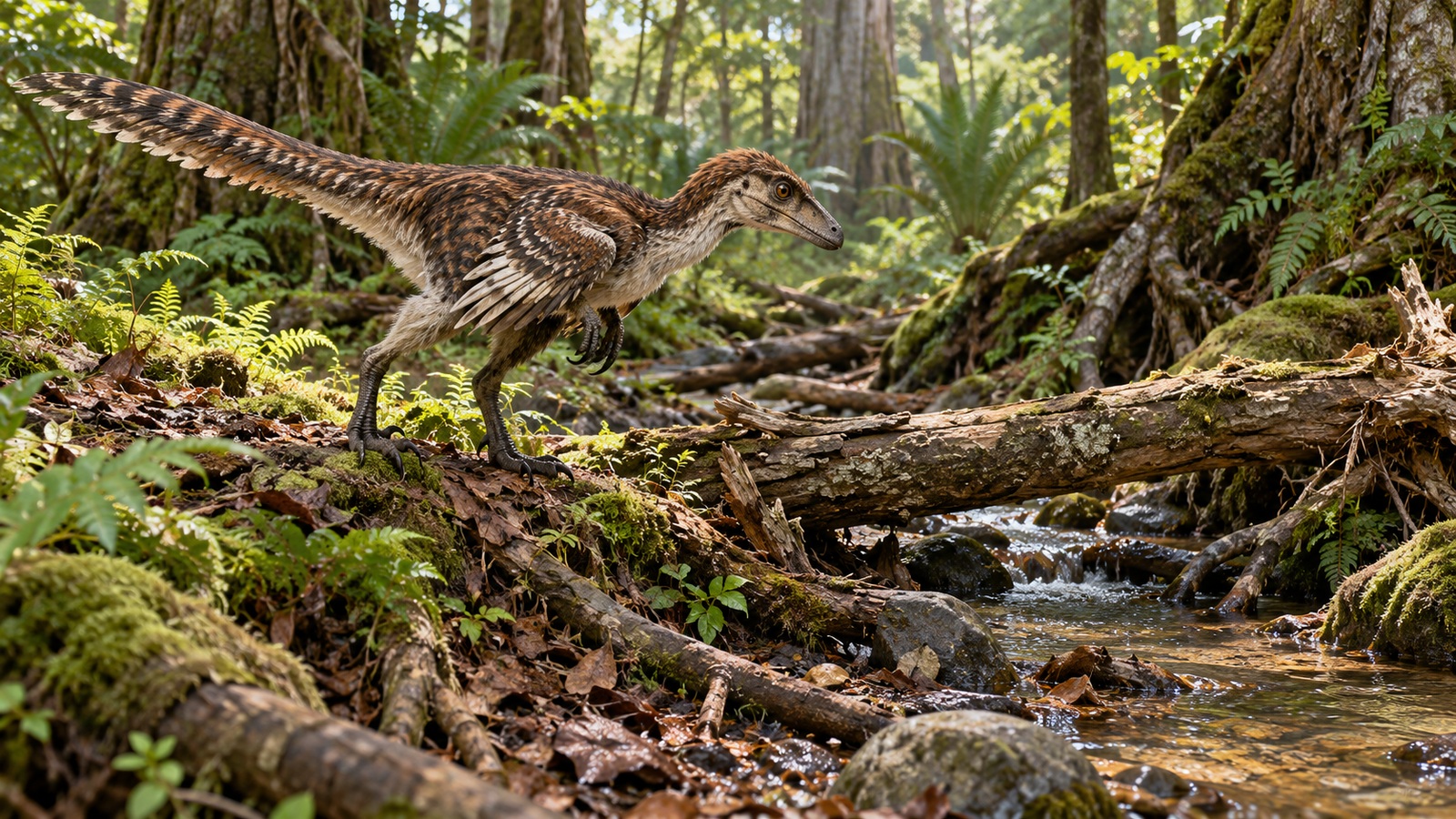
Finding a route through fallen branches, recognizing a useful feeding area, and responding to another animal all involve information. A dinosaur did not need to solve a human puzzle for its nervous system to do complicated work. Yet asking how smart dinosaurs were often produces a single answer, as though a huge and varied group shared one mental score. Scientists approach the subject through narrower problems: what sensory information an animal processed, how its brain was organized, what behavior fossils record, and which comparisons with living relatives are justified. These approaches reveal meaningful differences while leaving much individual experience inaccessible. A braincase can preserve clues to anatomy, but it cannot replay a remembered journey. Dinosaur intelligence becomes more interesting when treated as a collection of abilities adapted to particular lives, rather than a contest between dim reptiles and imaginary prehistoric geniuses.
A: It includes several capacities, and no universal fossil score captures them all.
A: It represents a cavity and anatomical clues, not memories or experiences.
A: A braincase does not record a momentary physiological state such as sleep; that requires different evidence.
A: It supports reproductive behavior, but teaching requires additional evidence.
A: Brain proportions varied substantially among lineages and specimens.
A: Researchers challenged brain reconstruction, scaling assumptions, and behavioral inferences.
A: Inherited tendencies and experience can contribute to the same behavior.
A: Its anatomy, senses, and motivation could make that comparison misleading.
A: A catastrophic ecological disruption cannot serve as a cognitive test.
A: Better braincases, behavioral fossils, and comparative studies can refine specific inferences.
Learning, memory, and perception need separate explanations
Intelligence is a convenient everyday word, but it can conceal several different capacities. Learning changes behavior through experience, memory retains information, and perception organizes incoming sensory signals. Behavioral flexibility describes an animal adjusting when circumstances change. These processes interact without being identical, and researchers do not always use the same boundaries when discussing cognition.
A dinosaur locating food might combine a remembered area with present odors and visual cues. That plausible interaction does not establish exactly how its memory worked or how readily it could solve an unfamiliar problem. Separating the components helps researchers identify what each kind of evidence can actually test. It also prevents a strong sensory ability from automatically becoming proof of advanced reasoning in every domain.
Endocasts preserve an inner surface with important limits
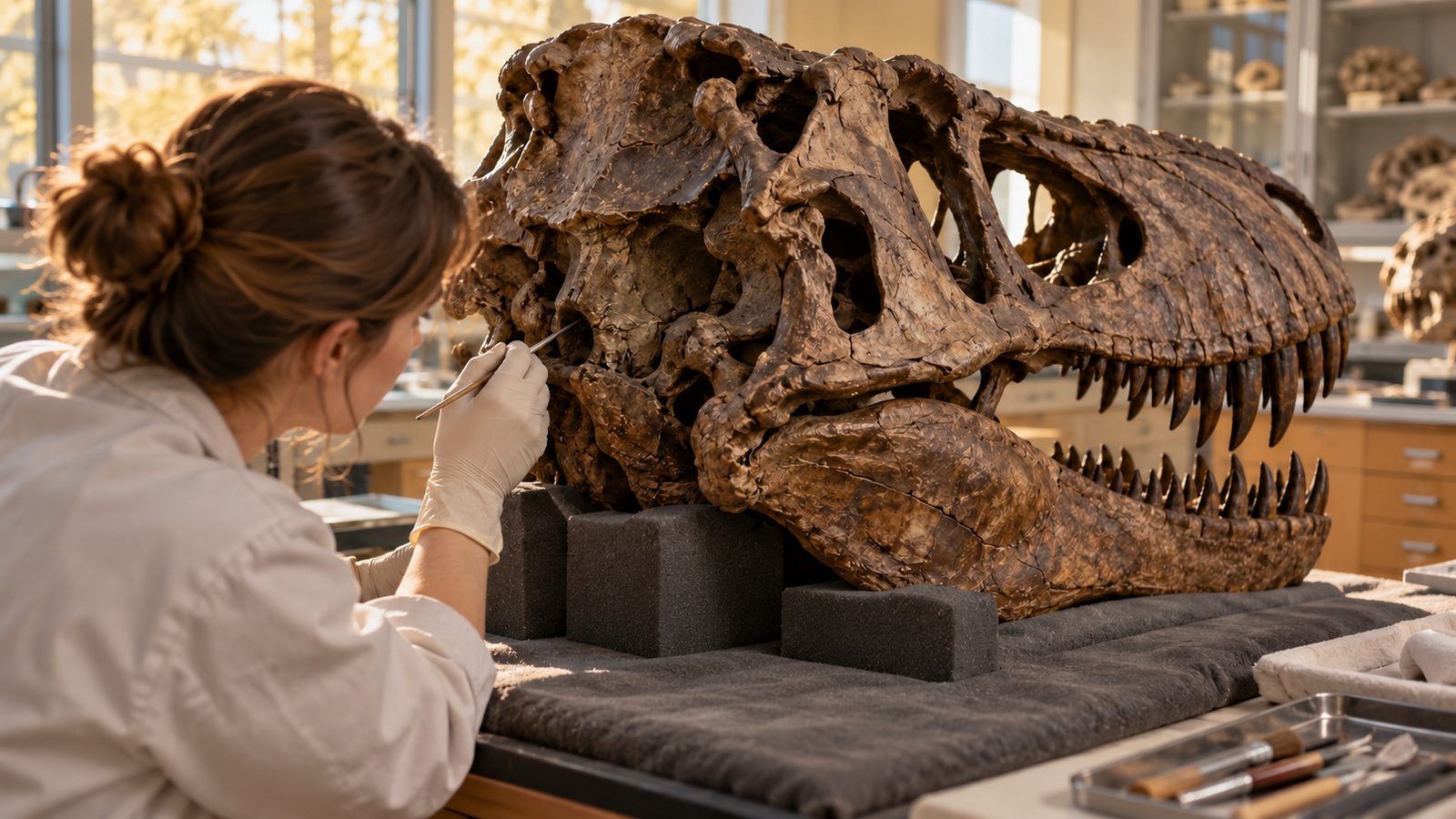
When the braincase survives, its internal space can be reconstructed physically or digitally. The result is an endocast, a representation of the cavity rather than necessarily an exact replica of the brain. Blood vessels, membranes, and other tissues occupied space there too. In some animals the brain follows the surrounding cavity closely; in others the match is less complete. Researchers must evaluate that relationship before treating cavity volume as brain volume. Fossil distortion and missing bone introduce further uncertainty, making a reconstructed endocast a carefully interpreted anatomical record rather than a preserved thought-producing organ.
Scanning a skull turns hidden spaces into testable anatomy
Computed tomography can record internal structures without physically opening a valuable specimen. Researchers distinguish bone from surrounding material and trace the boundaries of cavities through a series of images. Those interpretations can be assembled into a digital reconstruction. The resulting model allows measurements and comparisons that would be difficult to make from the outside of a skull.
Identifying boundaries still requires judgment, especially where crushing, mineral infill, or incomplete preservation complicates a scan. Two reconstructions may differ because their interpreters resolved an uncertain area differently. Good research describes the specimen and method so that those choices can be assessed. An attractive three-dimensional rendering should not hide the uncertainty of its underlying anatomy.
The Natural History Museum’s account of spinosaur braincase research illustrates the value of examining internal anatomy for sensory interpretation. Such work can clarify how a dinosaur received information without reconstructing its full mental life. Multiple specimens and comparisons strengthen the picture. A scan is especially useful when it helps test a defined anatomical claim rather than merely produce a dramatic brain image.
Relative brain size improves a comparison but does not finish it
A large animal generally needs a substantial nervous system to manage a large body. Comparing absolute brain sizes alone therefore mixes body-size demands with other influences. Researchers use scaling relationships to examine how a specimen compares with animals of different masses. An encephalization quotient expresses one version of that comparison relative to a chosen expectation.
The reference group and body-mass estimate matter. Change either input and the resulting comparison can change, even though the fossil has not. A relatively large brain can motivate investigation into behavioral capacities, but it does not translate directly into a human-style IQ. Species differ in neural organization, developmental history, sensory investment, and the ecological problems their nervous systems solve.
Sensory specializations reveal priorities rather than a complete personality
Some reconstructed regions are associated with smell, while other anatomy informs hearing, balance, or vision. These clues can identify capacities that mattered in an animal’s daily life. A substantial investment in processing odors might help an animal detect resources or signals that would be hard to find visually. It does not establish that the animal was generally wiser than a species relying on another sense. The nervous system allocates resources to particular demands, and an overall intelligence label can obscure that specialization. Reconstructing an animal’s information world is often more useful than imagining its performance on a task designed around human strengths.
Neurons have become the center of a continuing debate
A widely discussed 2023 study proposed estimates of neuron numbers in extinct dinosaurs using relationships observed in living animals. Those estimates encouraged claims that some large theropods had primate-like cognitive capacities. The reasoning depended on several inferred steps, including brain size, the amount occupied by relevant brain regions, and the appropriate neuronal scaling relationship. Each step needs support independently of the appeal of the final comparison.
A 2024 reassessment by Caspar and colleagues challenged both the estimates and the behavioral conclusions drawn from them. The discussion continued in later research commentaries, including publications appearing in 2026. Scientists disagreed about how cognition should be framed and how useful neuron counts could be if reliably known. The exchange should not be flattened into a settled announcement that Tyrannosaurus had either a monkey mind or a crocodilian mind.
A later reply on neurocognitive evolution identified agreement that neuron estimates for Mesozoic dinosaurs remain unreliable for inferring cognitive complexity. This shared limit is more useful to a general reader than a sensational numerical ranking. Neurons matter biologically, but uncertain reconstructions do not become certain through arithmetic. Brain organization, body size, comparative biology, and behavior still need to be considered together.
Behavioral fossils show actions at a different evidentiary level
A nest, a trackway, or an animal preserved in a brooding posture can record something the dinosaur did. These traces complement anatomical evidence by supplying a connection to behavior. They do not usually reveal the complete sequence leading to the preserved event. An action can be visible while the animal’s motivation and learning history remain unknown.
Tracks from several individuals may support an interpretation of coordinated movement in some circumstances. They can also require testing alternative explanations involving repeated passage, time averaging, or environmental concentration. Even a convincing group association does not specify communication signals or the complexity of relationships. Fossil behavior is powerful evidence when interpreted at the scale actually preserved.
Instinct and learning are not mutually exclusive operating systems
Animals inherit developmental tendencies while also responding to experience. A familiar behavior can involve both, rather than belonging entirely to one category. Nesting does not become cognitively trivial because some components are inherited, and learning does not necessarily require deliberate human-like reflection. The details of a dinosaur’s behavioral development are rarely preserved, but living animals show why a rigid instinct-versus-intelligence division is misleading. An extinct animal could have used evolved responses and learned information in the same activity. The important scientific problem is identifying evidence for particular mechanisms rather than assigning the whole animal to a simplistic category.
Modern birds expand the evidence without becoming exact substitutes
Birds are living dinosaurs, so studies of them are directly relevant to the evolutionary history of dinosaur nervous systems. Living species can be observed, tested, and compared with their neural anatomy. Their differences demonstrate that a single dinosaur intelligence level would be biologically implausible. A crow, a chicken, and an ostrich do not share identical ecology or behavioral repertoires.
At the same time, modern birds have evolved for tens of millions of years since their lineages separated from extinct nonavian relatives. A capacity demonstrated in one living bird cannot automatically be assigned to every earlier theropod. Evolutionary relationships help locate where a trait might have appeared. Fossils and broader comparisons must determine how far a particular inference can reasonably travel.
Crocodilians provide another living archosaur lineage for anatomical and behavioral comparison. They also warn against treating reptile as a synonym for a mindless machine. Their relevance depends on the feature under study and the evolutionary relationships involved. No single living species supplies a complete replacement for an extinct dinosaur’s brain or life.
Ecology changes what an informative mental test would look like
New Caledonian crows supply a concrete example of a test designed around an animal’s actions. In Jelbert and colleagues’ 2014 water-displacement experiments, birds dropped objects into tubes to raise a floating food reward. They succeeded at some distinctions, including sinking versus floating objects, without succeeding at every version of the problem. The result concerns particular choices in a particular apparatus, rather than a single crow intelligence score.
Changing the setup can also change performance. A follow-up study altered the tasks and obtained different choices about tube width and water level. This shows why the physical problem, prior experience, and information available all belong in an interpretation. Nonavian dinosaurs cannot take comparable controlled tests. Their anatomy can identify plausible capacities, while living birds demonstrate the kinds of behavior that an experiment can actually separate. The fair comparison asks what each species could perceive and do, rather than imagining every animal confronting an identical human puzzle.
Extinction says little about whether an animal could learn
Nonavian dinosaurs disappeared during a catastrophic interval of environmental disruption, while the bird lineage survived. This outcome does not provide an intelligence examination administered by evolution. Survival depended on circumstances involving food webs, habitat, body size, reproduction, and many interacting factors. Effective learning cannot make an animal independent of its ecological requirements. Equally, long-term evolutionary persistence does not tell us exactly how flexibly an individual behaved. The familiar story that dinosaurs vanished because they were too unintelligent replaces an environmental event with an unsupported moral about mental ability.
A useful portrait combines several incomplete records
The most defensible reconstructions bring together endocasts, body-size estimates, sensory anatomy, behavior, and living comparisons. Agreement among independent clues is more informative than a single impressive number. Disagreement can reveal where assumptions need testing or where the available sample is too limited. Research progresses by narrowing those uncertainties rather than pretending all parts of the mind fossilize equally well.
Future scans, better-preserved braincases, improved comparative datasets, and new behavioral discoveries may sharpen particular inferences. They are unlikely to transform every dinosaur into an animal with a precisely known mental score. Many aspects of individual learning leave no recognizable fossil signature. That limitation defines the reach of the evidence rather than making the subject unscientific.
Dinosaurs were varied animals with nervous systems suited to different bodies and ways of living. Some lineages show relatively expanded brains, and some fossils preserve remarkable behavior. Those findings support a rich field of investigation without a universal label of clever or dull. Asking which ability is being discussed, which evidence supports it, and which alternatives remain possible produces a more accurate understanding of prehistoric minds.