Different dinosaurs emphasized different ways of sensing their world
Tyrannosaurids had enlarged smell-related regions, Tyrannosaurus’s head geometry supported useful forward vision, and the small Mongolian dinosaur Shuvuuia had eye anatomy interpreted as well suited to dim light. These are specific clues to a varied sensory world, rather than evidence that every dinosaur possessed the same collection of superpowers. Eyes, noses, ears, and balance systems helped animals locate food, monitor neighbors, and move through changing habitats. Some conclusions are firmer than others: Shuvuuia’s proposed owl-like hearing, for example, was challenged by later research. Understanding how good dinosaur senses were means asking what each feature could accomplish and how the channels worked together. Fossils cannot reproduce the animal’s experience, but they reveal enough equipment to explain meaningful differences among species and the everyday tasks those differences could support.
A: Its size is an anatomical clue, but receptor populations, tissue arrangements, and processing also influence sensitivity.
A: No. Optics, retinal anatomy, and reconstruction uncertainty also affect visual performance.
A: Braincase proportions alone cannot recover that environmental and physiological measurement.
A: Their evolutionary positions and living anatomy help constrain plausible ancestral structures.
A: The inner-ear region included distinct components involved in equilibrium and sound detection.
A: Some are hypotheses based on anatomical proxies whose predictive strength has been debated.
A: Yes. Activity patterns can span different lighting conditions and need not fit one rigid category.
A: They still needed to locate food, negotiate terrain, and respond to other animals.
A: Much of its relevant receptor anatomy was soft tissue that usually did not fossilize.
A: It reveals anatomy more clearly, but missing physiology and behavior still limit reconstruction.
Preserved bone acts as a proxy for missing living tissue
Most light-sensitive cells, odor receptors, and delicate hearing tissues are missing from fossils. Researchers therefore examine associated bone, such as the ring supporting an eye or the spaces surrounding smell-related parts of the brain. These are indirect clues, called proxies. Their usefulness comes from comparing anatomy with actual function in living animals. A large orbit can constrain the possible eye size, for example, without preserving its retina. The task is to connect the surviving feature with a particular capacity rather than treating all sensory performance as one score.
CT scans open a braincase without opening the fossil
Computed tomography records internal differences in a specimen, allowing researchers to reconstruct spaces such as the brain cavity digitally. A model of that space is an endocast. Think of it as the shape left around an organ, rather than the organ itself. Digital removal of the surrounding rock makes otherwise hidden contours visible without demanding that a curator break the skull apart. It can reveal broad shape, passages associated with nerves and blood vessels, and regions relevant to sensory interpretation.
However, the space inside the skull was not necessarily occupied entirely by brain tissue, and surrounding tissues complicate a direct reading. A review of dinosaur palaeoneurology emphasizes the need to understand how endocast shape corresponds to the structures of interest. The method adds extraordinary access while retaining uncertainty about the living organ.
Large eyes answer only part of the vision question
An eye’s size and orientation can affect the light available to it and the part of the surroundings it surveys. Fossil orbits and, in some specimens, the bony scleral ring help constrain reconstruction. The ring consists of small plates within the eye rather than the outer rim of the skull’s socket. Its opening and overall dimensions offer more information about the eye than the empty orbit alone. This is why a small, delicate fossil preserving those plates can be especially valuable. They do not preserve every optical dimension or the distribution of retinal cells. A large opening should not be converted directly into a claim of exceptionally sharp sight.
Several visual abilities need separate treatment. Acuity concerns resolving detail, sensitivity concerns detecting weak light, and color discrimination concerns comparing wavelengths. Field of view describes the area visible from a position, while binocular overlap concerns the region seen by both eyes. An animal can be strong in one respect without maximizing all the others.
Skull reconstructions also depend on assumptions about soft tissue and eye placement. Distortion after burial can affect measurements unless corrected. Comparing several plausible reconstructions is more honest than presenting a single viewing angle as an exact fossil measurement. Vision was a complex biological system, not one score attached to the size of a socket.
Eye placement influenced coverage without dictating a lifestyle
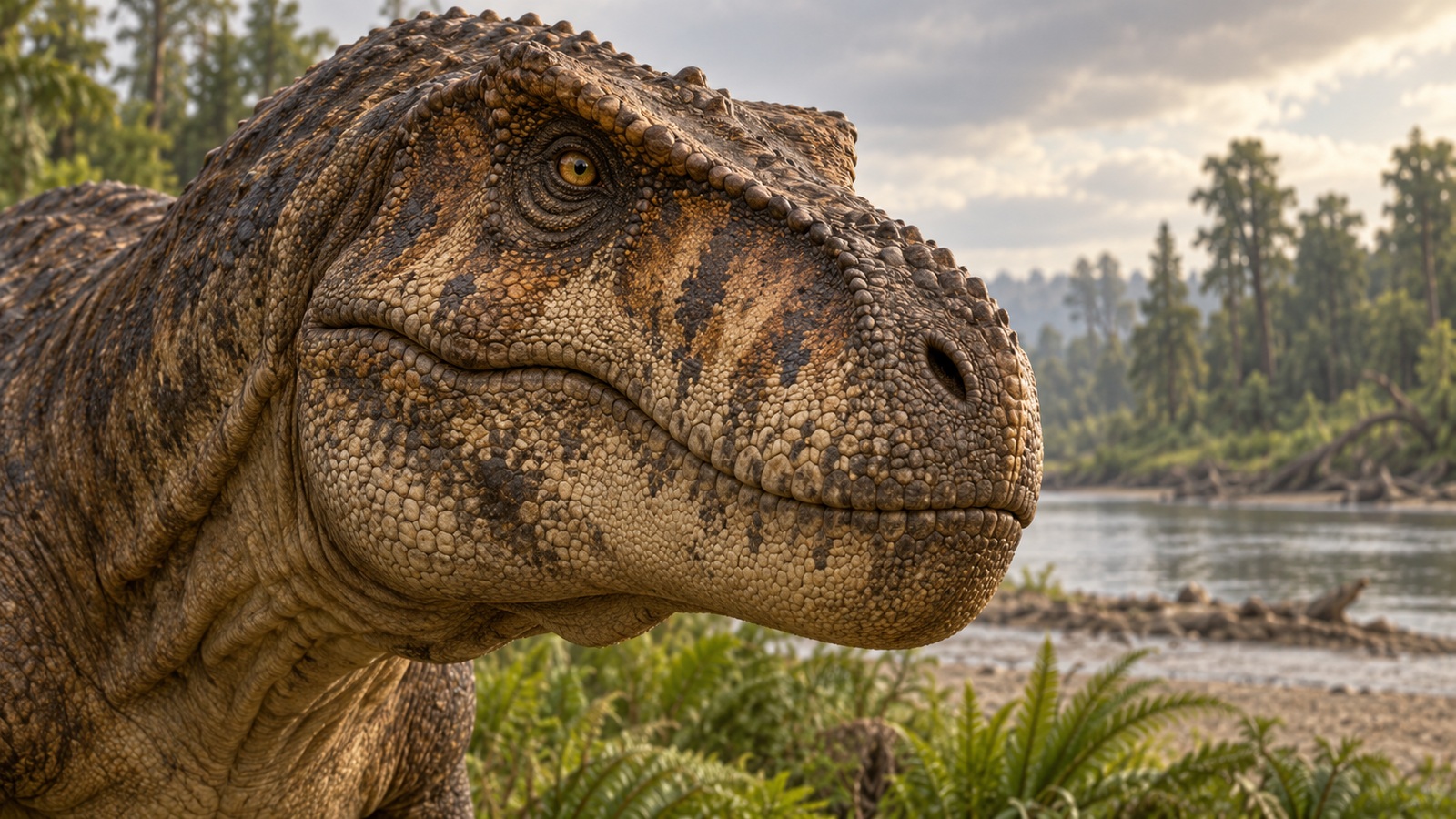
Tyrannosaurus provides a concrete example of head shape affecting sight. Its broad rear skull and narrower muzzle left substantial space ahead visible to both eyes. In contrast, the tall, narrow snouts in Kent Stevens’s Allosaurus and Carcharodontosaurus reconstructions obstructed more of that shared forward view. This comparison concerns where the animals could look, not which one resolved the smallest detail.
Stevens’s reconstruction study used models of actual skulls to map those obstructions. A target above or beside the Tyrannosaurus snout occupied different sight lines from one hidden low behind it. Head movement could change what came into view, just as moving our own head changes the scene around an obstacle. These species-specific arrangements offer more useful information than the rule that all predators had the same forward gaze and all herbivores looked sideways.
Smell left clues around the olfactory regions
Zelenitsky, Therrien, and Kobayashi compared theropod olfactory proportions and found relatively strong smell-related investment in tyrannosaurids and dromaeosaurids. Other theropods did not show the same relative enlargement. Olfactory bulbs are regions receiving odor information from the nose, so the comparison supports smell as an important channel in those animals. It does not identify one exclusive use. Odors could help locate food, recognize relevant animals, or provide information about a familiar area. A scent arriving before its source came into sight could direct the animal’s attention, while the eye helped locate the object once it was visible. This is a workable sensory portrait without inventing a kilometer-by-kilometer detection range.
Hearing depends on more than the shape of one chamber
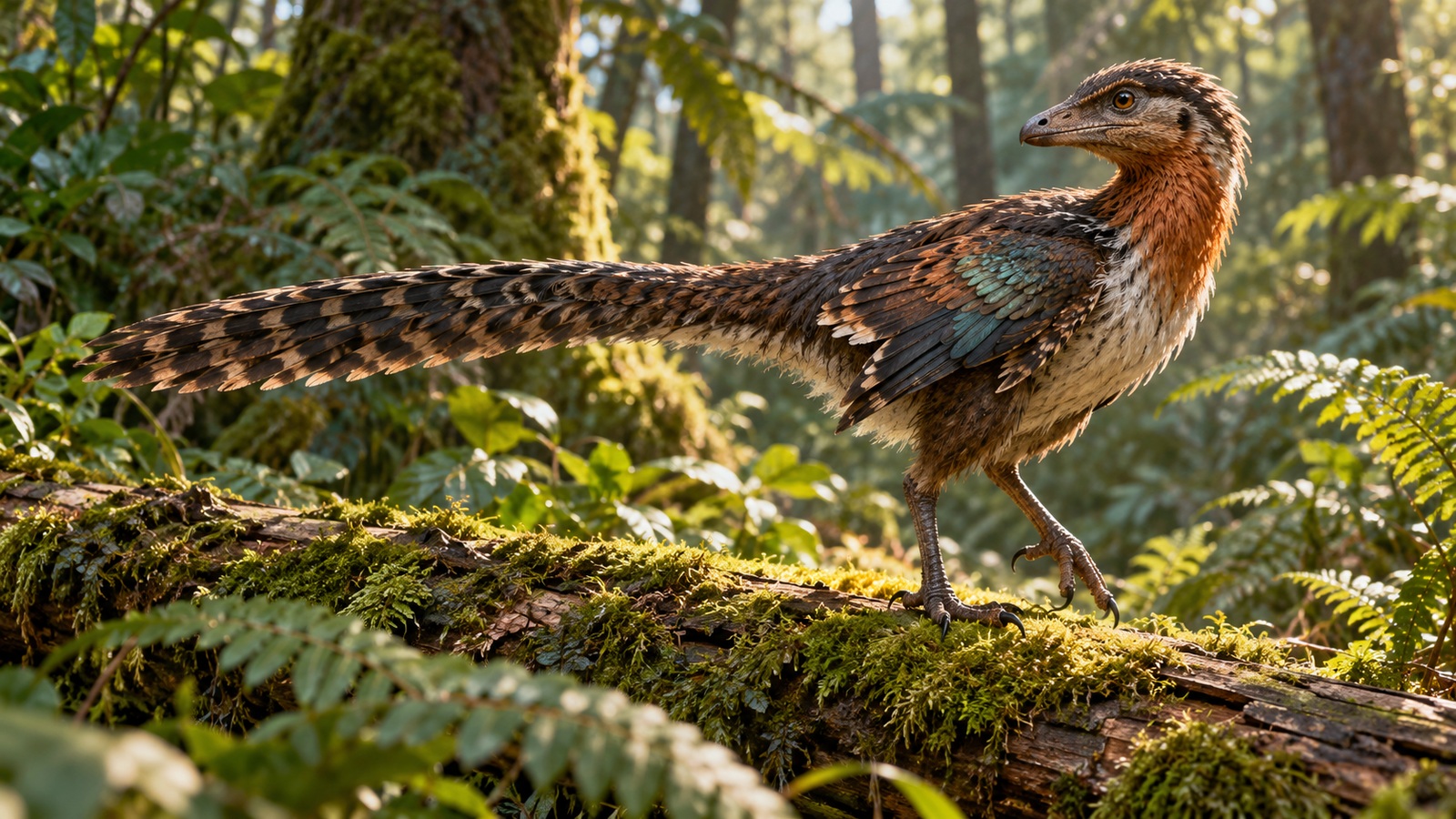
Shuvuuia deserti became a striking hearing case after a 2021 study compared its inner ear with living birds. The researchers interpreted its elongated cochlear region as supporting exceptional hearing, likening it to a barn owl. Combined with eye anatomy, this encouraged a reconstruction of a small dinosaur finding food at night.
Geoffrey Manley and Christine Köppl challenged that comparison in 2025. They argued that the metric used to assess the cochlear duct and an assumption about inner-ear structure did not justify the owl equivalence. A long bony space does not reveal how the actual sensory tissues were organized within it. The disputed result concerns a particular performance claim, rather than whether Shuvuuia could hear at all.
That distinction gives the case a clear outcome for readers. Its anatomy remains informative, but owl-level hearing is not a settled measurement to add to a fact card. The animal could use sound alongside sight without matching a modern specialist in every detail. Wind, running water, and other background noise would also affect which sounds were useful in an actual habitat.
The inner ear also helped keep a moving animal oriented
Hearing and balance share an anatomical neighborhood, but they are different functions. The semicircular canals are associated with sensing head rotation, contributing to gaze and postural coordination. Their preserved bony spaces can reveal aspects of the balance apparatus. Researchers compare their dimensions and geometry with living animals to explore functional implications.
Such comparisons need context from body size, head posture, and evolutionary relationships. A particular canal shape should not automatically be translated into a simple intelligence label or a precise measure of athleticism. Coordinating a large body, a long neck, or rapid head movement posed different demands. Balance was central to ordinary feeding and travel as well as dramatic locomotion.
Touch and taste remain harder to reconstruct
Nerve openings and surface textures can sometimes support inferences about soft tissues and sensitivity around the face. They cannot preserve every receptor or establish exactly how fine a distinction an animal felt. The same difficulty applies to taste, where much of the relevant living tissue is missing. Absence of direct preservation should not be confused with absence of the sense. A dinosaur biting vegetation, handling food, or contacting another animal would have benefited from bodily feedback, but the details require stronger evidence than usefulness alone. These less visible senses belong in the discussion even when the fossil record does not support spectacular measurements.
Activity in darkness required a combination of abilities
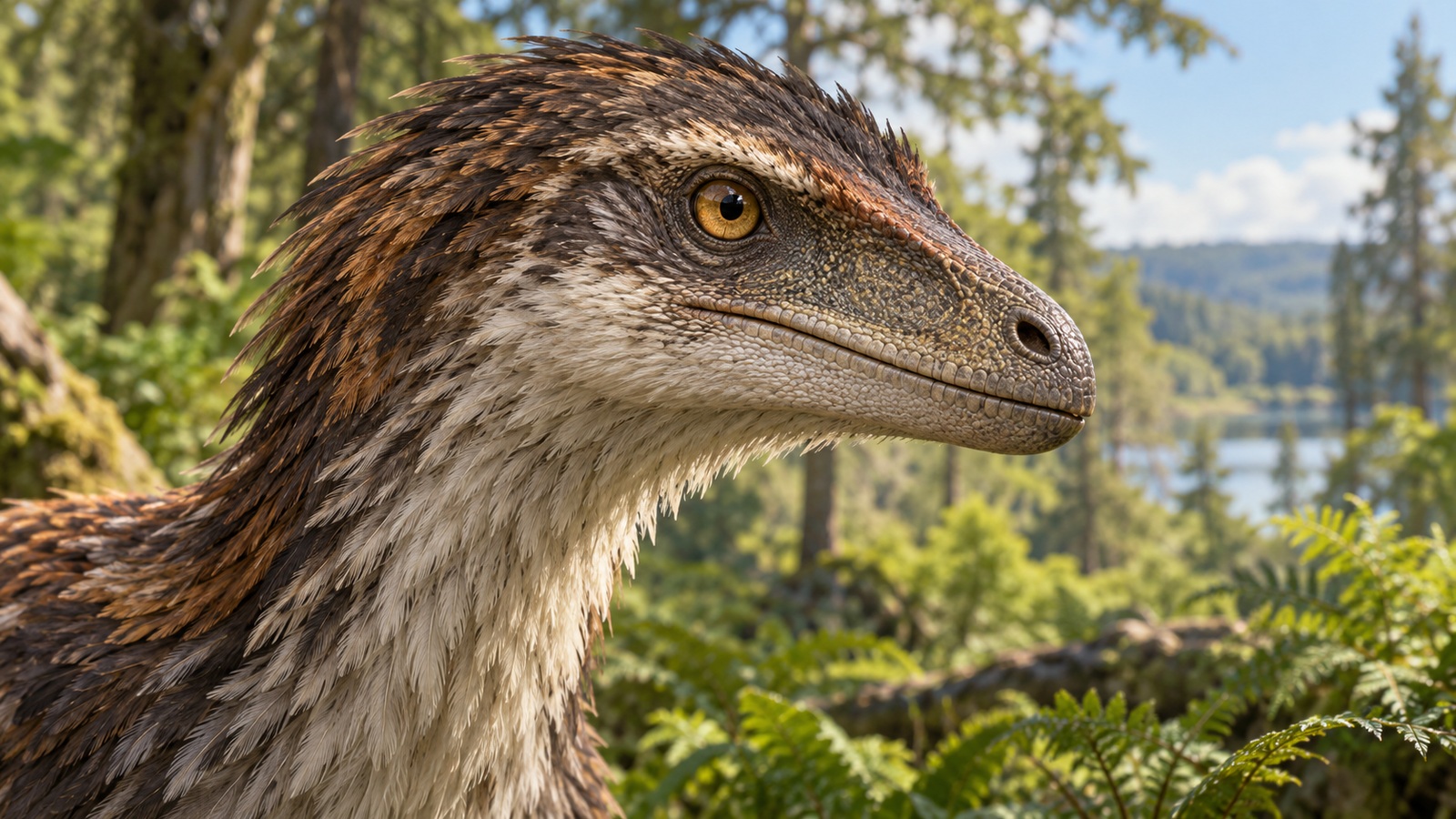
Shuvuuia’s eye evidence provides a separate reason for interest. A bony scleral ring supported a proportionally large pupil opening, an arrangement that could admit substantial light. The Oxford University Museum account of the 2021 research describes the animal as having some of the largest proportional pupils in the comparison. This supported low-light vision, independently of any claim that its hearing matched an owl’s.
Shuvuuia was a small, long-legged theropod from Late Cretaceous Mongolia, so a dim-light reconstruction describes a particular animal rather than all dinosaurs after sunset. A large light-gathering opening could help it detect a faint shape; hearing could contribute information even if the precise sensitivity remains unknown. Neither feature gives an exact nightly schedule. Dawn, dusk, shade, and seasonal light conditions also created settings in which low-light capacity could be useful.
No species needed to maximize every sensory channel
Animal sensory systems reflect evolutionary history and ecological demands. Detecting a faint signal, resolving fine detail, and processing information all involve biological equipment with costs. The most effective combination for one lifestyle may differ from that of another. There is no reason to expect every dinosaur to have the sharpest eyes, most sensitive nose, and widest hearing range simultaneously.
A relatively emphasized olfactory region suggests investment in smell, while the same animal can retain useful eyes, hearing, and touch. For a tyrannosaur, an odor arriving from a hidden source and a subsequently visible moving shape could supply complementary information about what was nearby. Conversely, seeing the source of an ambiguous sound could distinguish a moving animal from vegetation disturbed by the wind. These ordinary combinations explain why a single channel need not settle the animal’s response, even though its relative importance could differ among species. The fossil anatomy reveals some of that investment more clearly than it reveals the precise weight the animal gave each signal during an encounter.
Evolutionary comparisons can also be distorted if only spectacular predators receive attention. Plant eaters needed to find resources, move safely, and detect relevant events. Small dinosaurs faced different scales of obstacles and danger from giant ones. Exploring that range produces a richer account than assigning every group a single famous sensory talent.
A performance claim should state what was actually measured
The named cases answer different parts of the sensory problem. Tyrannosaurid olfactory regions support an important role for smell; modeled head geometry explains differences in forward coverage; Shuvuuia’s eye supports suggest a capacity to gather scarce light. Its hearing debate shows where a more precise analogy failed to convince later investigators. Keeping those results distinct preserves the positive discoveries without bundling them into an imaginary animal that saw, smelled, and heard better than every living species.
The prehistoric world was perceptually rich, even where our evidence is thin
A dinosaur’s world was not silent scenery around a moving skeleton. A small animal looking for food in dim light faced a different problem from a giant herbivore scanning vegetation or a tyrannosaur following an odor. Sensory differences mattered because they changed which information was available before an animal moved, fed, or responded to a neighbor. Those tasks depended on more than the dramatic moment of an attack.
Picture Shuvuuia with an eye opening suited to gathering scarce light, while keeping its exact hearing sensitivity unresolved. Picture a tyrannosaur receiving useful smells without treating its nose as a measured long-distance tracking device. These are concrete reconstructions of animals using their surroundings, with the supported feature visible and the unmeasured performance left open. New anatomical and living-animal studies can improve those portraits without erasing what the fossils already reveal.